

A well-dressed couple steps onto the stage, talking amongst themselves. The man queries, “Are we in the right place for the ballet chap?” The ‘chap’ he refers to is Vaslav Nijinsky, hailed as the God of Dance and widely regarded as one of the most extraordinary male dancers of the early 20th century.
Born in Kiev (then part of the Russian Empire, now Ukraine), to Polish parents, Nijinsky was accepted into the prestigious Imperial Ballet School in St. Petersburg at just nine years old. By 18, he was already performing lead roles. His star ascended quickly, dazzling audiences across Europe lead male dancer of Sergei Diaghilev’s legendary Ballets Russes.
But Nijinsky’s brilliance was tragically short-lived. Diagnosed with schizophrenia at 29, his career abruptly ended, he was committed to a mental asylum and spent the rest of his life in and out of psychiatric institutions.
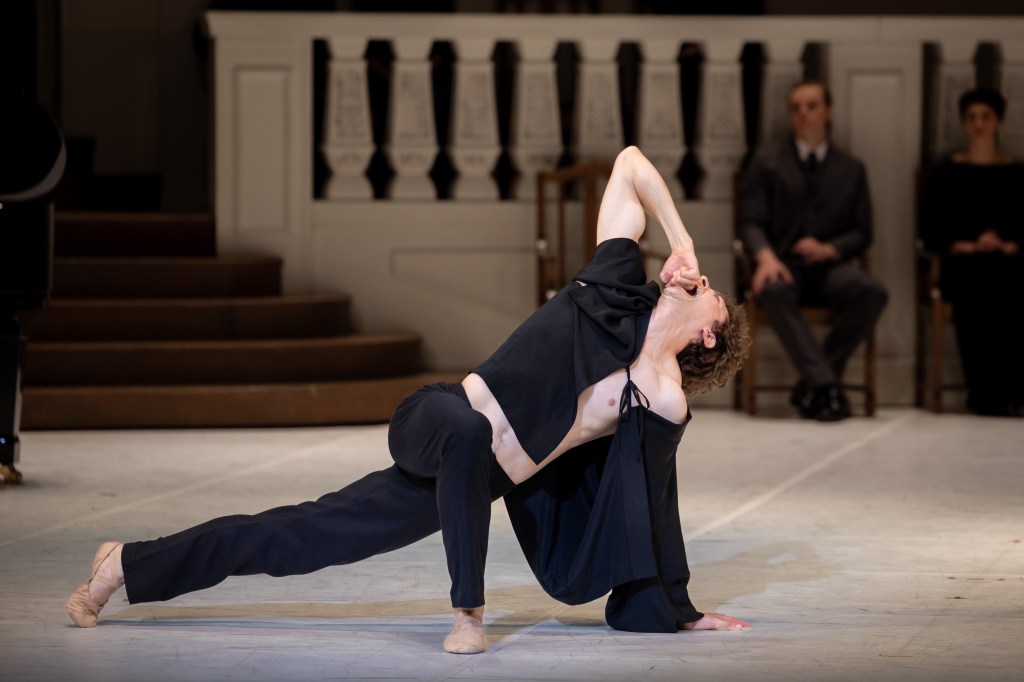
Though set in the early 1900s, this is unmistakably a modern ballet. Nijinksy, choreographed by John Neumeier, is the story of this great artist, shared through the pivotal characters he portrayed. It’s a sad tale—a reflection of a fractured mind.
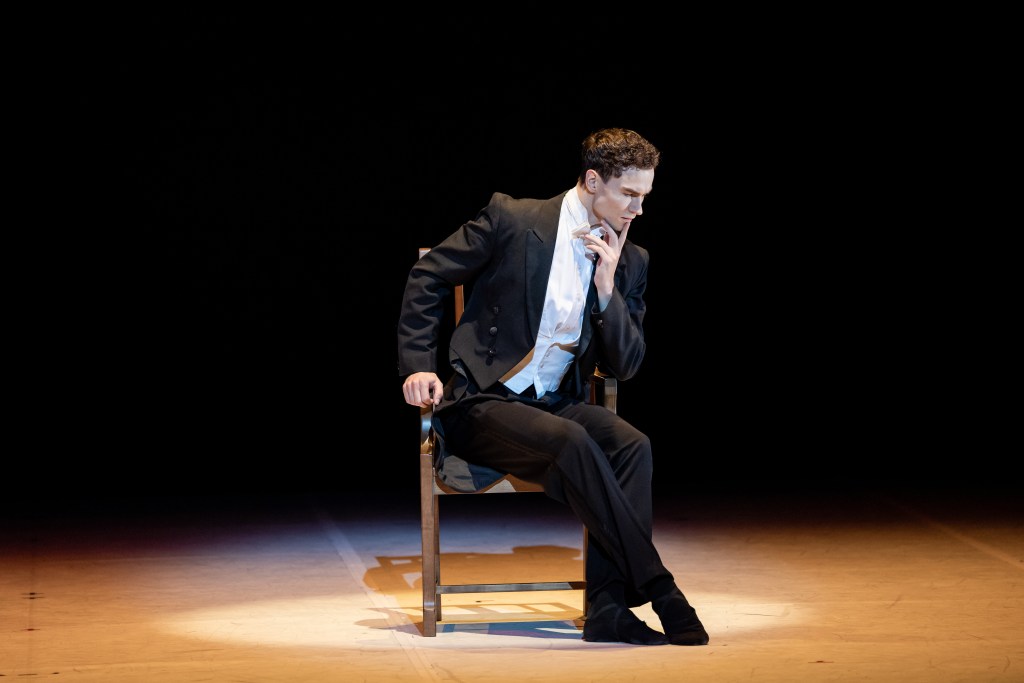
The Australian Ballet performance begins in 1919, St Moritz Switzerland where Nijinsky gives his final performance. The mood is jovial to start. The women wear velvet gowns, the men in suits. Among them, a striking figure in a long red dress—his wife, Romola de Pulszky, portrayed with poise and emotional depth by Grace Carroll. Nijinsky appears, broken jagged. He begins to dance, and it’s painful to watch. The on-stage viewers leave—this is not the dancer they came to see. Realising this, Nijinsky forces a cheerful facade, moving like a puppet, his smile hollow. His heart no longer dances—he is haunted.
Nijinsky is not an easy ballet to follow in a traditional sense. But dance, at its finest, transcends plot—it evokes feeling. And here, the feeling is overwhelming.
Principal Artist Callum Linnane (Carmen) reprises the title role, having first performed it in 2016. Artistic Director David Hallberg credits that earlier performance as his breakthrough—and it’s clear why. Linnane moves with stunning control, embodying both grace and torment within the same dance. His stillness holds power, his movements burst with emotion.
Neumeier’s choreography intricately weaves together Nijinsky’s narrative, with memories, visions and roles intermingling. At times, characters and dance life combine and overlap.
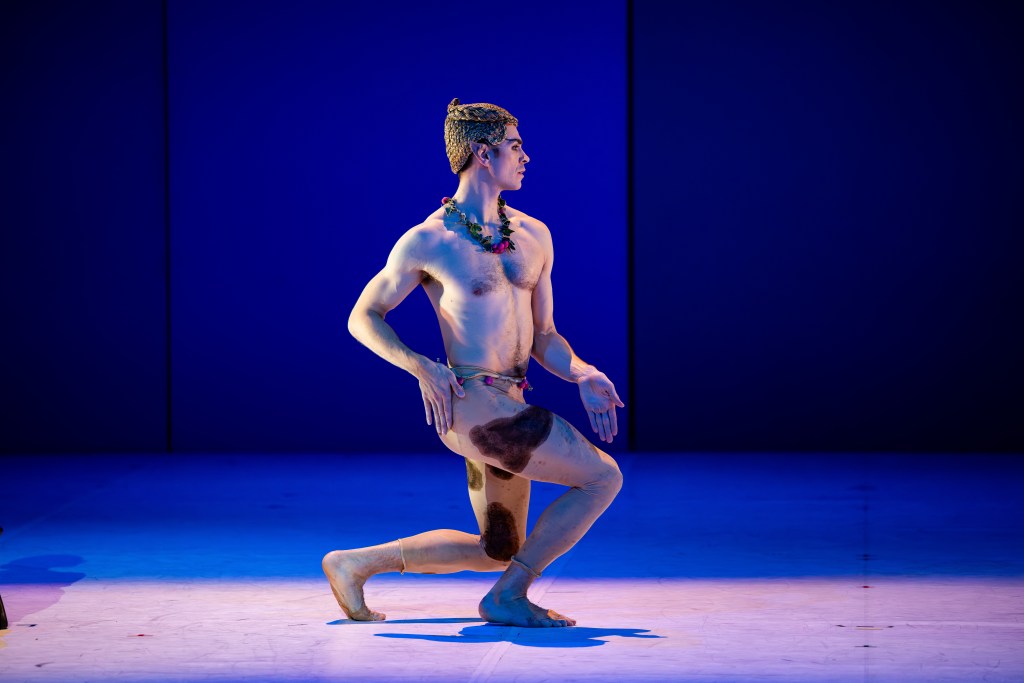
Marcus Morelli (Carmen) captivates as both Harlequin and the Spectre of the rose. Jake Manakahia returns as the sensual faun. Brodie James delivers a poignant performance as the tragic clown Petruschka. While the narrative skews male-focused, Principal Dancer Jill Ogai (Carmen, Oscar) shines in her portrayal of Bronislava, Nijinsky’s sister.
Every moment made with precision and thought—even the falls. Madness is choreographed into Nijinsky’s posture, accentuated in his jerky movements, the aching openness of his mouth. The tempo intensifies in Act Two with the outbreak of World War 1 and the death of Nijinsky’s brother Stanislav (skillfully performed by Elijah Trevitt). As the unraveling continues, Linnane is stripped bare—both emotionally and physically—though his modesty is protected. This exposure emphasises how Nijinsky had become a puppet of his own life, his wrist and back bends highlighting how he seemingly gives in to the internal madness.
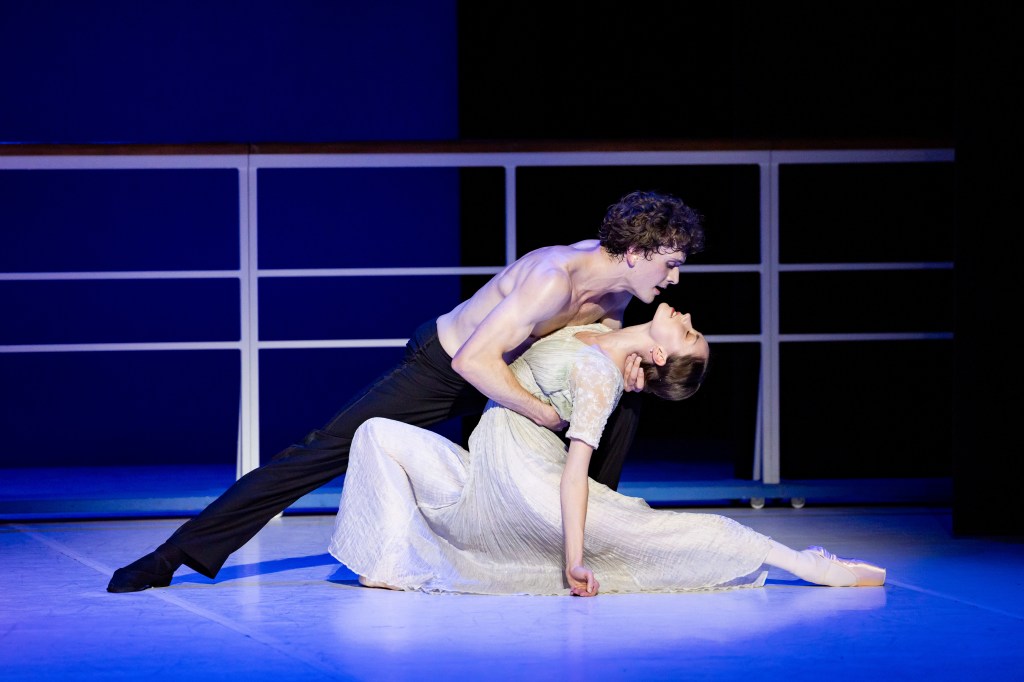
Controversy followed Nijinsky in life—particularly his bold choreography. As Nijinksy did in L’Après-midi d’un faune, Morelli delivers a suggestive solo with a tennis racket. Where Nijinsky’s version was shocking, Morelli’s is more nuanced, but still provocative.
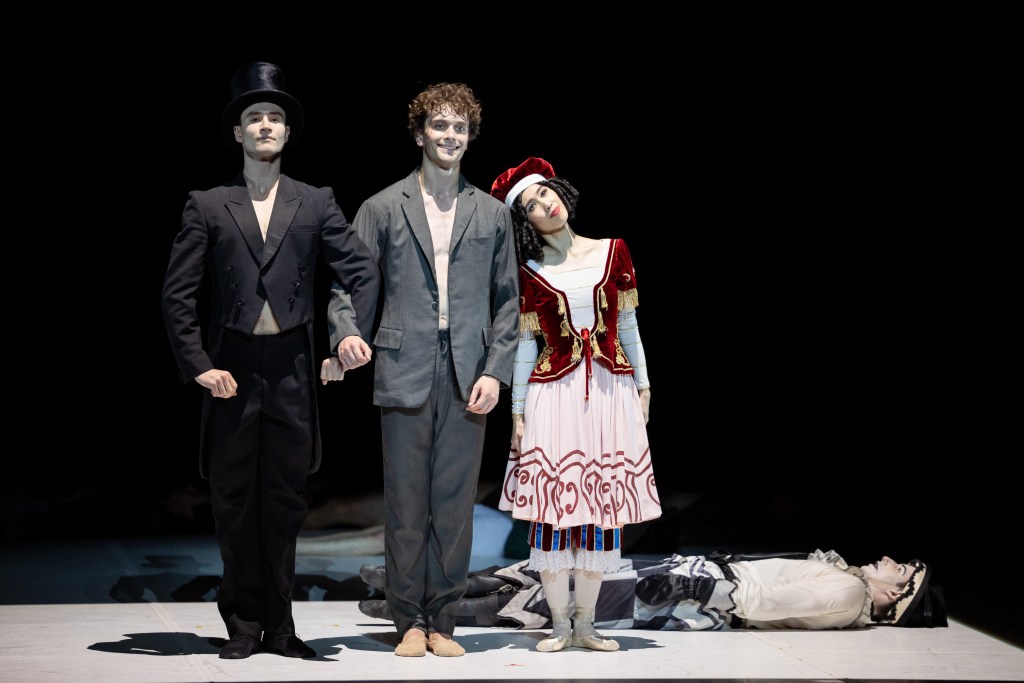
American choreographer Neumeier also designed the sets, costumes, and lighting—each a work of art in its own right. From elegant tuxedos and harem pants with jingling bells to retro swimsuits and swim caps, the costumes are visually striking. The stage transforms dramatically—from grand ballrooms to abstract spaces marked by stark contrasts and bold geometry. As Nijinsky loses his mind, Neumeier does a wonderful job with the lightning, creating shadows that lurk in the background.

By the end of the ballet, the intensity has built in velocity. Manic laughter and screams pierce the air. Chaos descends. The ballroom is in a state of distress. Dancers scale the walls and windows. Nijinsky’s movements become frenzied and violent, he throws himself across the stage, crashing to the floor.
Ultimately, Nijinsky is not just a ballet—it’s an emotional experience. A tribute to a complex man of incredible talent and unbearable suffering. It reminds us that beauty often walks hand-in-hand with tragedy, and that the most powerful stories aren’t always told with words, but with movement.
4.5 stars.
Nijinsky plays at the Joan Sutherland Theatre, Sydney Opera House, until 22 April 2025.
To purchase tickets visit The Australian Ballet


 BACCHUS AT THE THEATRE
Leave a comment