

Helen Garner’s multi-award-winning novel The Spare Room, published in 2008, has been powerfully adapted for the stage by director Eamon Flack. It tells the story of two close friends sharing three harrowing weeks as one undergoes alternative cancer treatment — a situation that tests love, patience, and truth.
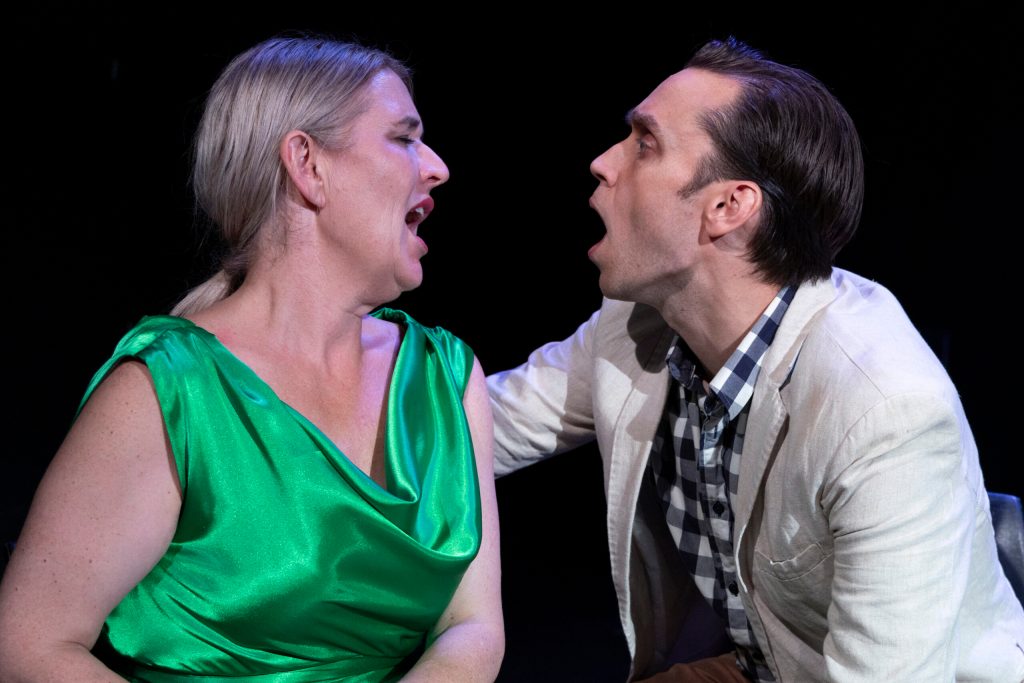
Judy Davis commands the stage as Helen, delivering a masterful performance that oscillates between anger, tenderness, and humour. It’s been almost 15 years since the Australian screen legend (The Dressmaker, Life with Judy Garland: Me and My Shadows, Husbands and Wives) has appeared on-stage, however from the moment she enters, she grips the audience’s attention.
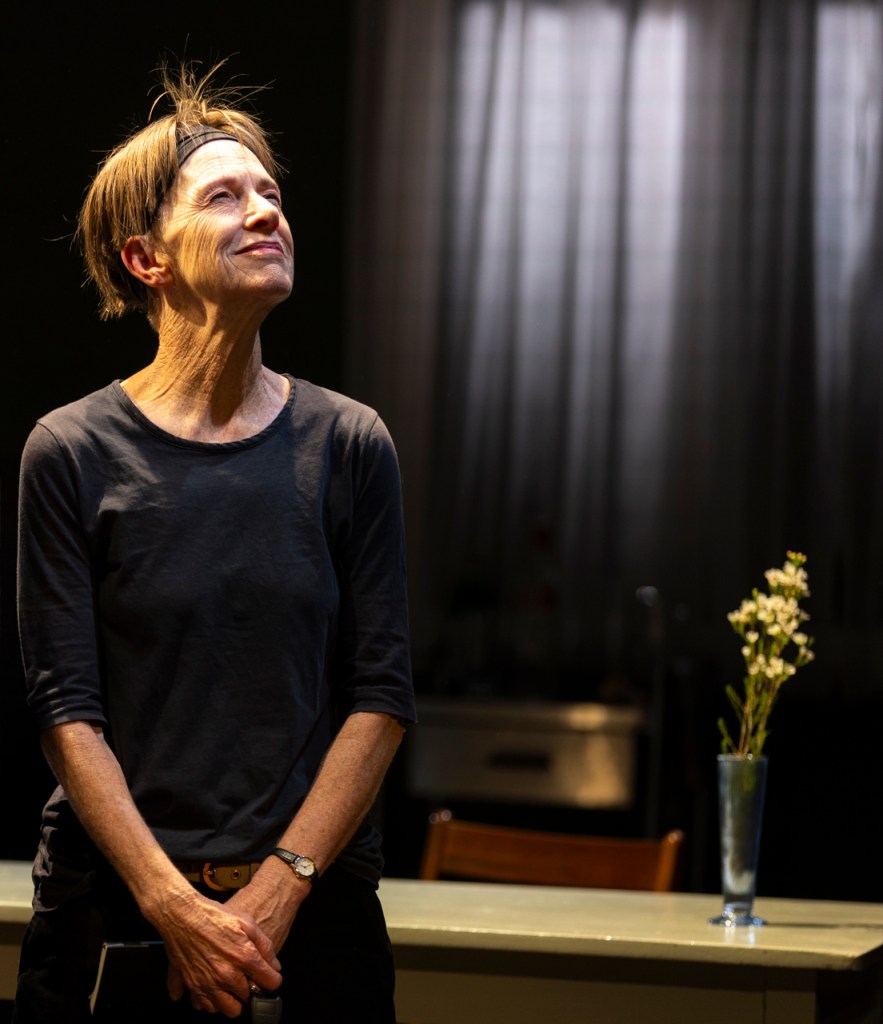
Elizabeth Alexander (Clickbait, Who’s Afraid of Virginia Woolf, Uncle Vanya) is compelling as Nicola, a woman determined to remain upbeat despite her deteriorating condition. Her daily “Hello, darlin’” becomes increasingly grating to Helen, a symbol of denial and false optimism. The two friends both feel the burden of a terminal illness, but the contrast between the characters is stark —Helen is all energy and pragmatism; Nicola, fragility and avoidance.
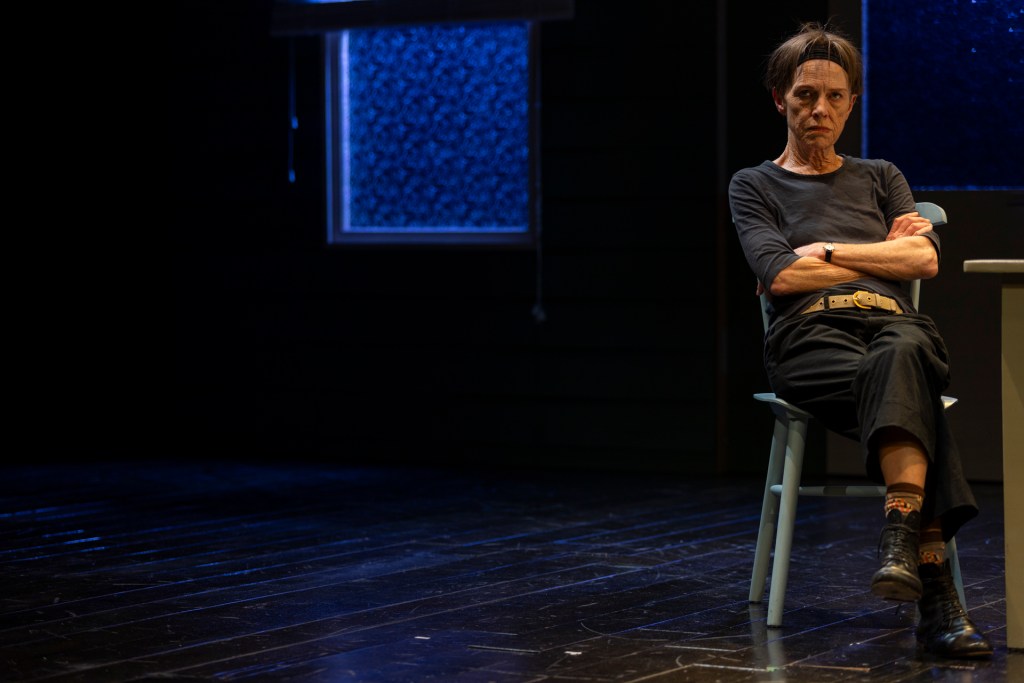
We see Helen dressing her friend, changing soaked sheets, and railing against Nicola’s refusal to accept palliative care. “Death is in my house,” she declares — an agonising, inevitable truth. Davis delivers moments of comic brilliance even in the bleakest scenes, bringing Garner’s dry wit to life especially as she shifts to narrator sharing her unfiltered internal monologue.

Emma Diaz (The Great Divide, Never Closer, The Crucible) provides support in a variety of roles, including nurse and Nicola’s niece. Her scene on the couch with Davis is a standout, as the two women momentarily let their guards down in shared exasperation and sorrow. We also see ensemble support by Alan Dukes (playing eight different characters) and Hannah Waterman.
Mel Page’s set design evokes a sense of chilly austerity: frosted glass windows, bare wooden floors, and furniture pushed to the periphery, creating a stage that feels sparse but allows space for Davis to dominate – dancing, rushing, and out fresh sheets to make Nicola more comfortable. The coldness softened by the live cello accompaniment of Anthea Cottee, whose playing brings warmth to the stark emotional terrain. In one unexpected moment of levity, Davis even joins her on the xylophone. Page has also cleverly included a long curtain, to help shift the set from Helen’s home to a medical setting. Paul Jackson’s lighting design heightens the shifting moods of the play — moving from clinical brightness to dusky emotive purples.
The audience responded knowingly to the medical references and metaphors, a testament to the play’s universal resonance. The Spare Room is a moving portrayal of friendship, mortality, and the helplessness of watching someone you love choose their own path — however misguided it may seem.
Beautifully expressed The Spare Room magnifies honesty in frustration. There is no right way to die, nor is there dignity in illness. There is a space for compassion, love and understanding, even when you don’t agree with the process.
4 stars.
Run time: 110 minutes (no interval)
The Spare Room is playing now at Belvoir St Theatre until 18 July 2025.
For tickets visit Belvoir St. Theatre


 BACCHUS AT THE THEATRE
Leave a comment