

Playwright Lauren Gunderson takes an inspired approach in Australian premiere of The Half-Life of Marie Curie focusing not on Curie’s fame but on the lesser-known bond between two female scientists. The friendship between Marie Curie and Hertha Ayrton is rich, complex, and loving.
Set in 1912, Marie is reeling from scandal — vilified by the press for her affair with fellow scientist Paul Langevin, she’s hounded and harassed, trapped in her Paris apartment until Hertha whisks her away to the English coast for the summer.

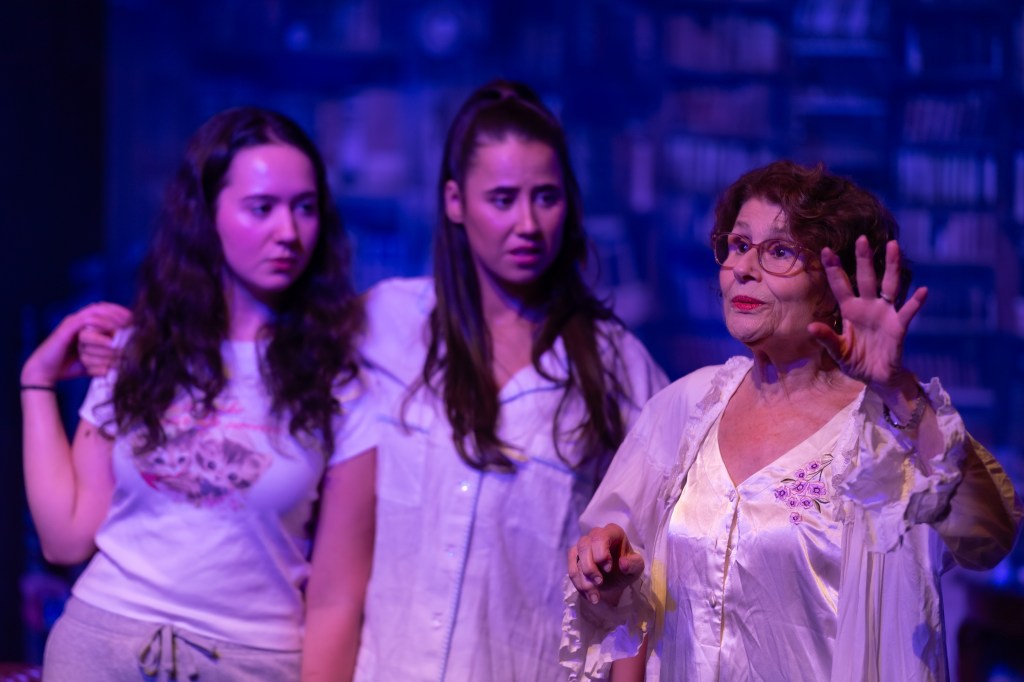
From the moment she stumbles onto the stage, Rebecca Massey dazzles as Hertha, a brilliant, quirky British physicist and electromechanical engineer. She introduces herself with flair: “There was a technical problem in the world — I fixed it.”
The play begins with monologues from our two leads — Massey and Gabrielle Scawthorn as Marie Curie — formidable figures in physics, sharp and compelling from the outset. The pair deliver enthralling performances, though Scawthorn in particular brings extraordinary emotional depth, particularly in a moment of silent agony — beating her chest as grief takes hold, wordless yet powerful.
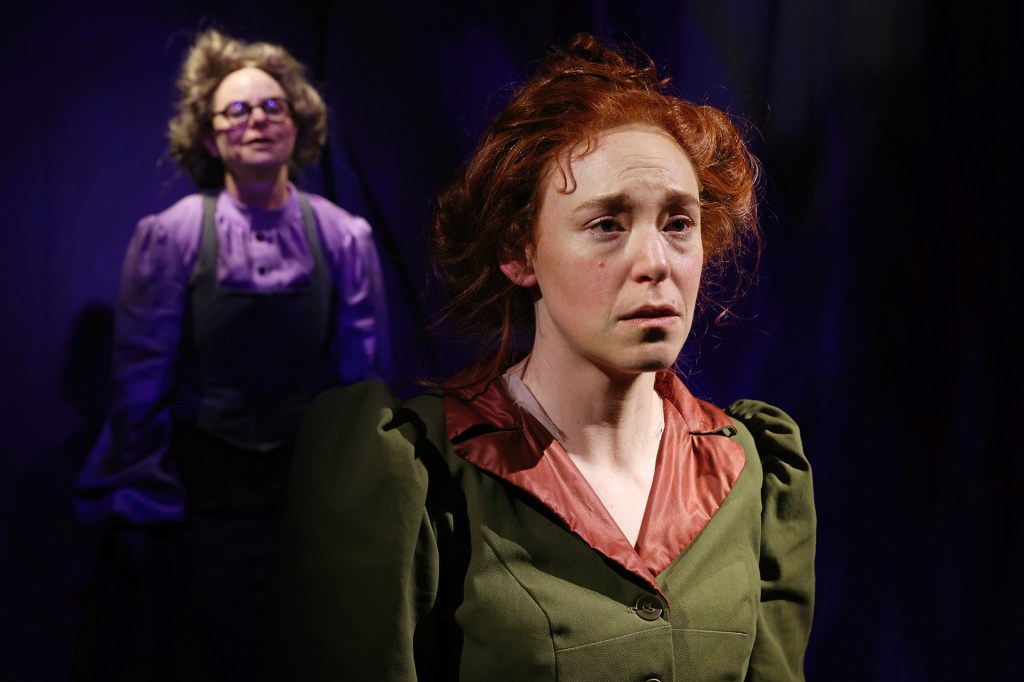
The women live in a time when it is hard simply to be female — especially a married one. Marie is a two-time Noble prize winner yet reflects on the sorrow she felt upon having a daughter, knowing the hypocrisies she’ll one day have to explain. Meanwhile, Hertha, a proud suffragette, is a woman who knows her worth, delivering laugh-out-loud lines with razor-sharp timing. She urges Marie to continue her work and return to her life. “To start a new chapter,” she says, “you need to begin turning some pages.”
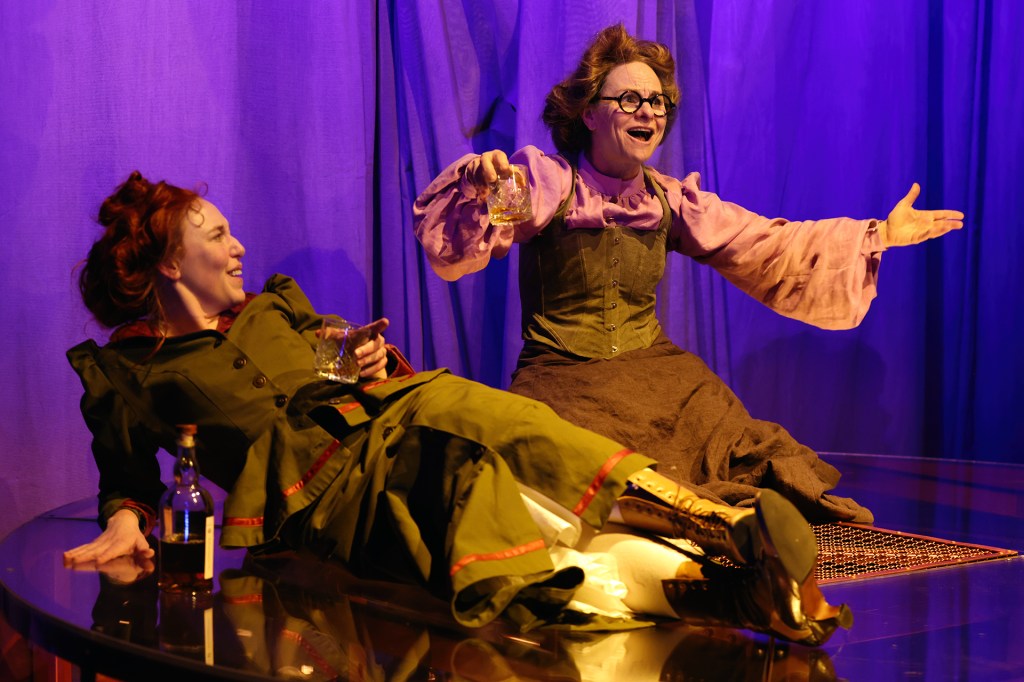
The banter between Scawthorn and Massey is electric. A highlight scene was of the two women drunk on the floor, legs splayed, passing a whiskey bottle back and forth as they try to drink away their argument.
Scene transitions arrive with a flash of darkness and sound — resetting focus, ensuring sound and lighting are in perfect harmony. There are no props; instead, the actors perform on a striking circular glass stage. At one point, a sheer curtain is drawn around it — not to obscure, but to soften, creating a tender intimacy between Marie and Hertha.
Theirs is a friendship that has weathered time and distance. Director Liesel Badorrek (Masterclass, The Glass Menagerie) brings clarity and pace to the production, using quick-fire snippets to chart the women’s lives through time — from personal milestones to world-changing achievements, like Curie’s pioneering work during WWI — intimate, quick, and full of history.
Movement coach Gavin Robins crafts a beautiful slow-motion sequence in which Marie appears to float in the sea — aided by Cameron Smith’s ethereal video projections. While Verity Hampson (The Glass Menagerie) delivers a stunning, emotionally rich lighting design. She doesn’t simply light the stage — she sculpts mood and meaning. Her shadow work is extraordinary: the production opens with filtered silhouettes of a female figure — at once ghostly and godlike — as poetry sets the tone.
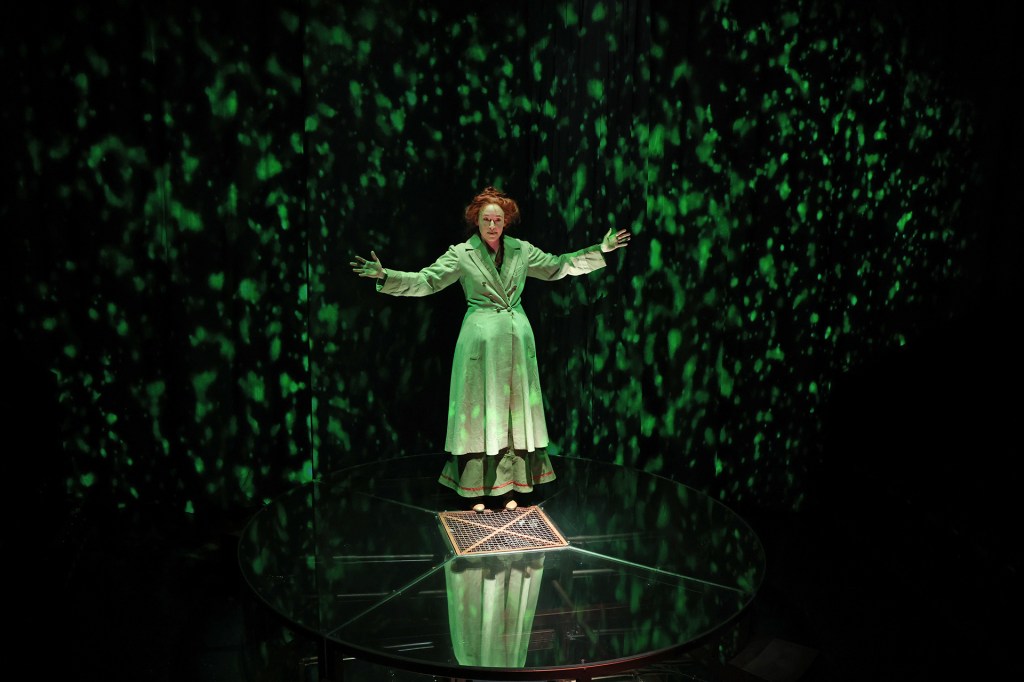
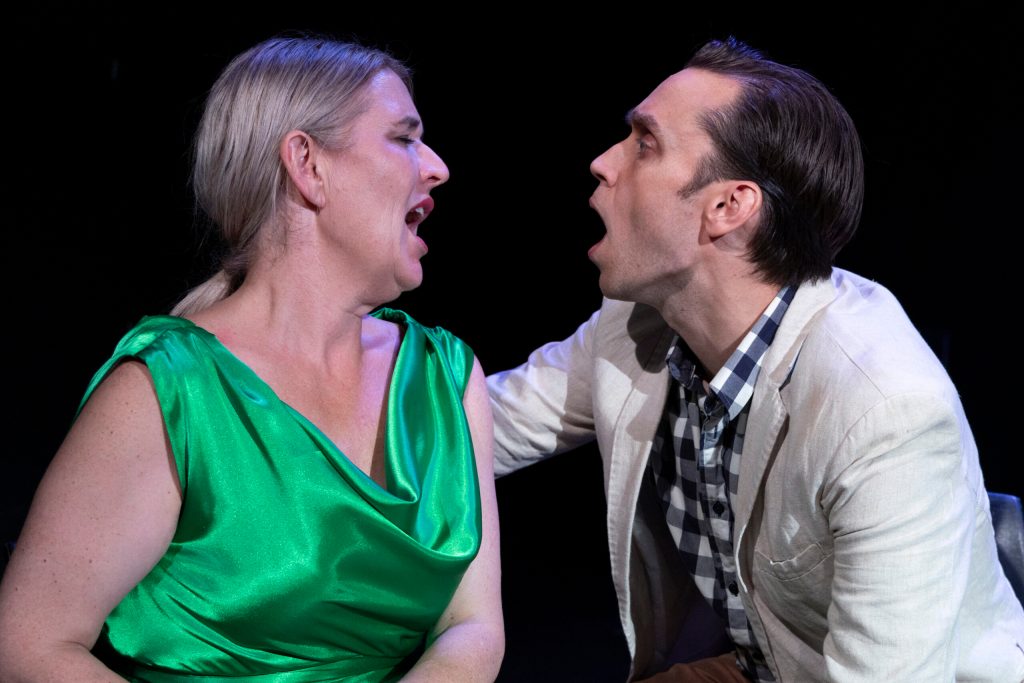
James Browne’s set and costume design is equally thoughtful. Marie’s green dress perhaps nods to her infamous element, radium. Likewise, her blackened hands are a haunting symptom of lifelong radiation exposure. It’s said, she suffered radiation sickness most of her life — her remains interred in a lead-lined coffin.
The Half-Life of Marie Curie is a moving portrait of resilience, reminding us of the power of female friendship — and the strength that comes from leaning on one another when the world becomes too much.
4.5 stars
Run time: 90 minutes (no interval).
The Half-Life of Marie Curie is playing at Ensemble until 12 July 2025. For tickets Ensemble Theatre

Curtain’s down—time to settle in for a post-show nightcap…


 BACCHUS AT THE THEATRE
Leave a comment