
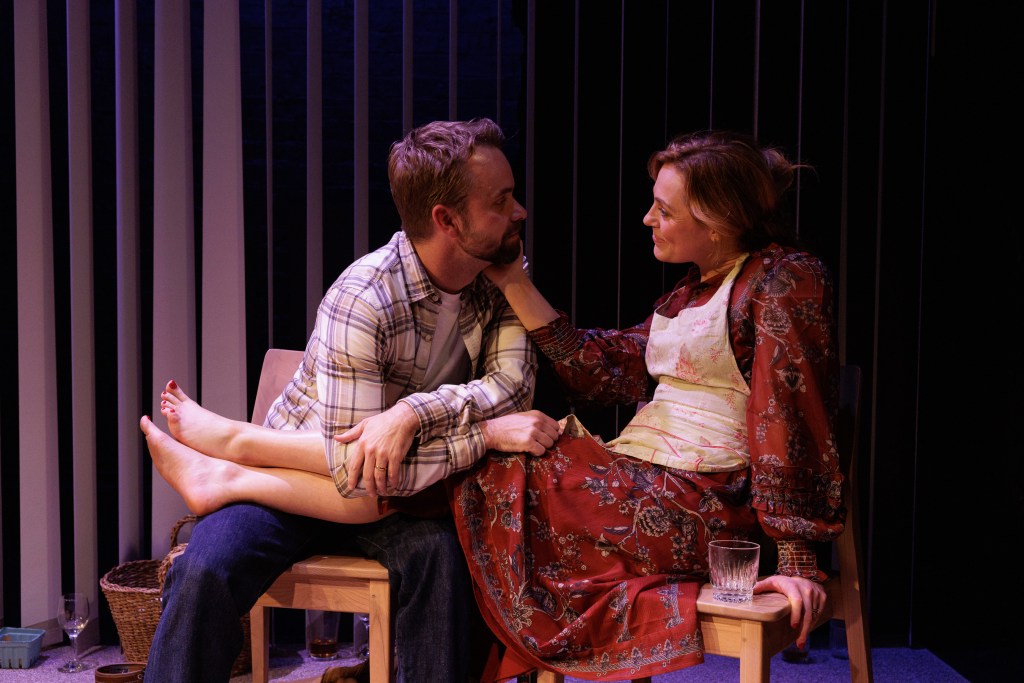
Though written nearly fifty years ago, Betrayal still cuts deep. Its themes are timeless—infidelity, deception, the quiet decay of relationships.
Rather than follow a smooth linear narrative, Harold Pinter’s story jumps through time and tells the story of an affair in the reverse order.
The play begins with the end: a pub scene where Emma and Jerry reconnect after years apart. From there, it moves backwards, revealing moments from their seven-year affair, mostly made up by secret afternoons of love making in a rented flat.
Hypocrisy lingers in the air, as despite the couple cheating on their spouses, we see a double standard between the lovers, especially with Jerry, who finds it irritating that his wife has an admirer.
Pinter is known for exploring powerplay, and we see this through the shifting dynamics of each of the characters.
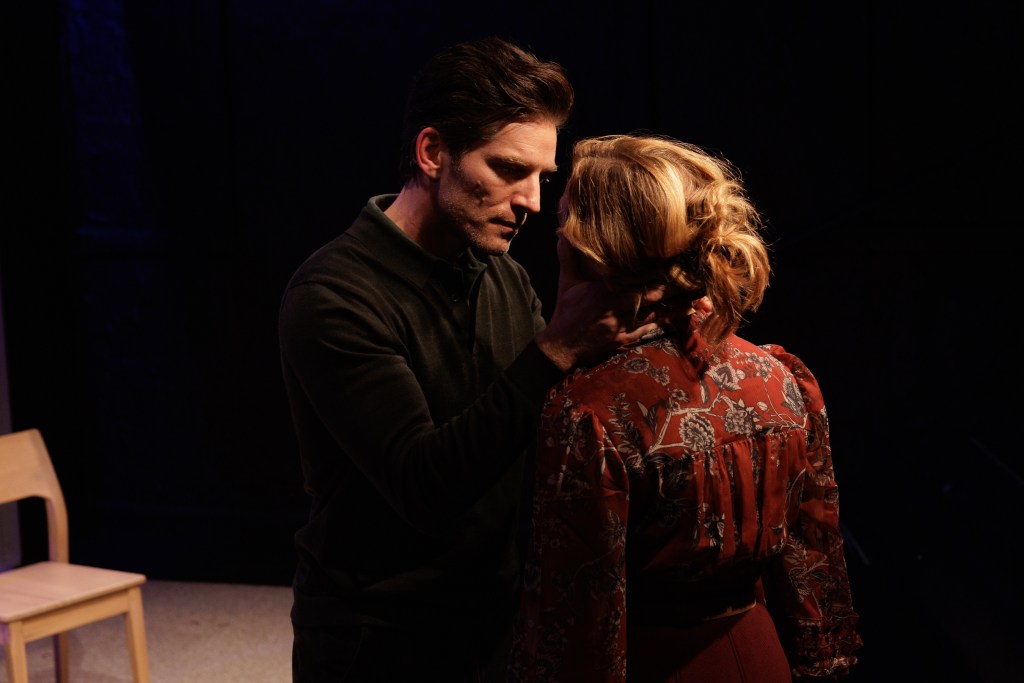
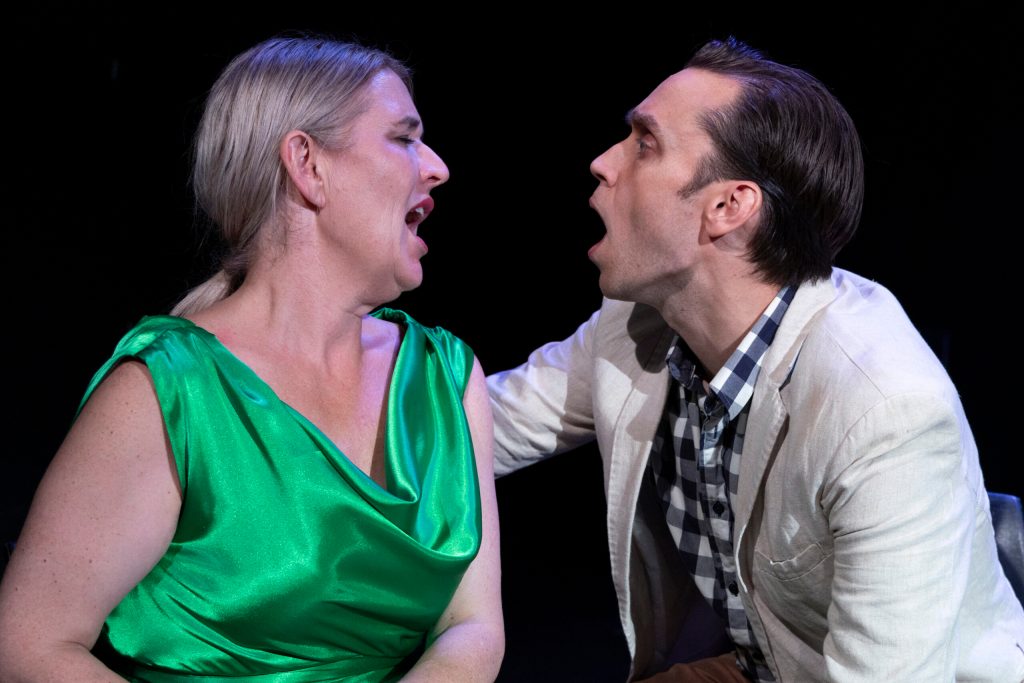
Andrew Cutcliffe brings nuance to Robert, Emma’s husband. His performance marked by subtle movements and piercing glances. There’s bitterness beneath his restraint, but also passion for his wife. You could almost feel sorry for the man—except offhand remarks hint at his own infidelities and references to violence towards Emma. Pinter doesn’t delve into this.
Ella Scott Lynch (Emma) delivers a poised, matter-of-fact performance, her voice steady but subtle hand trembles reveal a deeper sense of loss. Rifts of dishonesty build into walls of betrayal, and she and her lovers (Jerry and her husband) shift from yearning to confusion, from joy to tears.
Matt Hardie’s Jerry seems to value desire over friendship, disregarding his old friend (whose wedding he once stood as best man at), as he professes his love and pursuits Emma. His desire overriding any loyalty.
Pinter is known for creating a sense of unease, and the British playwright excels at dissecting the drama of relationships. Through love triangles, affairs and deceit, we see the disintegration of trust and intimacy. This is classic Pinter, where so much said in what remains unspoken. The famed Pinter pause is alive in every hesitation and silence is weighed with emotion.
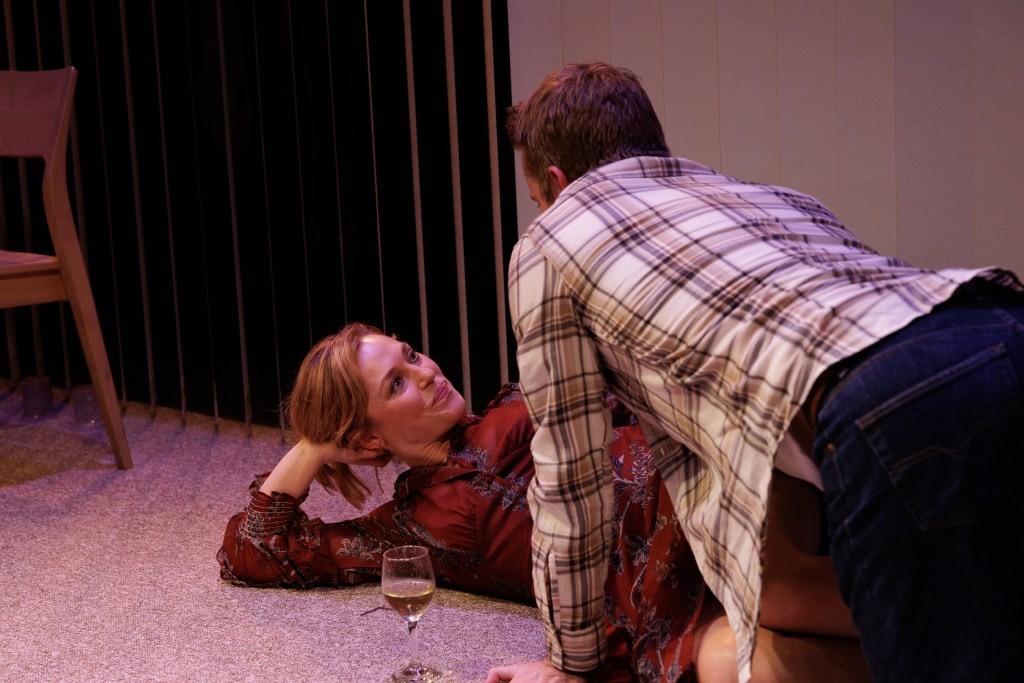
There’s tension in the refrained words; however, Betrayal was Pinter’s opportunity to expose his own romance—the story is based on his affair with BBC presenter Joan Bakewell.
Melanie Liertz’s minimalist set is deceptively simple—every piece purposeful. The distance between characters is mirrored in the physical space: two chairs set far apart become suddenly close as the conversation shifts from combative to conversational.
Director Cristabel Sved relocates the play from London to Melbourne, using adjustments to vertical blinds to mark scene transitions, with projected dates—”One year ago”—reminding us of the timeline’s reverse chronology.
The subject matter still resonates. Betrayal, it’s something most of us have known, whether from a lover, a friend, or even within ourselves. It leaves a mark. This production ensures you leave the theatre with much to reflect on. Betrayal is a thought-provoking play that sparks conversation long after the final scene.
4 stars
Presented by Sport For Jove, Betrayal is playing at the Old Fitz Theatre until 10 August 2025.
For tickets visit: Old Fitz Theatre

Looking for more? Check out the late night show Three (Short) Plays is an opportunity to see Tennessee Williams‘ lesser known work brought to life.

 BACCHUS AT THE THEATRE
Leave a comment