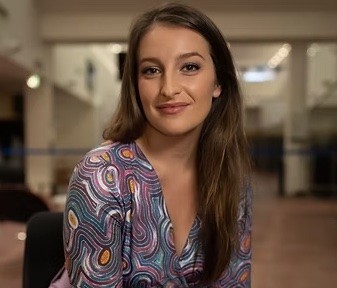
In conversation, Brittanie Shipway speaks with conviction and clarity about the future of Australian theatre.
From performer to director, playwright to dramaturg, she is reshaping the industry—centering culture, joy, and collaboration over convention.
Shipway is a rising presence across Australia’s mainstages. Her performance credits span roles at the Sydney Opera House as Hermia in The Lovers (Bell Shakespeare) and Margaret Whitlam in The Dismissal, as well as lead in The Sapphires, Kinky Boots and Jesus Christ Superstar. Many will also remember her from Season 3 of The Voice, where she turned all four chairs. As a writer-performer, she made her debut with A Letter for Molly at Ensemble Theatre (Sydney) and also wrote for Senser at Theatre Works (Melbourne).
“I’m riding a wave at the moment,” Shipway says. “It’s scary and intense, and there’s not a lot of free time, but I’ve been incredibly lucky, especially over the last couple of years, to have some level of autonomy over the kind of work I pick and the projects that really excite me.”
When we spoke, she was immersed in several creative ventures, including rehearsals for Once On This Island, casting for Witches of Eastwick, and acting as Resident for Waltzing the Wilarra, which is touring regionally across Australia. In the background, she’s also developing a new comedy and progressing her musical Yellow Rock.
“It takes a lot to give all these different projects the attention they need,” she admits, “but it’s a blessing to be able to work in different capacities within the same field. It’s given me a more nuanced perspective and appreciation for the different roles that I’m taking on.”
This year marks a defining shift, with Shipway directing all three musicals. Though new to directing, she’s embracing this new addition to her wheelhouse, wholeheartedly.
“Going into directing has surprised me, the level of time and care it takes to put on a showing in pre-production. I always thought pre-production was important but then you would get to rehearsals and refine your concept or ideas. You can to some level, but really the decisions you make 6-8 months before you hit rehearsals, they define the work and the project.”
Her directorial debut, Once On This Island at Hayes Theatre Co., is the culmination of creative trust. “I’ve worked with all three producers before.” Stephen Kramer was the music director for The Dismissal. Keith Murr produced Big Fish (her first professional performance credit). And Sam Dukka works at the Hayes.
Once On This Island is a musical retelling of a Caribbean folktale, loosely inspired by Hans Christian Anderson’s The Little Mermaid, in a poignant tale of love, sacrifice, and transformative.
“Dramaturgies have been my bread and butter, these last few years but I’ve also written plays and a musical, so I have an insight into what that process is.”
Shipway’s collaborative style is evident in the production’s evolution. “I thought that I would have a plan A, B and C ready in pre-production, but things grow beyond that. It’s been lovely to let go of old ideas and work with the creative team.”
The team includes Set Designer Nick Fry and Choreographer Leah Howard. “Nick’s created a visual playground and Leah has created a safe environment for all of the cast to bring in their cultural dance practices. I wept the first time I saw it—it’s so beautiful, what they came up.”
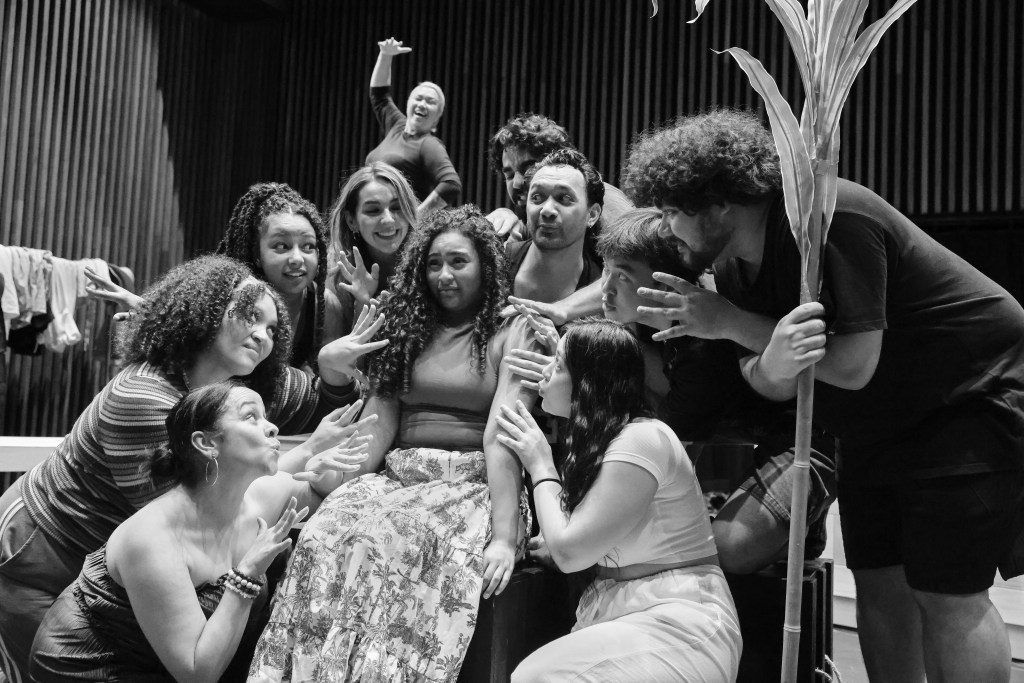
During the interview, she explained that audiences expecting a Broadway-style revival may be surprised. Shipway has cast performers from islands around the world—Tonga, Samoa, New Zealand and Aboriginal communities. Each will perform in their own accent, wearing costumes that acknowledge where they’ve come from.
This cultural care also informed her approach to Waltzing the Wilarra, a First Nations story by David Milroy. Set in the 1940s, the musical explores love and connection, in the midst of a divided, segregated society.
“The first thing I did was talk to David—find out why he wrote it, what he wanted from this new life for the play. This work has only had one life before and I wanted to know what this show would look like for him, ten years after it had first been produced. We assembled an incredible cast, mostly Aboriginal, but from all different walks of life, and different countries around the Island. I let their processes lead.”
Shipway is proud of her Gumbaynggirr heritage (she’s also of Turkish descent) and passionate about sharing stories that extend beyond trauma. “We’re so much more than the last couple of hundred years of history. Cultural storytelling is not cheap entertainment—it is vital, it’s the lifeblood to culture. It has language, morals and ethics.”
In 2022 she was awarded the prestigious Dreaming Award from Creative Australia for her musical Yellow Rock (which is currently in development). The Gumbaynggirr song circle seeks to share Dreaming stories both old and new with the next generation of deadly kids.
Shipway hopes it inspires the community. “I want kids to be able to see Yellow Rock and say, ‘I could write songs’ or ‘I’d really love to get into lighting’. I want to remind communities that theatre has room for everyone.”
Promoting shows with black excellence is important. “This industry needs a shake up and we’re not going to get it by box ticking—we need to smash the box. I’m not interested in colourblind casting or cookie-cutter theatre. I’m interested in works of scale, that celebrate who we are, and all the different corners that make up Australia.”
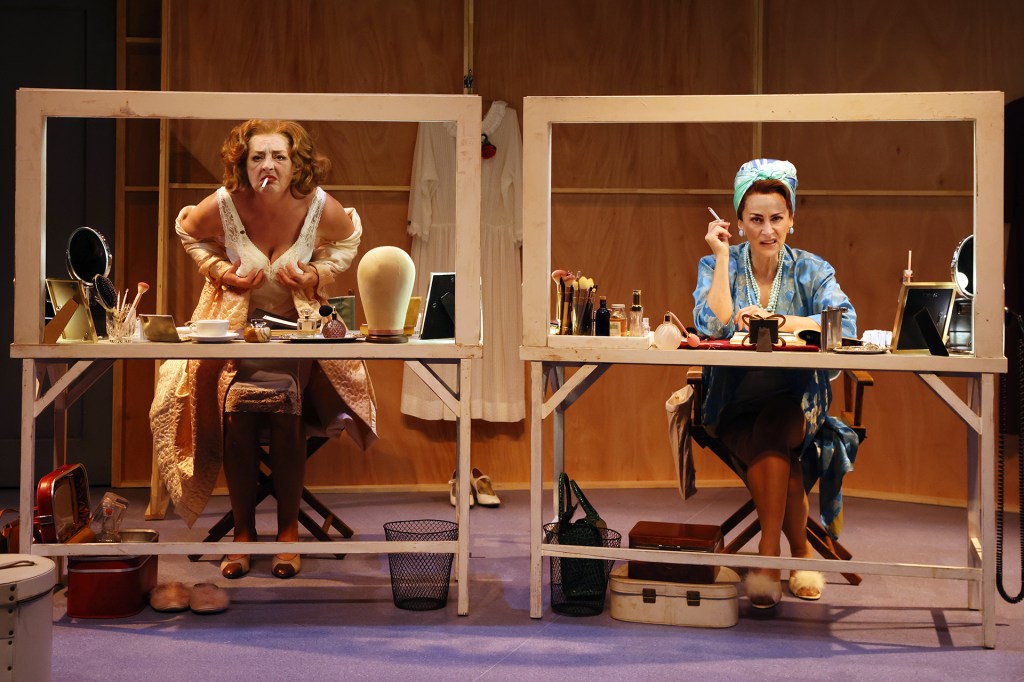
Casting for Witches of Eastwick is still underway, and Shipway is seeking out: “incredible singers, amazing actors—they have a lot of craft, and they need to know who they are and what their approach to the characters will be.”
The supernatural comedy will be presented as part of Neglected Musicals— a theatre initiative that stages never (or rarely) seen musicals, scripts in hand, with piano accompaniment, after only a day’s rehearsal. It’s a rare window into what theatre looks like as you are making it.
“I’m not interested in portraying those witches as silly, gullible, innocent or naïve. I want strong women who, over the course of the show, learn how to come into their own power. Each of the women want different things from ‘Darren’—stability, sexual prowess, intelligent conversation—but the lesson they learn is they don’t need this man in order to have those things in their lives.”
For Shipway, balance is a lesson in progress. ““The more you understand the kind of artist you are, the more you’re able to create work you’re proud of—the kind of work you’ve always wanted to see. Each project is a creative darling,” she reflects. “Each one needs and deserves attention—but not all at once. I’m still learning how to give each child its time.”
As our conversation draws to a close, I ask: what inspires her most?
“When I can turn my analytical brain off and just enjoy the work. When I’m in the audience and I can attach to the characters and empathise with them. That’s what the art of theatre is—allowing an audience to step into somebody else’s shoes and their life, for a couple of hours. When I forget the technical elements, that’s when I know the show is really special.”
For tickets to Once On This Island visit Hayes Theatre Co. Witches of Eastwick visit Neglected Musicals and touring dates for Waltzing the Wilarra visit HIT Productions

 BACCHUS AT THE THEATRE
Leave a comment