

The Face of Jizo premiered at the Old Fitz Theatre (Sydney) in 2023. It now returns to the stage to mark 80 years since the atomic bombings of Hiroshima and Nagasaki, and in celebration of the 2024 Nobel Peace Prize.
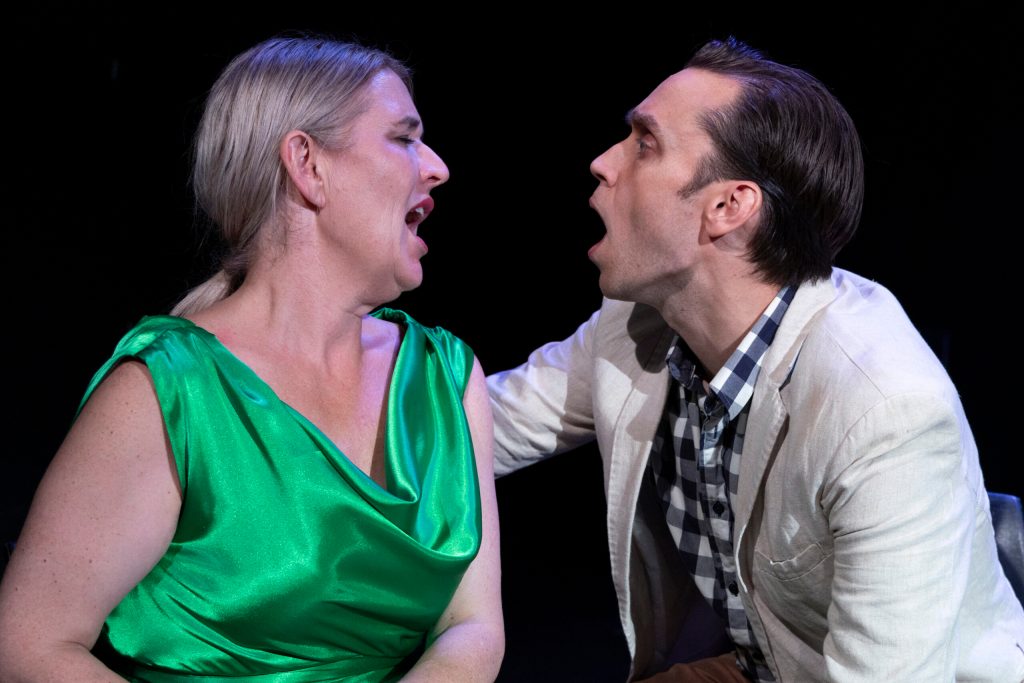
Co-directed by Shingo Usami (Apple TV+’s Invasion) and David Lynch, and translated by Australian writer Roger Pulvers, this production reunites the original cast and creative team, including Mayu Iwasaki as Mitsue, and Usami as Takezo.
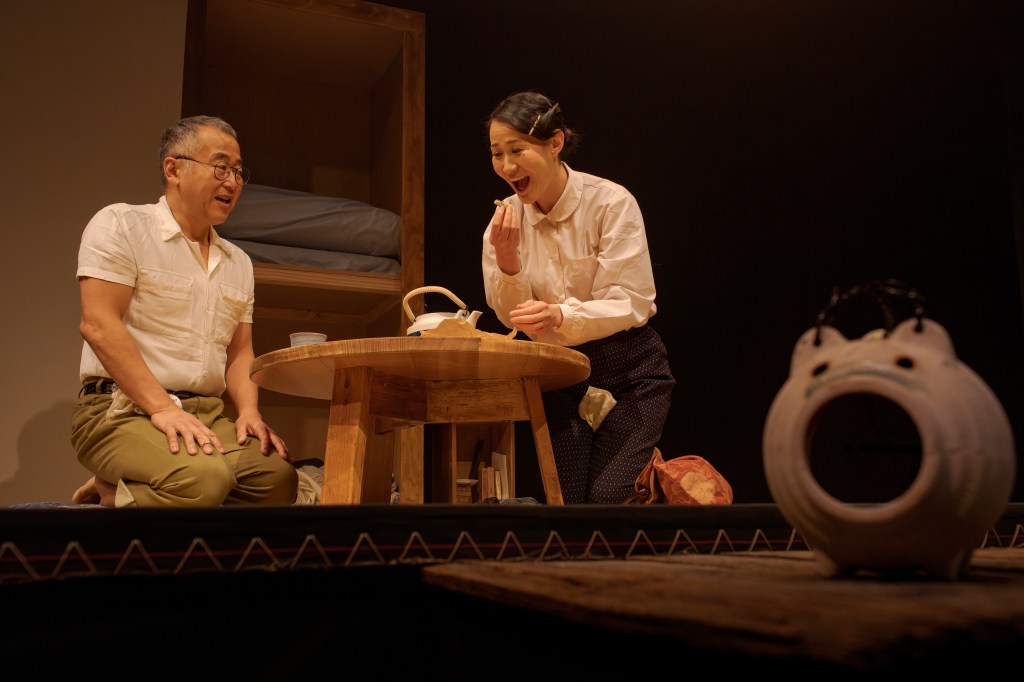
Set three years after the atomic devastation, the story centres on Mitsue, a young librarian living with her father Takezo. It opens with Takezo urging her to take cover in the cupboard during a storm. At 23, Mitsue is embarrassed by her fear, but her father reminds her that thunderclaps and flashes of lightening stem from memories of the bomb.
A poignant parent-child drama set in post-war Hiroshima, The Face of Jizo explores survivor’s guilt, memory, and the resilience of love. Written by Hisashi Inoue, one of Japan’s most esteemed playwrights, the dialogue is often times poetic—“my existence came from the faint whispers of your heart”—while remaining gentle and heartfelt.
The father-daughter exchanges are tender and moving. Takezo longs for his daughter’s happiness, encouraging her to live and love. But in the aftermath of war Mitsue carries the heavy burden of survivor’s guilt—“who am I to make a claim on happiness?”.
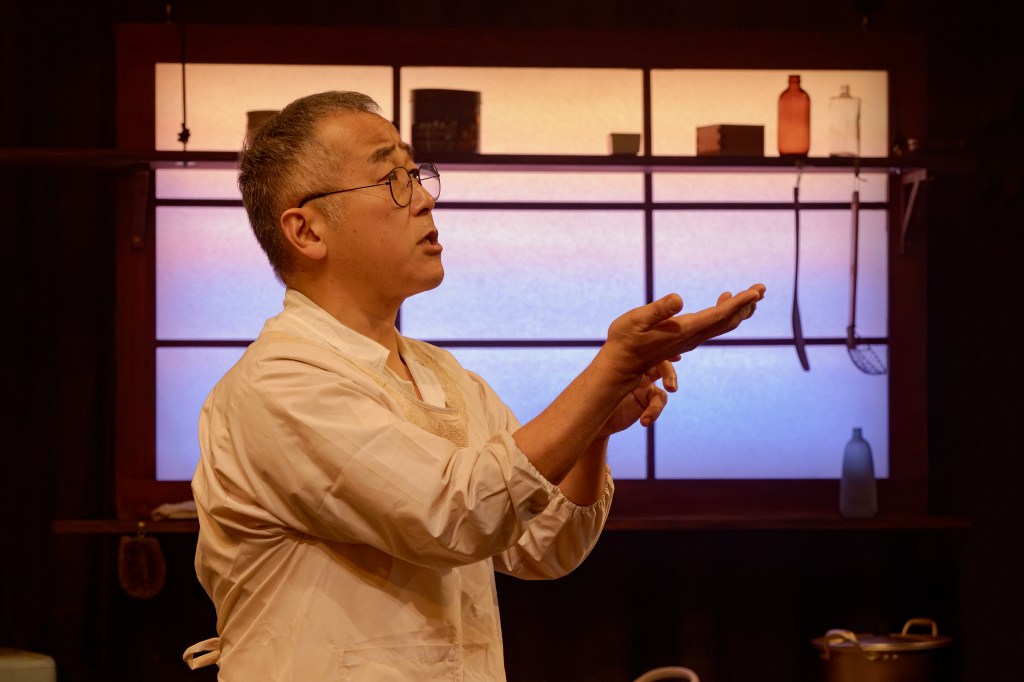
While the annihilation of Hiroshima remains one of history’s most devastating events, this narrative does not dwell on statistics. Instead, it renders history on an intimate scale. Inoue imbues compassion for the citizens of Hiroshima through his words. He turns back time and softly shares stories of the past, painting a picture of the city before its obliteration.
Silence heightens the impact, yet moments of levity are deftly woven throughout, easing the weight of the play’s emotional depth. Both actors reveal layers of character, shifting from laughter to anguish across the 80-minute production. Usami plays the role with warmth and playfulness, and Iwasaki doesn’t hold back on releasing the pain. Their relationship feels very real and draws us in: a loving father-daughter bond with familial annoyances yet anchored by tenderness and care.

Here design and dramaturgy entwine: thunder and lightning that haunt Mitsue are mirrored in Matt Cox’s use of the backlit set window, with searing flashes of white, evoking the bomb’s blinding power. Tobhiyah Stone Feller’s set extends the metaphor—beginning as an authentic Japanese interior with tatami mats, sliding doors and a modest kitchen, before being scattered with wreckage: a grandfather clock, statues, tiles—objects forever altered by the bomb.
Good theatre awakens empathy, and this production achieves it profoundly. Many in the audience were visibly moved to tears. Their story is heartbreaking and Takezo reminds us, it was just one account within a city of 350,000 people. Fewer than ten per cent of the causalities were military. What befell Mitsue and Takezo is representative of the fate of hundreds of thousands of people maimed and killed in the two cities. As Takezo says, “It was so inhuman, what people did to people just like them.”
Many of us have grown numb to war. Atrocities saturate our newsfeeds daily. For those of us in Australia, untouched by war’s immediacy, it can feel remote, stripped of meaning. That should never be the case. The Face of Jizo restores humanity to atrocity.
5 stars. This is a show everyone should see.
Run time: 80 minutes (no interval).
Recommended for ages 12+. Contains mentions of death, survivor’s guilt, haze smoke and strobe lighting.
Presented by Omusubi Productions and Seymour Centre, The Face of Jizo is playing now at Seymour Centre until 7 September 2025.
For tickets Seymour Centre


 BACCHUS AT THE THEATRE
Leave a comment