
Written by Tennessee Williams, The Glass Menagerie draws heavily from the playwright’s own troubled life. The play begins with Tom Wingfield (Danny Ball), the narrator, addressing the audience and framing the story as a “memory play.” He emphasises its sentimental and nonrealistic nature, noting that memory takes poetic license, allowing for a heightened dramatic experience.
Memory plays require a narrator — someone whose recollections guide the audience through past events. Williams masterfully employs this device to heighten dramatic tension and reveal the manipulative power of memory. As Tom introduces the Wingfield family, his mother and sister enter the stage in slow motion, an atmospheric touch that immediately showcases Williams’ stylised approach to movement.
Regarded as one of the greatest playwrights in American literature, Williams was known for crafting deeply emotional and complex characters. The Glass Menagerie continues his tradition of portraying the struggles of marginalised figures, offering an unflinching yet poetic view of human vulnerability. Directed by Liesel Badorrek (Master Class), the entire cast delivers outstanding performances, each bringing nuance and depth to their roles, making this production both powerful and profoundly moving.
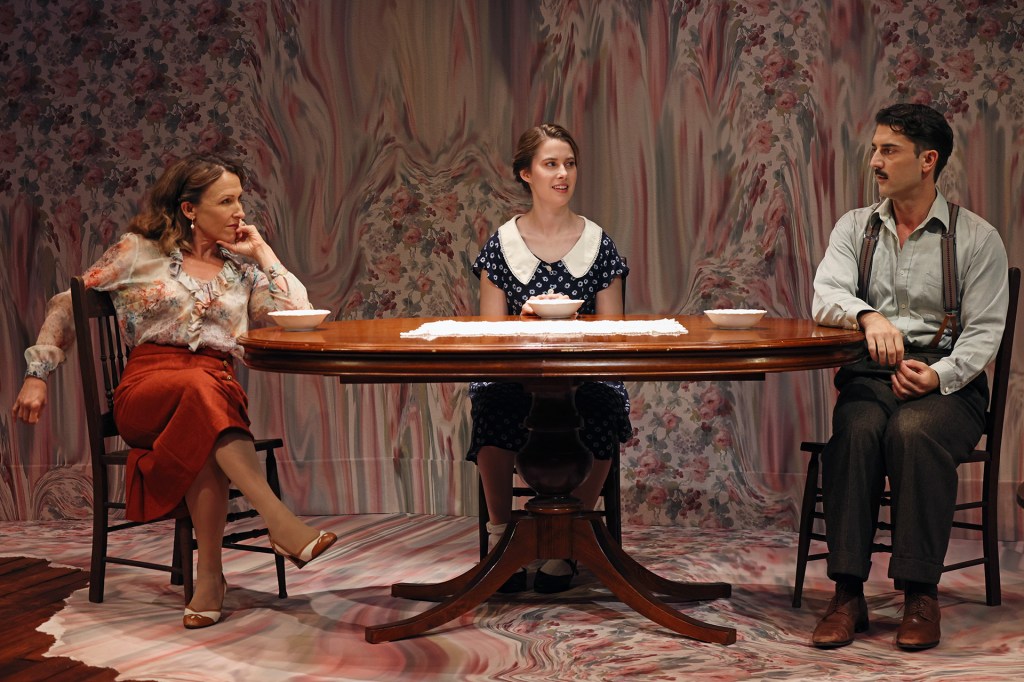
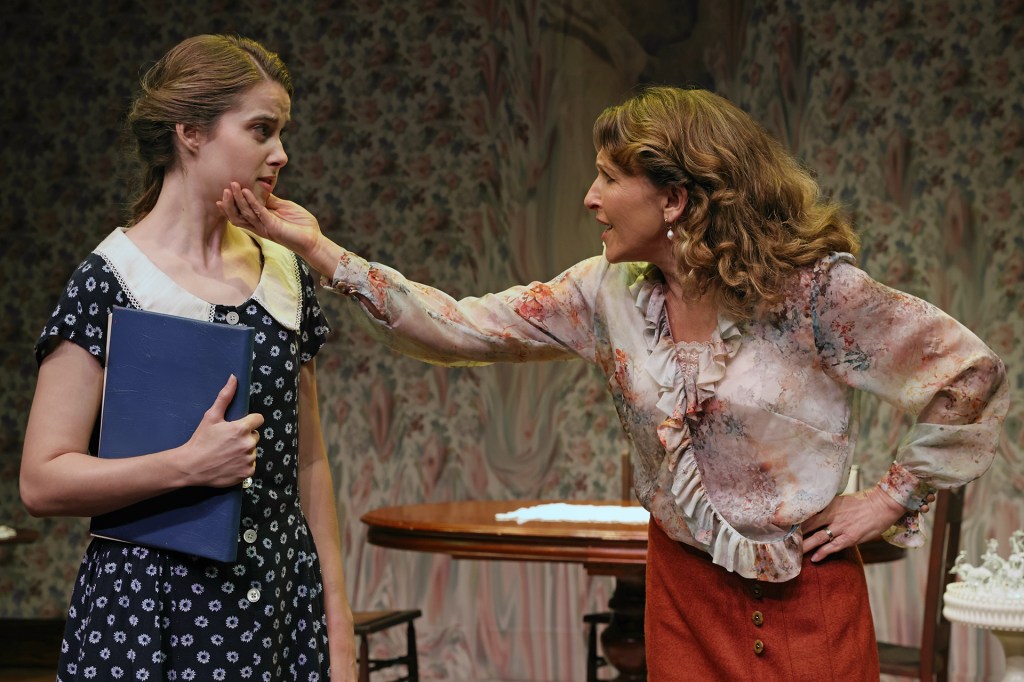
Blazey Best delivers a convincing performance as Amanda, the mother — confident and assured, yet burdened by life’s disappointments. However, she clings to optimism, whether to convince herself or to encourage her children. She repeatedly tells Laura to “stay fresh and pretty” as she struggles to make ends meet and worries about an uncertain future. A former Southern belle, Amanda is overly dramatic, calculating, and obsessed with securing a gentleman caller to rescue them from hardship.
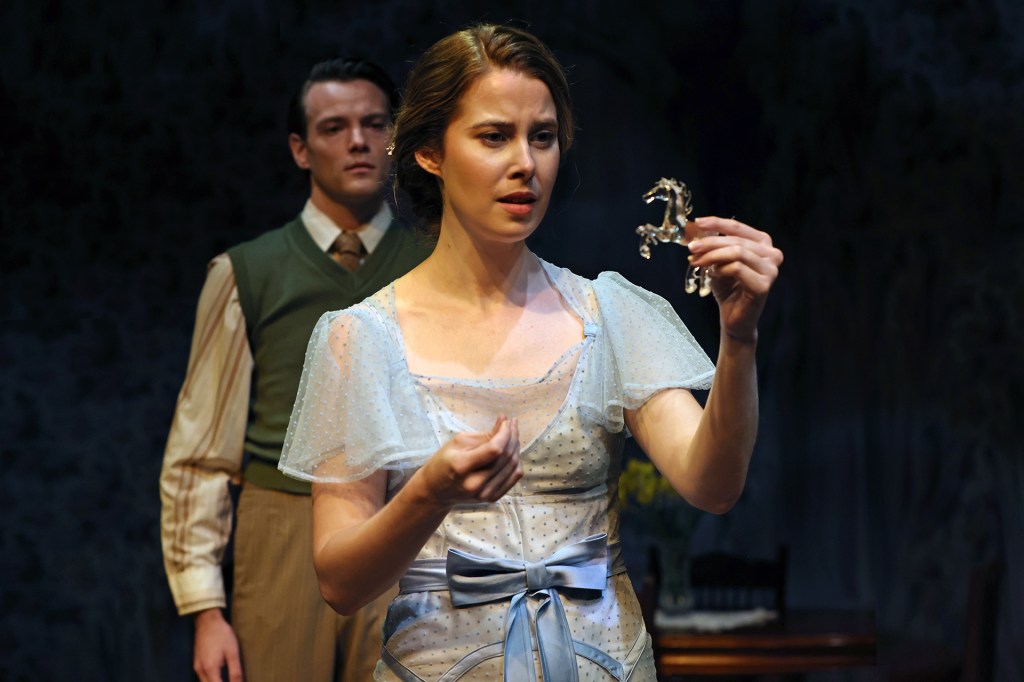
Bridie McKim’s portrayal of Laura reveals a character who moves with difficulty, and we soon learn she is a “cripple” — though Amanda insists it is merely “a little defect.” Innocent, socially awkward, and lost in her own world, Laura’s character blossoms in Act Two when she allows the possibility of romance to enter her life. She never asks for change, making her fate all the more poignant and heart-wrenching for the audience when her chance at happiness slips away.
Tom toils away in a monotonous job, longing for adventure and escape, much like the characters in the films he watches to pass the time. Trapped by poverty and the weight of responsibility for Amanda and Laura, his internal conflict is palpable. As our narrator, Ball shares the story with a blend of nostalgia and regret.
Act Two brings the long-anticipated arrival of the gentleman caller. Tom Rodgers, as Jim O’Connor, delivers a heartfelt and genuine performance, making him both likable and a believable match for Laura. His portrayal is sincere and caring, adding depth to the fleeting hope he offers her.
Spoken in strong Southern accents, Williams’ dialogue flows like butter — melodic and evocative. His writing paints vivid imagery, rich in lyricism and emotion.
Grace Deacon’s set design authentically captures the languishing Wingfield family from the 1930s. A tattered rug hints at the decay of the family’s world, and the wallpaper dripping onto the floor adds to the dreamy, nostalgic aesthetic. The two-tiered set, complete with fire stairs leading to a balcony, symbolises Tom’s constant yearning to escape. This is a world where women must depend on men, and though the family’s father abandoned them long ago, his looming presence remains. His large image on the wall serves as a haunting reminder of his absence and the weight of his memory.
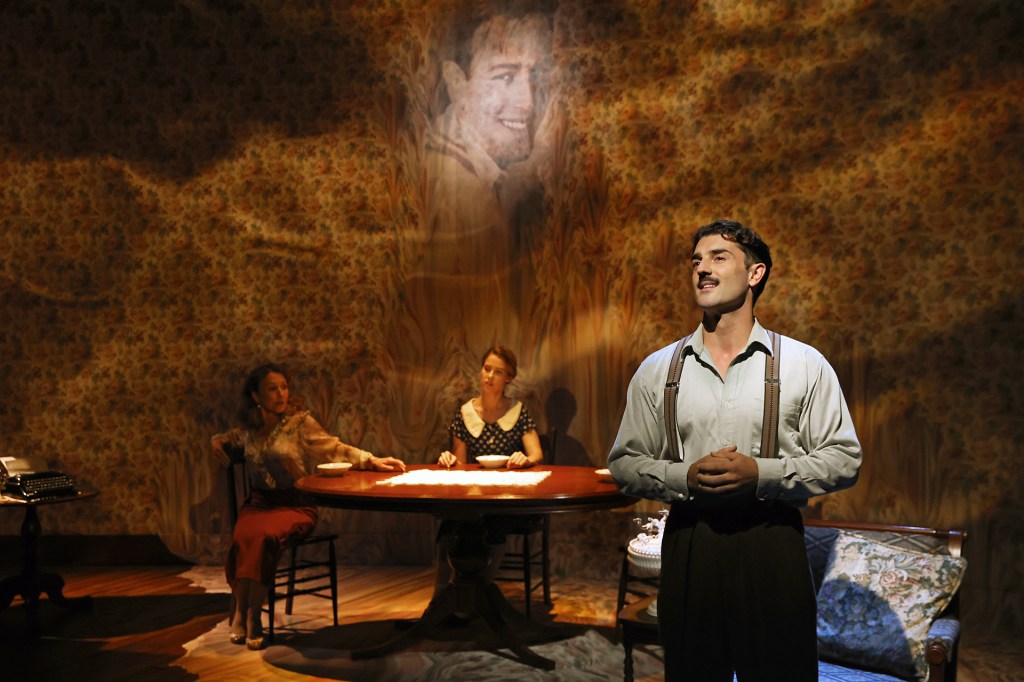
Lighting designer Verity Hampson enhances the play’s dreamlike quality with dim, atmospheric lighting. During a pivotal argument between Amanda and Tom, their shadows loom large on the wall, visually amplifying the tension. Hampson also masterfully spotlights the delicate, rotating glass menagerie, a collection of fragile glass animals symbolising Laura’s vulnerability.
Music and sound by Maria Alfonsine is wistful and melancholic, with the aged, crackling sounds of the gramophone reinforcing the play’s nostalgic tone. Deacon’s costume choices perfectly align with the era, with clothing even serving as a comedic device — particularly in Act Two, when Amanda and Laura don their attire for the gentleman caller’s visit.
Poignant and deeply moving, The Glass Menagerie beautifully encapsulates the passage of time. It balances fragility with the combustible tension within the Wingfield family, leaving a lasting impression that lingers well beyond the final curtain.
Five stars.
Run time: 2 hours and 30 minutes (including interval).
The Glass Menagerie is playing at Ensemble Theatre until 26 April 2025.
For tickets visit Ensemble
Curtain’s down—time to settle in for a post-show nightcap…




Leave a Reply