
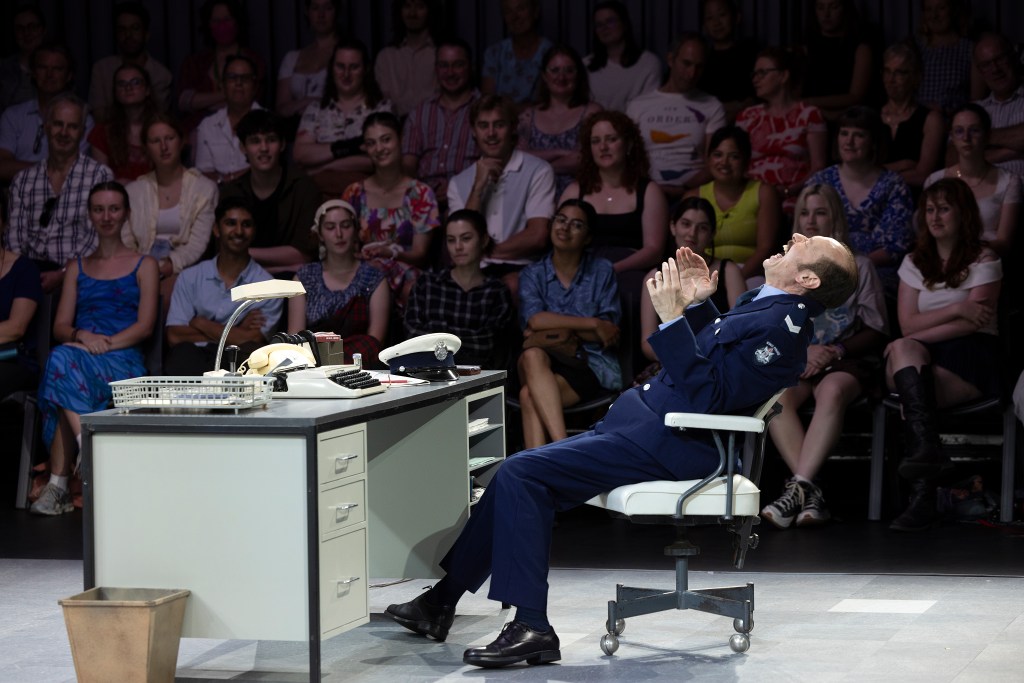
One of David Williamson’s earliest plays, The Removalists premiered in 1971. Based on a true story the playwright heard from a removalist he was assisting one day, the play explores the darker sides of power and masculinity. Directed by Anne-Louise Sarks, Artistic Director & Co-CEO of Melbourne Theatre Company, this revival takes the playwright’s iconic, confrontational script, recreates a 1970’s set, and powers forward with a strong cast and a story that remains deeply relevant today.
William McKenna plays new recruit Constable Ross. Wearing knee high socks, he bounces up and down, eager to get into some proper police work. He is a complete contrast to Sergeant Simmonds (Steve Mouzakis), who has been on the force for 23 years-without ever pulling a gun or making an arrest. Mouzakis commands the stage—perfect in the role of the older sergeant, with a vocal range that masterfully fuels his domination and authority. The entire cast is brilliant, but it’s Mouzakis who steals the show, excelling in timing, pace and delivery.
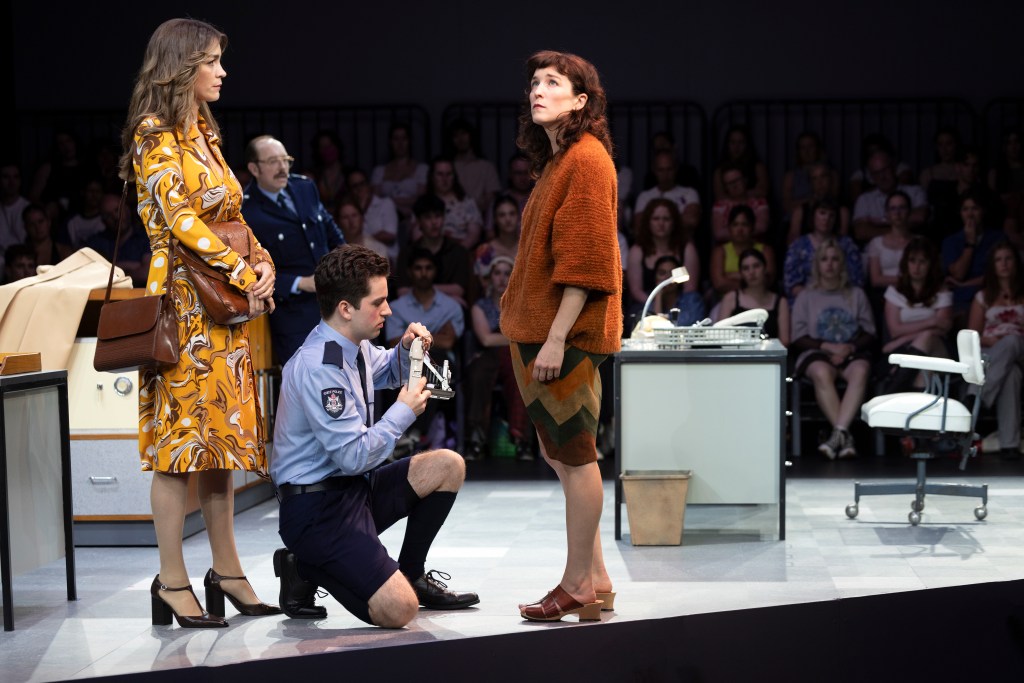
When Kate (Jessica Clarke) and Fiona (Eloise Mignon) arrive to file a police report against Fiona’s abusive husband, Simmonds plays the role of the charming tough cop—eager to help, offering to arrange a removalist and assist Fiona in moving out. But beneath the surface, Simmonds is the kind of officer who gives the entire force a bad name. He’s a sleazy, crooked cop who shamelessly abuses his position, his narcissistic tendencies convincing him he can act without consequence. His appalling attitude is summed up in lines like, “Never arrest the wife basher if the wife is still warm.”
There are many scenes within the play that will make women feel uncomfortable, particularly one in which Simmonds inspects Fiona’s bruises. This is the 1970s—there are no female officers present, and no care or privacy is given. Leering at her, telling her to lift her skirt, Simmonds takes advantage of the ‘inspection’ to touch Fiona. He later tells Ross, assisting with the move will be their chance to “get their end in”.
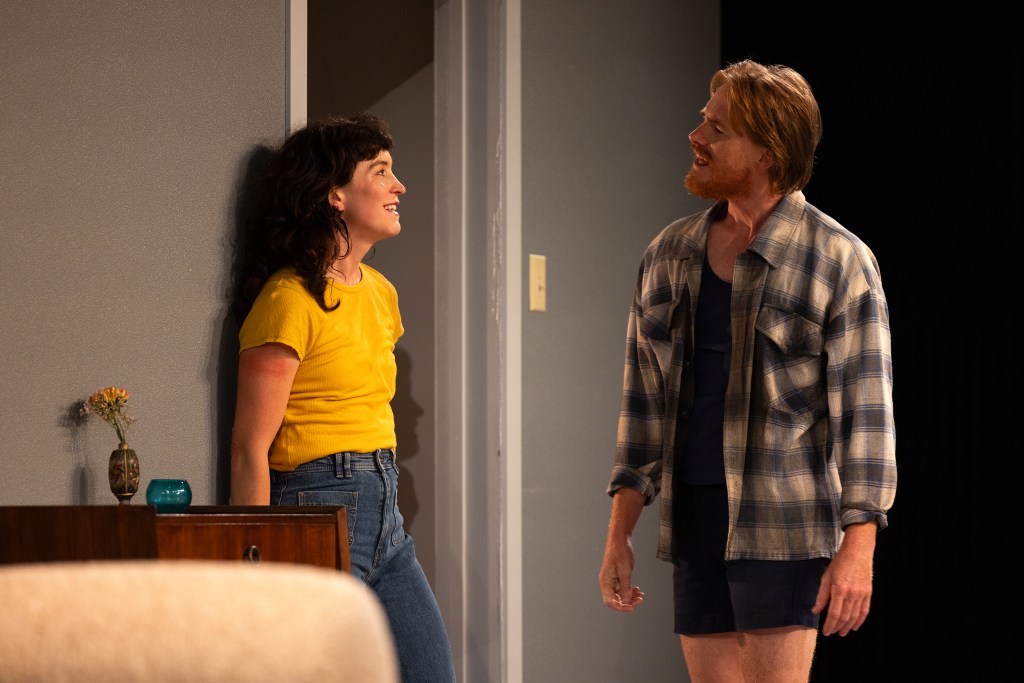
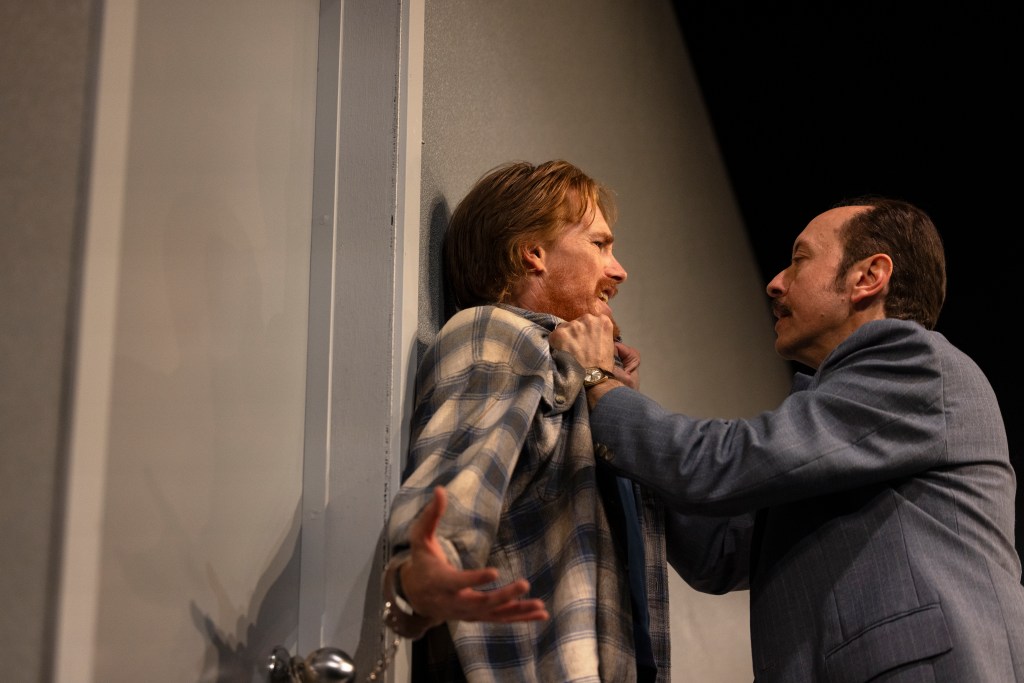
Covering domestic violence, police brutality, and abuse of power, the drama tackles heavy, dark subject matter. We witness the worst side of the male ego, with a hot-headed young police officer, a malignant older sergeant, and an abusive, deadbeat husband—each convinced they’re in the right.
Fiona’s husband Kenny (Michael Whalley) is vile—believing that an untidy kitchen is reason enough for a beating, which he disturbingly refers to as “love pats”. His mistreatment of his wife almost steers the audience toward a he-had-it-coming mindset but that, in itself, would make us no better than the men in this play.
Williamson’s work is compelling for its relatable, sharply observant portrayal of real people and situations, and Martin Blum’s performance as the removalist (a role Williamson originally played) exemplifies this. By turning a blind eye to the violence, Blum provides levity, breaking the tension while deadpan underscoring the serious business of moving.
When Sergeant Simmonds declares, “I haven’t left a bruise in 23 years,” and screams, “Self control is a test of man”, you know the story is about to spiral further into darkness. This play is undeniably violent, but the presence of fight director Nigel Poulton ensures the action is carefully choreographed. With so much violence, the silence that follows becomes even more unsettling. Sounds, movements and sharp dialogue have a visceral impact on the audience—who gasp, flinch and lean back, as if trying to emotionally dodge Williamson’s words.
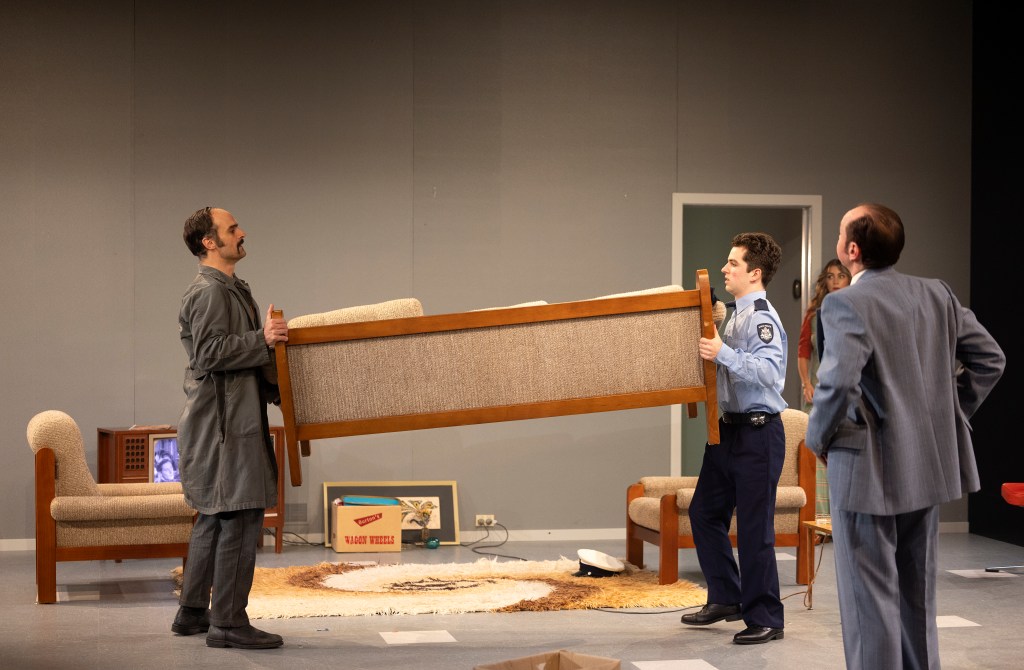
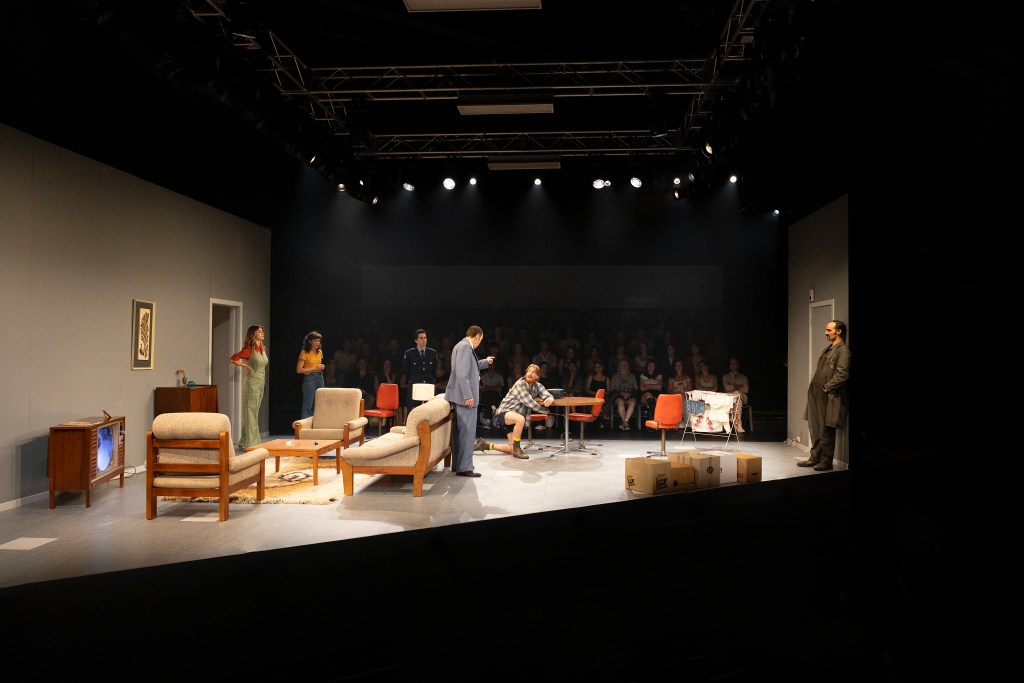
Costumer Designer Matilda Woodroofe leans into 70s fashion, especially for the sisters, with vintage print dresses and bell-bottom jeans. Set Designer Dale Ferguson effectively recreates the 1970s in the staging—from a police station to a living room with retro furniture and analogue technology. The performance runs for a gripping two hours (no interval), with set changes occurring in full view. This gives the audience a rare glimpse behind the curtain as the cast and crew work swiftly to transform the stage. At one point, Mignon even sits center stage while a makeup artist applies bruises to her.
Audience members who would like to get closer to the action might like to consider the alternative on-stage seating offered for this play. The Removalists is set in a traverse—or “alley”—stage layout, where audience members sit facing each other with the performance unfolding between them. It’s a unique, close-up experience.
Fifty years ago, this play shocked audiences. Today, it’s still disturbing—and sadly, with domestic violence statistics even higher, it feels more relevant than ever. Williamson writes about social issues that reflect Australia back to its audience, and it’s disheartening to realise how little has changed. Uncomfortable, gritty and raw—how long will this production continue to mirror society?
Five stars.
The Removalists is playing at Melbourne Theatre Company until 17 April 2025.
For tickets visit Melbourne Theatre Company





 BACCHUS AT THE THEATRE
Leave a reply to Angela Cancel reply