
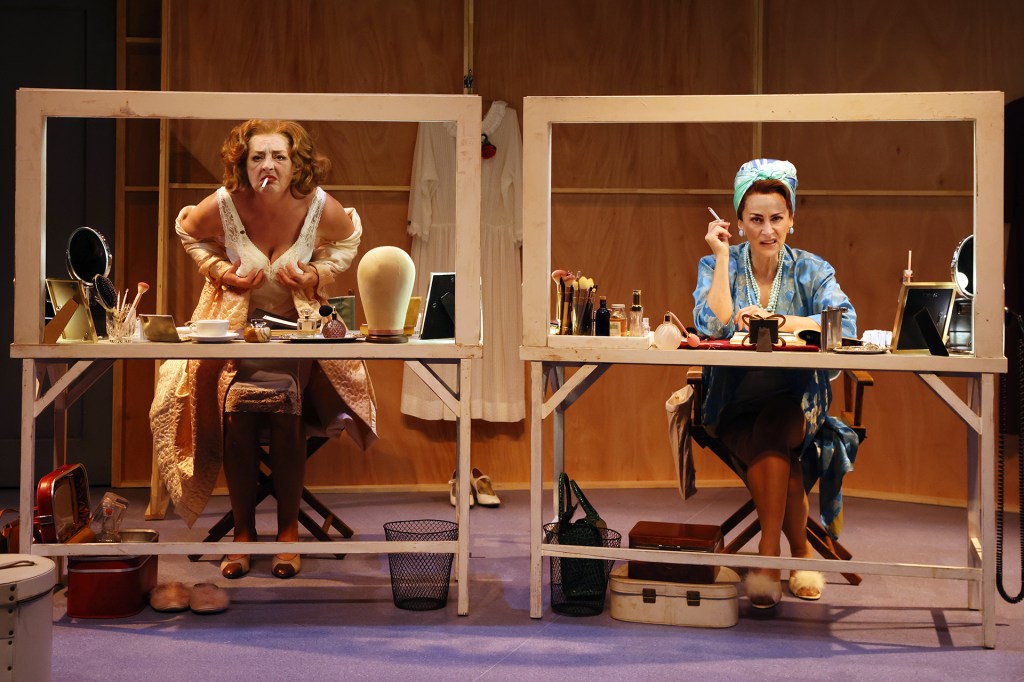
The rivalry between Joan Crawford and Bette Davis is legendary. These Golden Age Hollywood stars were opposites in many ways, a dynamic brought sharply into focus in Bette & Joan. The play exposes the feud between the two during the filming of What Ever Happened to Baby Jane?
Written by Anton Burge, a British playwright whose work often centres on the lives of historical leading ladies, Bette & Joan moves beyond the feud and to explore the women’s troubled backgrounds and failed relationships. Through Jeanette Cronin (Bette Davis) and Lucia Mastrantone (Joan Crawford), we see the tears, longing and lingering regrets. Women who have survived because of their careers and live for their place in the spotlight. “Without my work, I’m nothing,” says Davis.
The duo might have respected each other’s acting talent, but they were a complete clash of personalities. Cronin and Mastrantone excel as the bitter battle axes, both storming onto centre stage, in their own worlds, accustomed to unwavering attention.
Mastrantone captures Joan’s drawl and modulated politeness, edged with underlying resentment. Joan’s reputation as a sex symbol is embodied through exaggerated kicks and flashes of her famously glamourous legs, in contrast to Bette’s indifference to looking pretty for the camera. Cronin’s Bette is unapologetically brash, full of colourful language and acerbic wit.
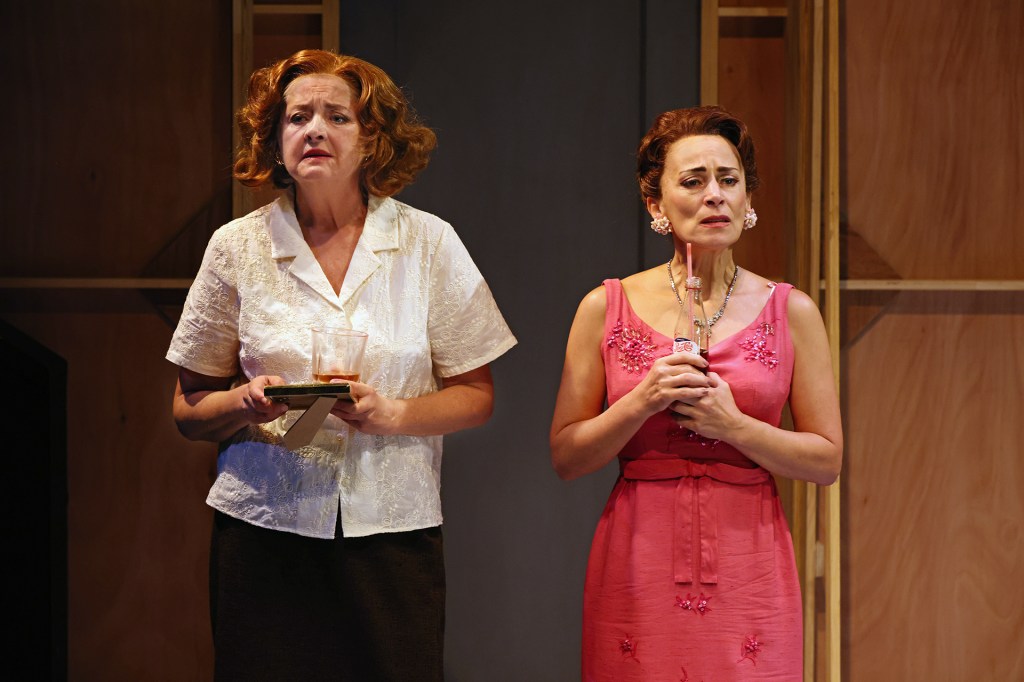
Beneath their successful acting careers were two complex women, and the darker moments are deftly directed by Liesel Badorrek to land with humour. “How can you make a movie when you’re loaded?” draws laughter from the audience as Joan taunts Bette mid-stumble, drunkenly slipping down the chair.
They were both in their mid-50s when filming Whatever Happened to Baby Jane – a production that helped revitalise their careers. However, their relationship did not mature with age. Cronin nails Bette’s iconic, witch-like laugh, rattling Joan with deliberate provocation but Joan fights back. The infamous weighted belt is cleverly staged, referencing Crawford’s reported tactic to make her body harder to lift and drag during scenes where Bette was required to drag her across the floor.
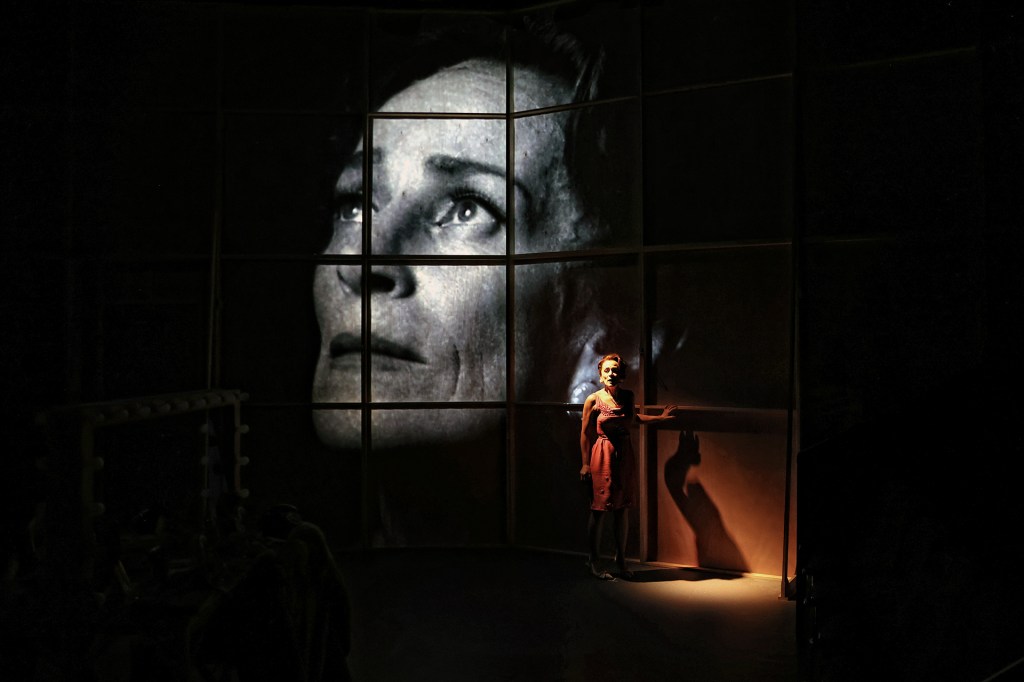
Composer and sound designer Ross Johnston draws on the sonic language of classic cinema. Film sound effects of the bygone era and dramatic scoring heighten tension. Video designer Cameron Smith works seamlessly with lighting designer Kelsey Lee. Old film countdowns are projected onto the wall, while golden spotlights frame the women during monologues. Their faces magnified in black and white and projected larger-than-life, reinforcing their status.
Set and costume designer Grace Deacon creates an intimate dressing room, anchored by a large mirror frame bordered with Hollywood lights, ensuring visibility from all angles. Deacon’s costumes firmly establish the era, with Crawford appearing in suspenders, big earrings, fluffy stiletto slippers, a hair turban and dressing gown.
Bette & Joan is a portrait of two formidable, cantankerous women and this production reminds us why their story continues to fascinate.
5 stars
Presented by Ensemble Theatre Bette & Joan is playing at Kirribilli, Sydney until 25 April 2026.
Run Time: 2 hours (including interval)
For tickets visit Ensemble Theatre



Leave a comment