Walking into the Joan Sutherland Theatre, an artist’s impression of Ascot Racecourse drapes the stage curtain, encircled by a pretty pink bow. As the orchestra begins to play the iconic overture medley, the lighting changes from blushing pinks to lavender to a cool blue in a dreamy and whimsical movement.
This six-time Tony Award-winning 1956 production is more than a rags to riches tale. Behind Frederick Loewe’s romantic musical score and Alan Jay Lerner’s book and lyrics to hit songs like “Wouldn’t It Be Loverly?”, “With A Little Bit Of Luck”, “The Rain in Spain” and “On The Street Where You Live”, is a story of transformation, the search for self-worth, feminism, and the idea that integrity and class are not mutually exclusive.
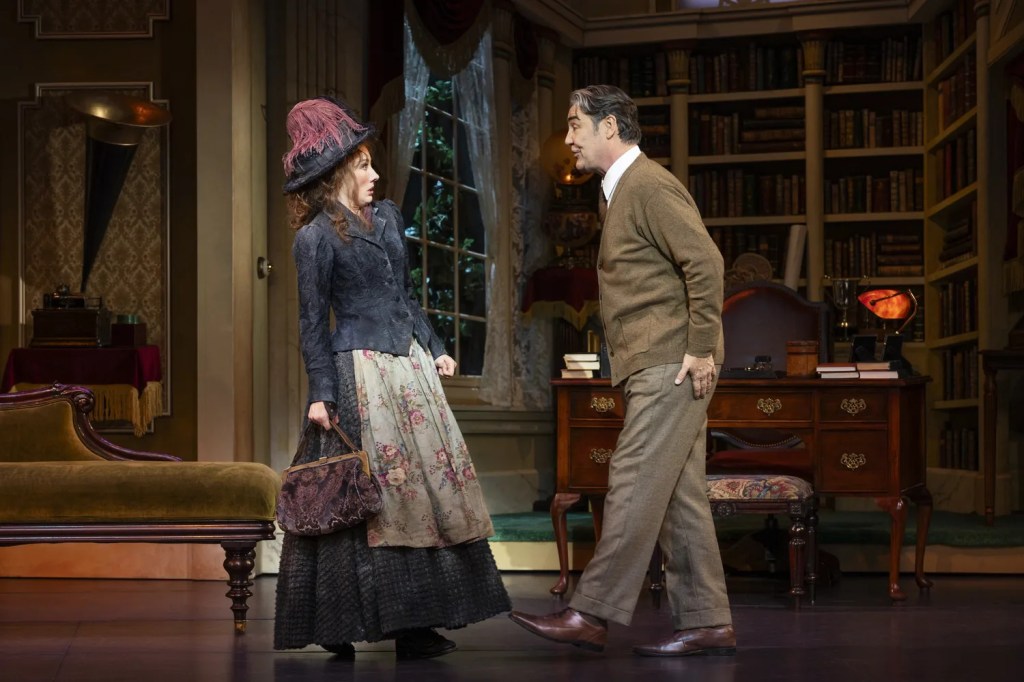
The premise follows Eliza Doolittle (Claire Lyon), an impoverished Cockney flower girl who seeks speech lessons to improve her station from the streets to a respectable flower shop. Phonetics professor Henry Higgins (Nathaniel Parker) is an arrogant, self-proclaimed bachelor who is only enticed to take on Eliza after being presented with a bet by his friend Colonel Hugh Pickering (Tony Llewellyn-Jones) to pass her off as a duchess.
The genesis of one of the world’s most celebrated musicals was George Bernard Shaw’s 1913 play, Pygmalion. There have been many adaptations since that time, including the Oscar-winning film from 1964, but it was the 1938 film from which the Broadway musical was born. Originating the lead role of Eliza Doolittle was the then-20-year-old Dame Julie Andrews, effectively launching her star-studded career and her lifetime affiliation with the production.
Opera Australia breathes new life into the ‘perfect musical’
In 2016, Opera Australia invited Dame Julie to direct the 60th anniversary revival of the 1956 version for the Australian stage to much acclaim. In a full-circle moment, she led the recreation of the original Tony Award-winning staging, with intricate costumes by Cecil Beaton, and artistic set designs by Oliver Smith.
As Opera Australia and the Broadway musical both celebrate 70 years, the director of this iteration, Karen Johnson Mortimer, stays true to Dame Julie’s staging, honouring its rich legacy and preserving the original charm and magic of the 1956 version that has often been revered as the ‘perfect musical’.
Show-stopping performances deliver a feast for the senses
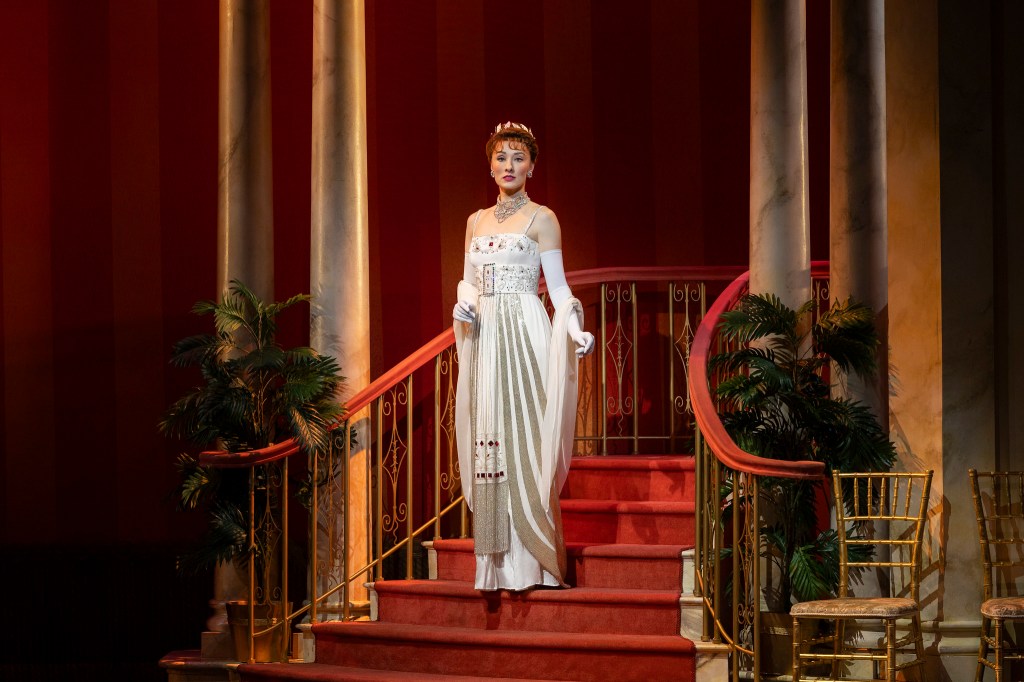
The jewel of this production is Opera Australia principal artist, Claire Lyon. From the moment she steps onto the stage and utters her first “Owwwww” to serenading the audience with “Wouldn’t It Be Loverly?”, it’s clear she was born to play this role.
Lyon nails the Cockney accent, balancing it beautifully when she breaks into song. The consummate soprano’s pitch-perfect voice is breathtaking, while her commitment to bringing Eliza’s naivety, desperation and struggles with the seemingly impossible task before her is moving.
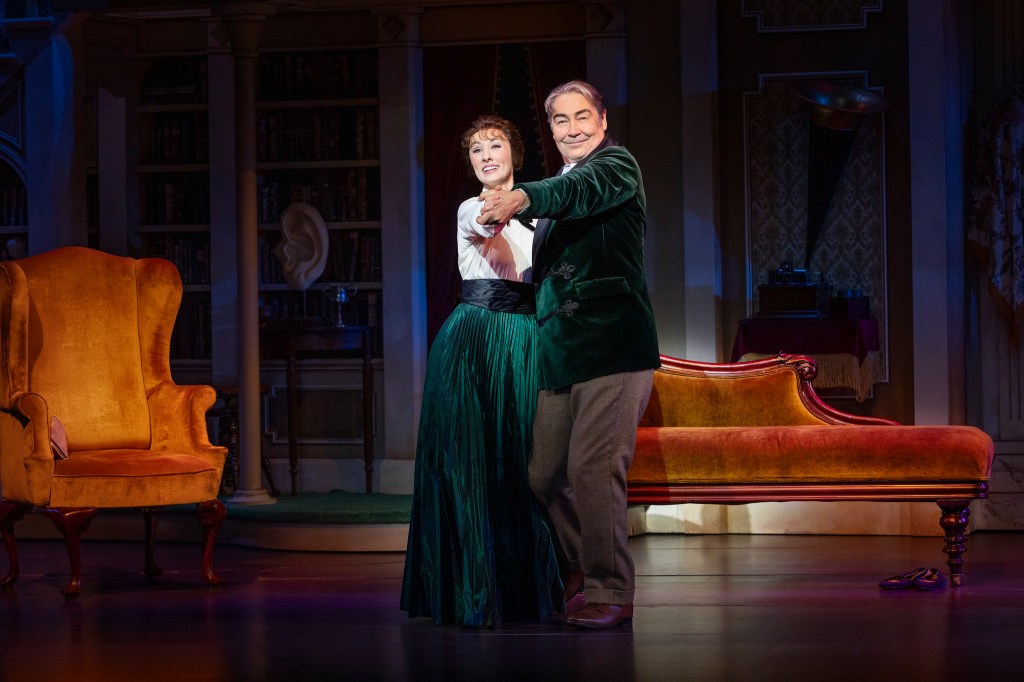
Her rendition of “I Could Have Danced All Night” is utterly captivating and one of the highlights of the show. The other is her reveal in a bejewelled white gown before the Embassy Ball, which elicits an audible gasp from the audience.
Opposite Lyon is Laurence Olivier Award winner and Tony nominee Nathaniel Parker. Renowned for his extensive background in Shakespearean theatre, Parker makes his musical theatre debut. His Higgins is understated, grounding the proud academic in his intellectual dialogue, which he delivers with upper-class condescension. This contrasts with his musical numbers, which combine a mixture of speak-singing and flourishes of melody, allowing this version of Higgins to better express emotions that he would otherwise conceal.
Stealing the show is the charismatic Reg Livermore AO, reprising his 2016 role as Eliza’s dustman father, Alfred P. Doolittle. Dubbed the “original moralist” by Professor Higgins, he undertakes an unexpected transformation of his own. Livermore is beyond convincing as the “undeserving poor”, stumbling over the pronunciation of words of more than three syllables and regularly leaving the audience in stitches with his comedic timing, execution and sheer stage presence.
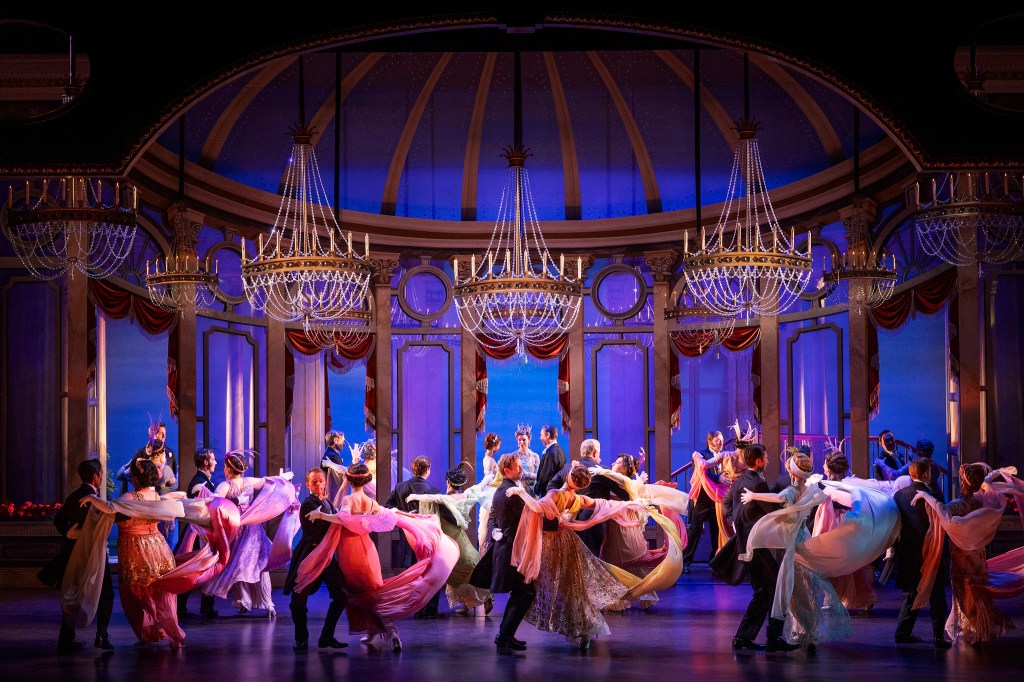
Oozing talent and enriching each and every musical number is the ensemble cast. From the poise and precision in the iconic “Ascot Gavotte” scene to bringing the house down with acrobatics and show-stopping choreography in “Get Me to the Church on Time”, they successfully elevate the production from a traditional musical to a feast for the senses.
The creative genius and design of an unconventional romantic comedy
The writing, a combination of Shaw’s Pygmalion and Lerner’s lyrical genius, delivers a delightfully fast-paced and witty production that successfully demonstrates the capability of the English language, from highly articulate, intellectual dialogue to sharp wordplay and irony to catchy melodies.
Modern lighting has enhanced the production’s ability to highlight Beaton’s exquisite costumes and complement the artistic style and colours in Smith’s sets, while keeping a soft, dreamy quality. Audiences will be mesmerised by the revolving set change at the Embassy Ball, accented by chandeliers glistening as they descend.
Historically, the most controversial part of the play’s various productions and, by extension, the musical, has been the ending. While Shaw sought to maintain Eliza’s independence and integrity, other producers favoured a more popular and traditional “happily ever after” ending. Yet this is no conventional romance.
It’s hard to believe a 1913 play filled with misogyny could stand the test of time and evolve into such a beloved and enduring piece of theatre. It’s a testament to the visionaries who recognised the potential in the transformative arcs as universal themes, painfully relevant in modern society.
My Fair Lady is simply brilliant; a musical like no other, a feast for the senses and, in the immortal words of Eliza, worth moving “your bloomin’ arse” to the theatre for again and again!
5 stars
Presented by John Frost for Crossroads Live and Opera Australia My Fair Lady is playing at the Joan Sutherland Theatre, Sydney Opera House in Sydney until 31 October 2026.
The production continues to Melbourne (Ian Potter State Theatre, Arts Centre Melbourne) from 14 November 2026 to 17 January 2027.
Run Time: 3 hours (including interval)
For tickets visit Opera Australia Book Now
Looking for a pre-show bite? Deux Frères is located close by. For more suggestions, check out Bites & Sips.


Leave a Reply