

Dial M for Murder remains as gripping today as it was in the 1950s.
Pride, greed and revenge simmer beneath Tony’s plan to murder his wife, and from the outset his deception is clear. The story is an “inverted mystery,” where the audience watches the crime being planned rather than trying to solve it and the pleasure lies from watching the plot unfold and unravel.
Originally written by Frederick Knott and made famous by the master of suspense Alfred Hitchcock, the stage thriller has been adapted countless times since its debut. This version, by Jeffrey Hatcher, was approved by the Knott estate in 2022 and reimagines the character of Max Halliday to Maxine Hadley, transforming the affair into a lesbian romance. Directed by Mark Kilmurry, the change adds nuance and injects a fresh spark of surprise into the narrative.
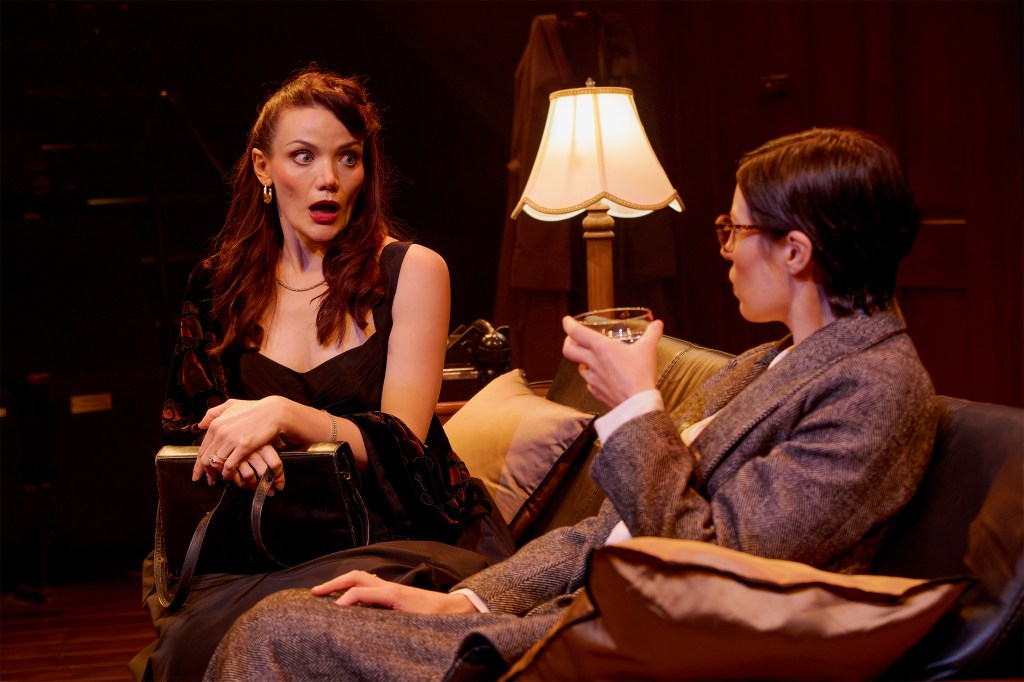
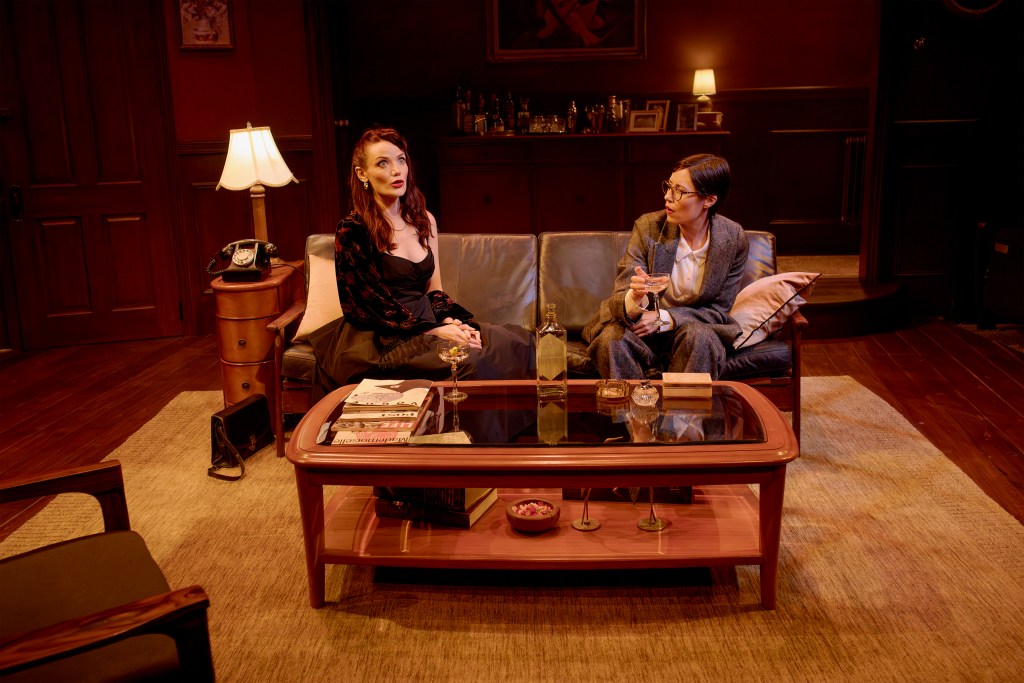
The play opens with Margot (Anna Samson) and Maxine (Madeline Jones) seated on a black leather lounge, martinis in hand, when Margot suddenly asks, “How would you murder me?” It soon becomes clear the two women were once lovers, their affair ending because Margot was blackmailed by someone who knows their secret, a threat that becomes central to the unravelling plot.
Within this dynamic, Samson’s Margot exudes nervous energy; she paces the room, wide-eyed and alert to danger. Jones’ Maxine is a murder-mystery writer, delivering longing glances towards Margot, revealing she remains in love. With insight into the motives of murder, Maxine’s ironic observation: “there are people who have committed murder who walk amongst us” highlights in this production every gesture and line of dialogue is deliberate, each word a clue, a hint of what’s to come.
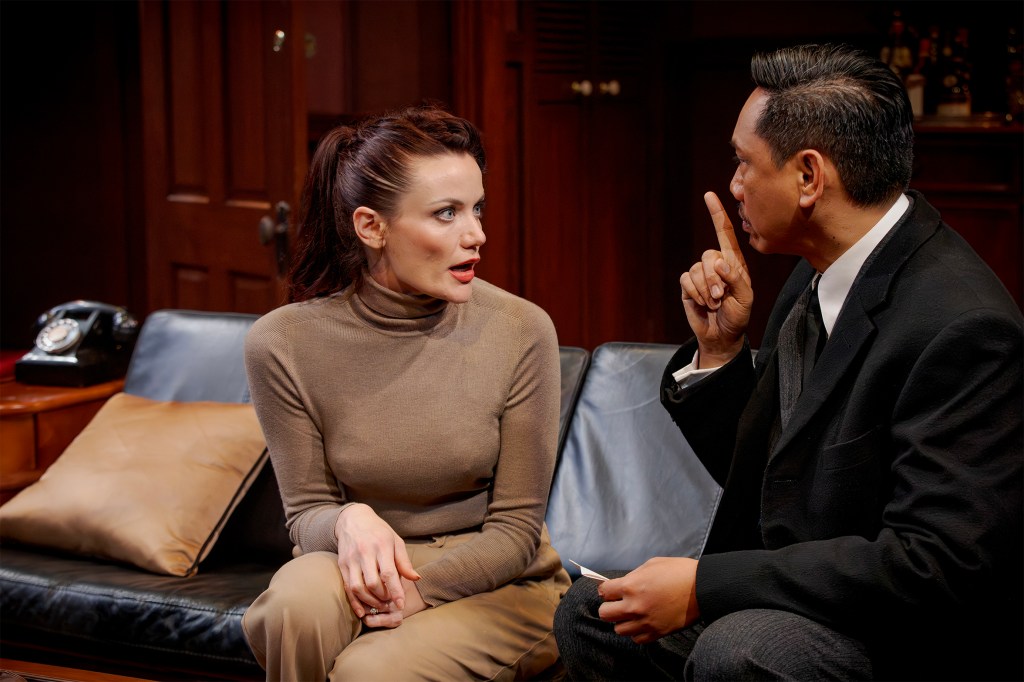
Meanwhile, Garth Holcombe’s Tony is disarmingly charming. He embodies the role with precision and pomp, admitting, “I married for money.” His manipulative nature unmistakable, as his sly expressions betray his true intentions. His voice shifts from cocky confidence to feigned desperation, shoulders slouching with calculated effect. He won’t be bested, stating, “We don’t like women having the upper hand”, as he calmly lays out the murder plot.
The ensemble is rounded out by David Soncin appears as the shady hitman Captain Lesgate, while Kenneth Moraleda’s Inspector Hubbard arrives later as the bumbling detective.
The story moves at pace, running for just over two hours, this diabolical thriller is engrossing and will have audiences jumping in fright.
Hitchcock is known for his use of sound and music to build anticipation, an approach that composer and sound designer Madeleine Picard effectively plays into. Max Cox’s lighting casts moody shadows that pair well with the ominous score, heightening the dramatic tension, especially during the atmospheric thunderstorm scene.
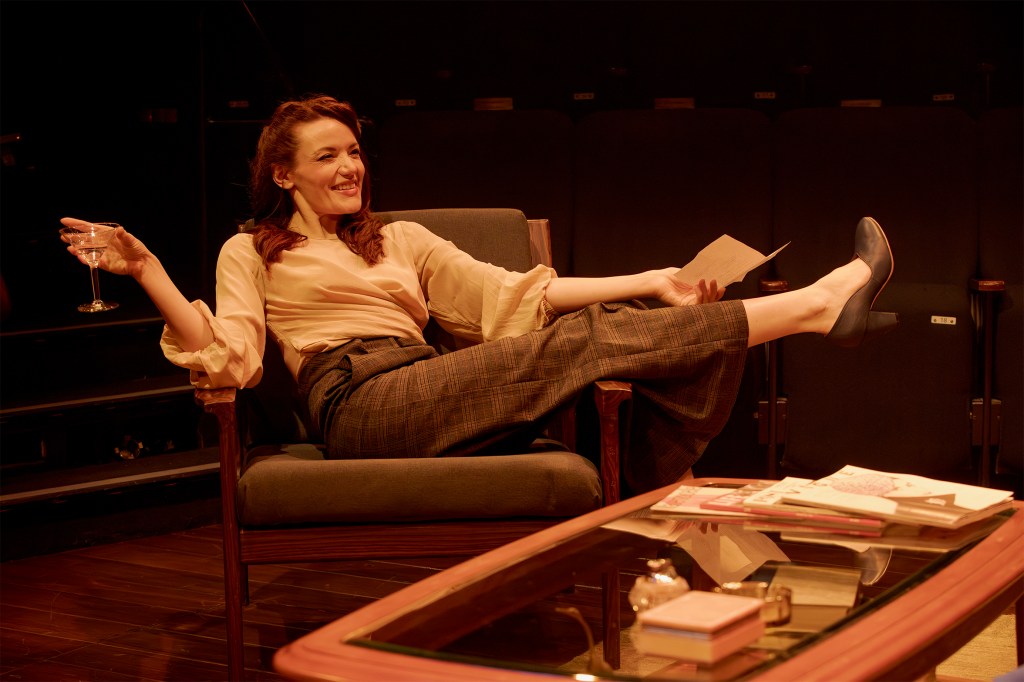
Visually, Nick Fry’s set is richly detailed, the couple’s home furnished with a classic black dial-up telephone, and crystal glassware ready for cocktail hour. Costume design reinforces their wealth and moneyed class: Margot in a floor-length black gown and velvet bolero wrap, ready for a night at the theatre, and later dressed in high beige pants and turtleneck jumper. While Tony cuts a sharp figure in a grey pinstripe pants and Oxford-style vest.
Ultimately, the stage noir is a gripping caper with clever dialogue and a plot that keeps the audience guessing until the very end.
4 stars
Run time: 2 hours 20 minutes (including interval)
Dial M for Murder is playing at Ensemble in Kirribilli, Sydney until 11 January 2026.
For tickets visit Ensemble



Leave a comment