
There is something unsettling about watching a good man slowly unravel. Arthur Miller’s A View From the Bridge explores that descent through the complexities of love, loyalty, honour and pride.
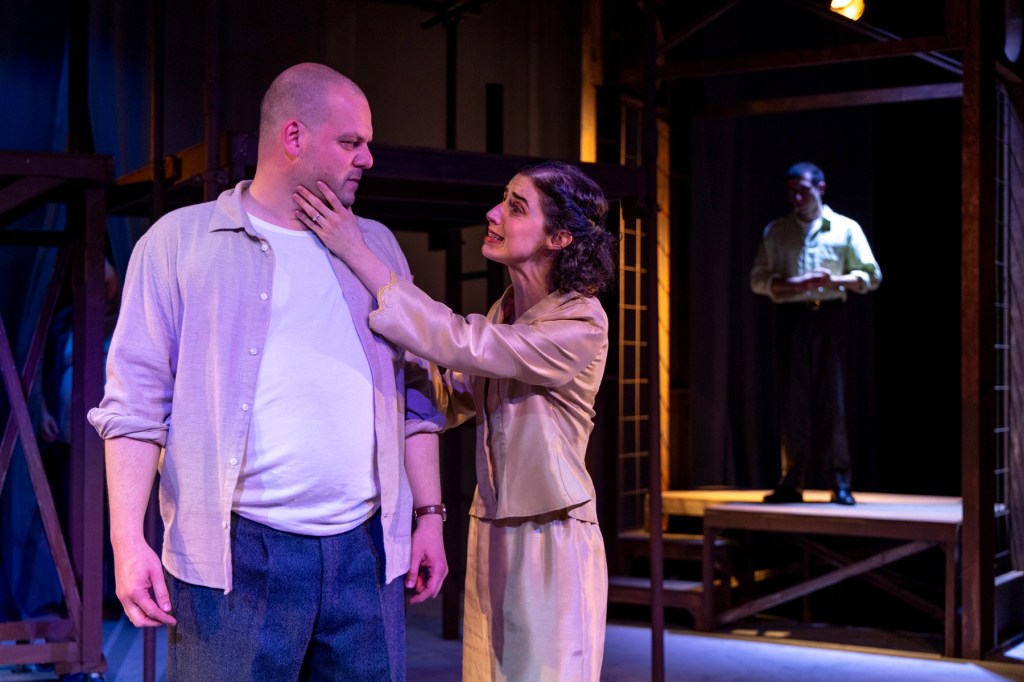
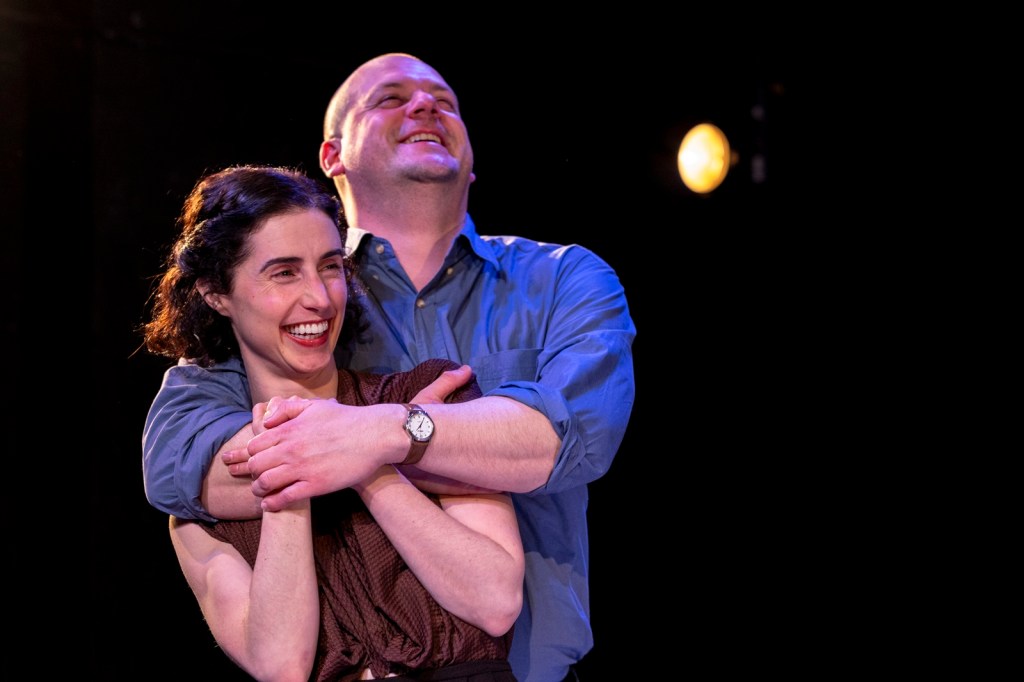
At the heart of that struggle is Eddie Carbone, played by Alex Bryant-Smith, perhaps the most interesting and complex of Miller’s characters, best described in the line: “He was as good a man as he had to be in a life that was hard and even.” Tender and kind to his wife, Beatrice (Megan Elizabeth Kennedy), Eddie dearly wants his niece Catherine (Georgia Da Silva) to have a better life, stay in school and not leave home. Beatrice would argue he’s overly protective and that it’s time for the eighteen-year-old to become an independent woman and begin making her own life.
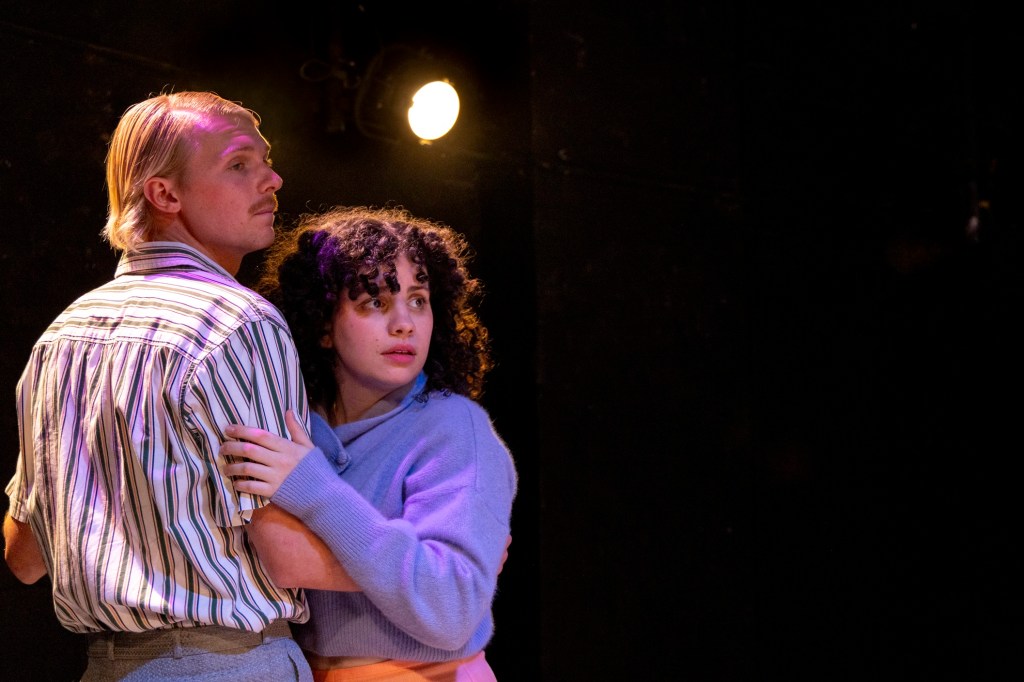
Eddie’s protective nature turns to possessiveness when Beatrice’s cousins Marco (Jonathon Nicola) and Rodolpho (Finn Couzner) arrive from Sicily, illegal immigrants desperate for a better life. His unease intensifies when Catherine and Rodolpho fall in love, and Eddie grapples with letting her go.
The cast are uniformly strong, guided by dialect coach Nick Curnow, leaning into the Italian and Brooklyn accents with authenticity.
Bryant-Smith personifies Eddie in every sense, his body tense, voice guttural as he shouts, face flushed and eyes fixed in furious glares. He is terrifying on stage. As the overprotective father figure struggling to let go of his “baby girl”, his suspicions of Rodolpho’s intentions cloud his good-heart, telling Catherine: “He bows to his passport. He marries you, he’s got the right to be an American citizen.”
As Beatrice, Kennedy brings an earnestness to the caring mother figure, torn between her husband and niece. When realisation dawns, her face vividly expresses the moment. A proud Italian man, Marco’s resolve is conveyed by Nicola through his firm presence and measured delivery. Da Silva’s Catherine is eager and enthusiastic, her youthful demeanour reflected in her bouncy, twirling movements. As Rodolpho, Couzner portrays him as a charming, sweet Italian man. While the love between him and Catherine isn’t one of passion, there is a sense of hope and excitement in their relationship, capturing the optimism of youth.
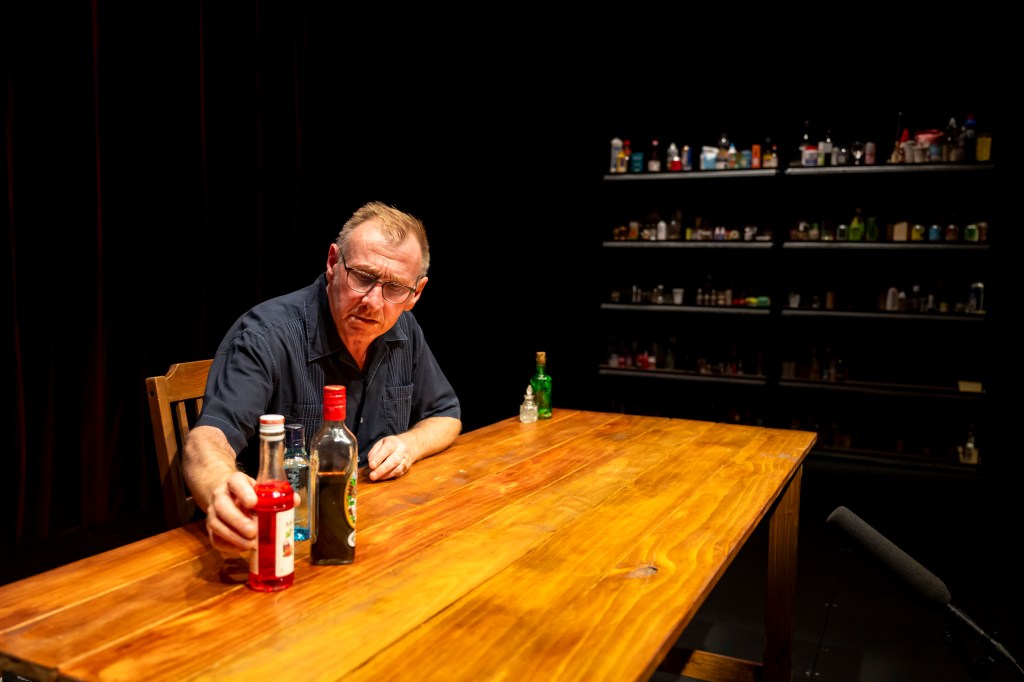
Elena Pavli acts as the play’s narrator Alfieri, hinting at what is to come. Yet despite knowing there is unlikely to be a happy ending for everyone involved, the audience remains locked into the story, groaning at the characters’ wrong decisions, laughing during moments of comic relief and, for some, shedding tears.
In his directorial debut Luke Visentin, working alongside co-director Louise Fischer, doesn’t simply tell Miller’s story but their directorial choices heighten the underlying tension, particularly through the ensemble (William Badger, Julia Boyd, Adriana Carlino, Jad Deeb, Thomas Roberts, Emma Worrall and Tom Massey) who act as a Greek chorus, the community and society bearing witness. In another scene, a dance sequence becomes a visual representation of the ballet of Eddie’s unconscious mind.
Amongst the universal themes, contemporary issues of immigration resonate. “The themes are timeless but feel particularly relevant at the moment with all the anti-immigration rhetoric and the rise of One Nation,” says Visentin. With Fischer echoing his sentiments, noting, “I would have loved this work to be purely a historical snapshot but sadly it remains relevant.”
The creative elements further reinforce the play’s sense of unease. Tom Bannerman’s minimalist bare set, comprising wooden stairs and open framing, creates a stark environment that keeps the focus firmly on the characters and their relationships, with the openness contrasting with Eddie’s suppressed feelings. Set in Brooklyn, New York, the only hint of location comes through the black and white visuals of the city in the 1950s, projected onto the back of the stage, while Raynor McKay’s costumes place the cast firmly in the era.
Lighting by Victor Kalka draws focus to the pivotal moments, particularly through his use of a side light that appears only once in the play, emphasising a decision that will change everything for the families. Patrick Howard’s sound design uses the music to build towards a crescendo, until silence itself becomes heavy.
For those unfamiliar with Miller’s story, there are moments that shock but there’s also something really beautiful about the work of playwrights who emerged in the 1950s, such as Edward Albee and Harold Pinter, that dared to explore confronting ideas and flawed human behaviour. A View From the Bridge encourages us to reflect on how we treat people, both those we love and those we welcome as strangers. Its intensity, energy and raw emotion are utterly captivating, making for a powerful performance that gets under your skin.
5 stars
Presented by New Theatre A View From the Bridge is playing at New Theatre in Newtown Sydney until 5 September 2026.
Run Time: 2 hours 15 minutes (including a 20 minute interval)
For tickets visit New Theatre Book Now
Looking for a pre-show bite? Arre is located close by. For more suggestions, check out Bites & Sips.



Leave a comment