
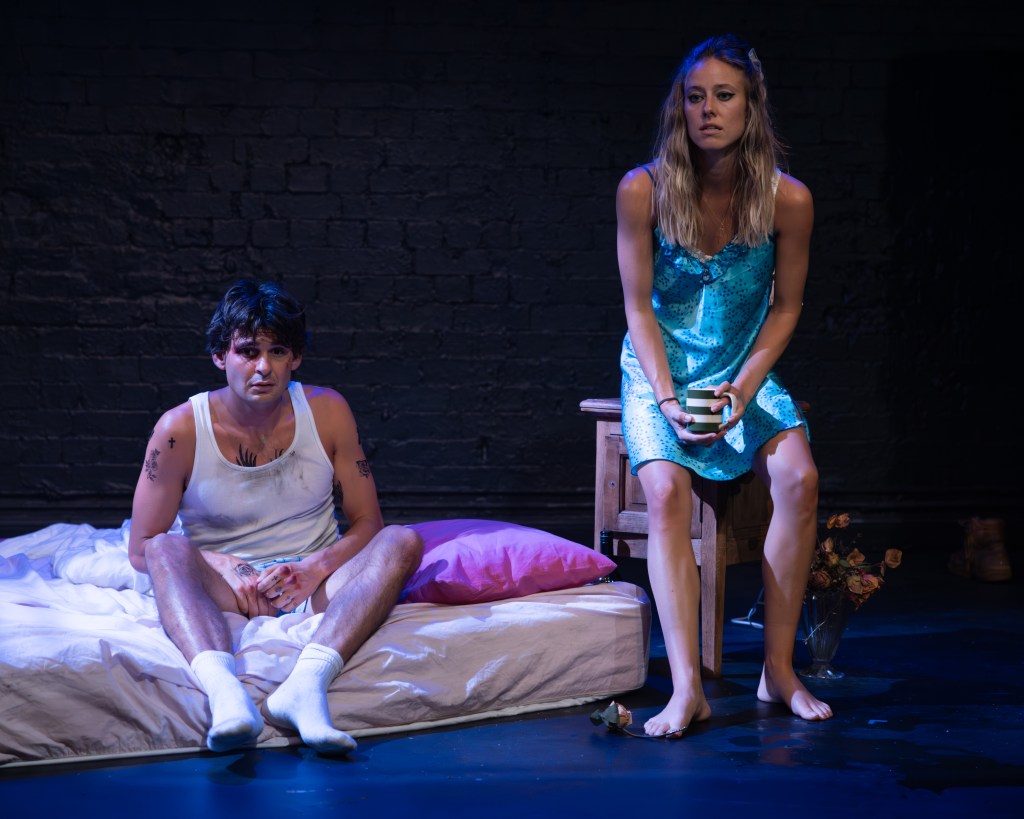
This isn’t a love story. At least not in the boy meets girl and they fall in love sense. This is about two crazy, lost souls, the journey they take together and the impact they have on each other. Danny and the Deep Blue Sea unflinchingly balances brutal honesty, dark humour and hope.
Written by John Patrick Shanley, the play is nearly 40 years old but remains emotionally potent today. The two-hander stars JK Kazzi (Danny) and Jacqui Purvis (Roberta) and is performed with fierce depth. Their characters are abrasive, with wild emotional swings and oversharing to the point that brutality through words feels harsher than skin-deep action.
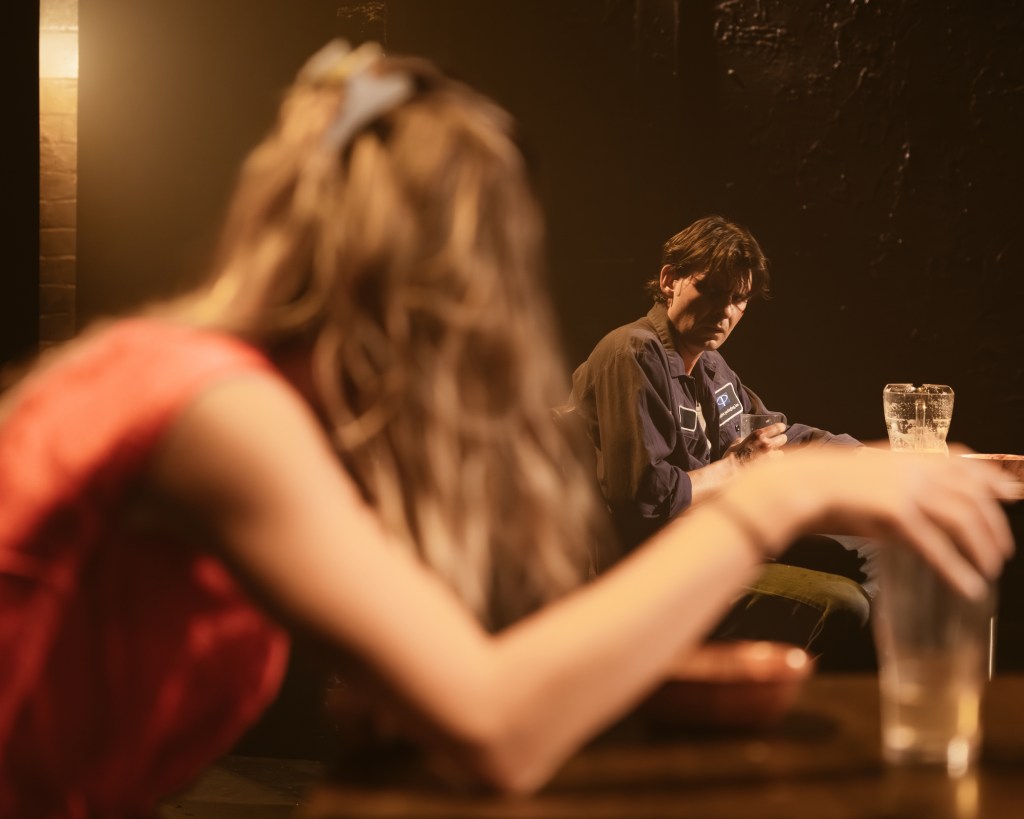
We open with the pair sitting alone at small tables, cocooned in their own worlds, highlighted by soft spotlight lighting and at first, oblivious to each other. But as Roberta and Danny swap stories, opening up in that way where you often tell more to a stranger than a friend, they confess their worst moments to silent reaction. There’s no judgement when you believe what you’ve done in life is the worst of all.
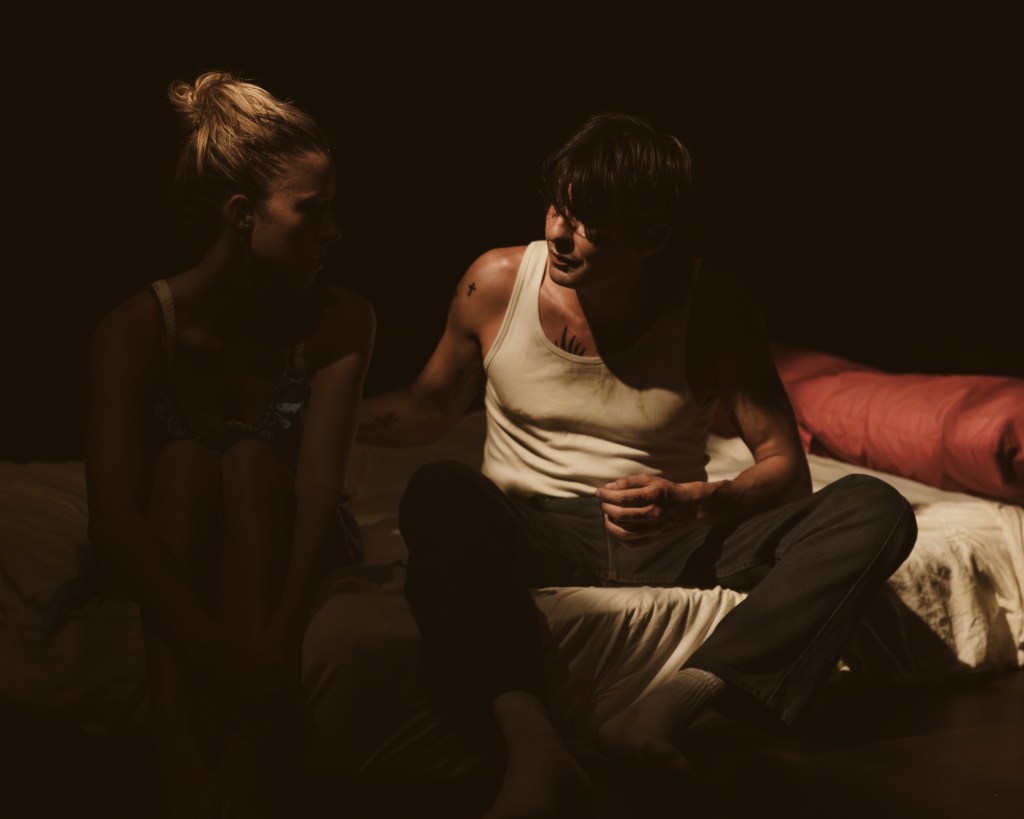
In this character-driven drama the couple are at boiling point in life. Director Nigel Turner-Carroll shares: “In a time where I feel emotions are repressed, to wear your heart on your sleeve really appeals to me, and I hope others. It also holds strong because John Patrick Shanley writes of the human condition. I think people present versions of themselves, as a way of protecting themselves. To truly be yourself, to allow yourself to be really seen by someone else is one of the bravest things you can do. That hasn’t changed.”
Kazzi and Purvis commit fully to the rawness of Shanley’s text, delivering intimate, compelling performances. Kazzi lets Danny’s anger sit close to the surface; he erupts at any little question or comment, spilling beer and throwing punches. With cuts on his face and hands, it’s clear he’s been in a recent brawl. His emotional tirade moves from outward violence to self-defeat as he crumbles to the floor, back against the wall, knees hugged tight into his chest, berating himself.
A divorced young single mum, Roberta has been burnt by life and is struggling with her existence, but she’s not afraid of him. She courts the danger, eager to rid herself of the self-loathing and disgust she feels, making all the moves on Danny. When seduction doesn’t work, she turns to provocation—pushing him, hitting him—until he reacts violently.
Turner-Carroll explains: “The focus of this play isn’t the set design it’s the two human beings. This is why for the set, I wanted it minimal, raw and also so that the audience could fill in the rest of the space in their imagination.”
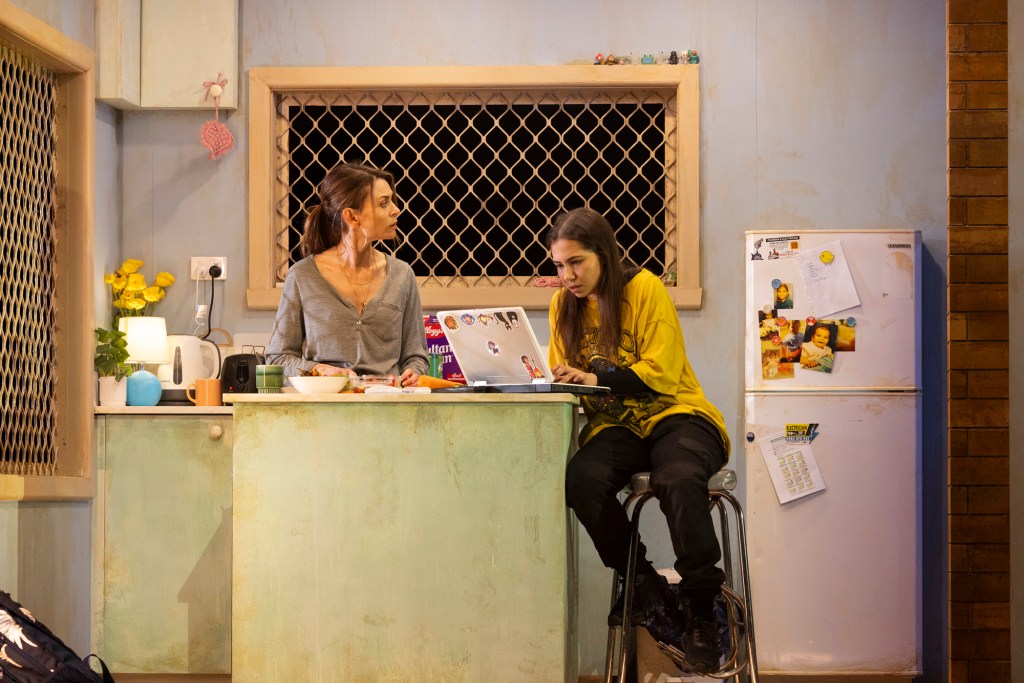
The sparse set for the two settings is as bare bones and gutted as the characters themselves. At a New York, Bronx bar, each sits at their own table and chair, reinforcing a sense of separation and loneliness. The bedroom scene equally simple, featuring just a mattress, doona and side table. The black walls of the Old Fitz Theatre play into the dramatic use of Poppy Townsend’s shadow and lighting.
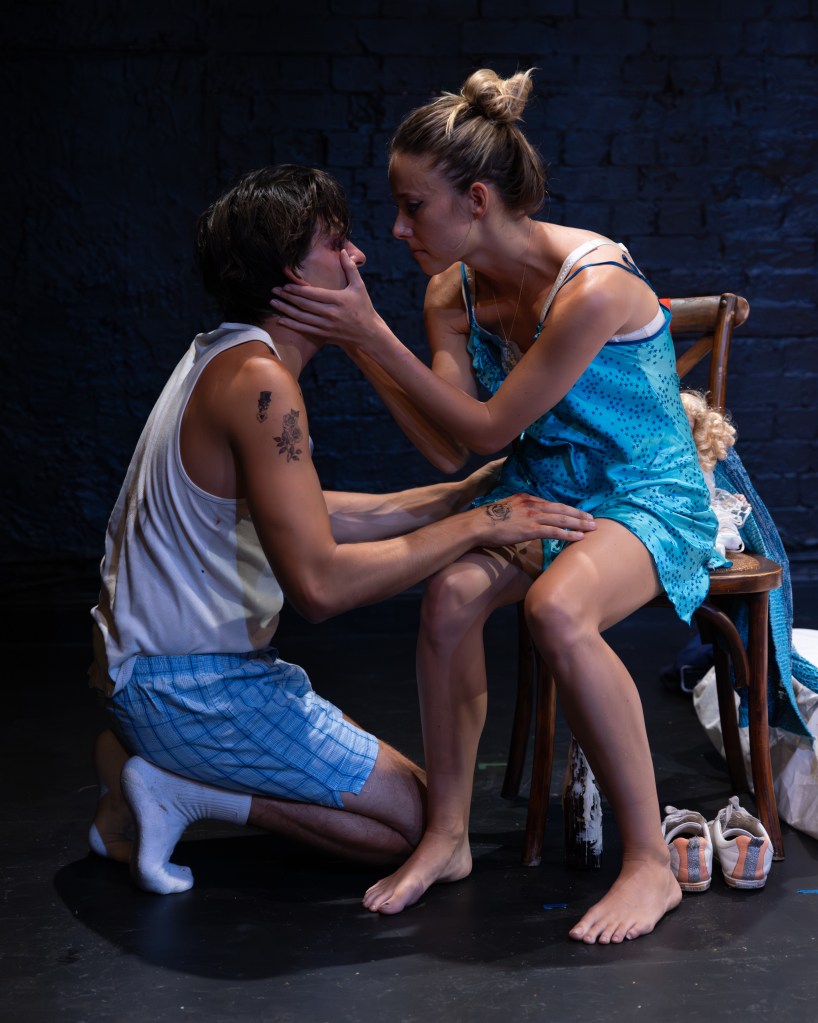
As the relationship between the pair progresses, there’s a gradual shift in their attitudes. The paranoia and explosive edge still simmer, but their hard facades begin to crack. It asks the question: if we show softness, can it really make a difference to another person’s life?
For me, the ending was a little too sharp and easy, especially given the drama and intensity of the production. The show, however, is enthralling and the stars are fearless in their vulnerability. There are triggering moments, yet that’s exactly what Turner-Carroll intended. “The job was to create something truthful, raw, and human, and then trust the audience to bring their own experiences to it. If they felt moved, unsettled, challenged, or simply stayed with the characters beyond the theatre, then I felt like the work had done its job.”
Gripping and confronting, Danny in the Deep Blue Sea beautifully explores connection, vulnerability and the possibility of redemption.
Presented by NicNac Productions Danny and the Deep Blue Sea is playing at the Old Fitz Theatre until 7 February 2026.
For tickets visit Old Fitz Theatre



 BACCHUS AT THE THEATRE
Leave a comment