
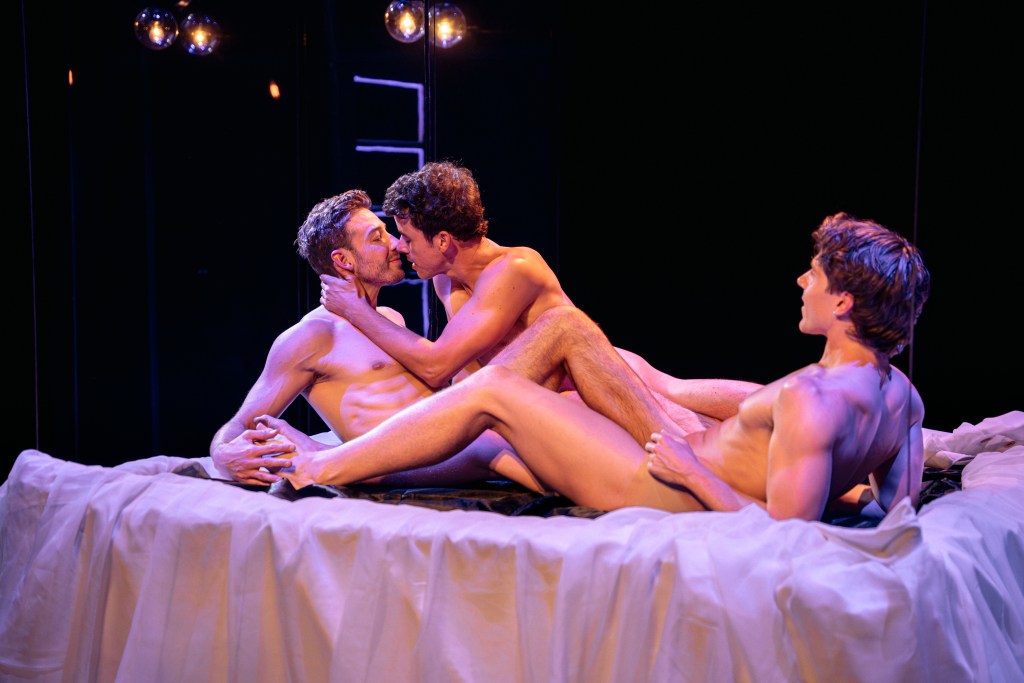
Afterglow exposes a complicated open gay relationship between three men and the boundaries of modern love when the rules begin to shift.
Written, directed and choreographed by S. Asher Gelman, the playwright created Afterglow to make sense of his own romantic situation that nearly destroyed his marriage. “What began as an attempt to make sense of a painful chapter involving my own experience with loving more than one person has fundamentally altered the course of my life, and continues to do so.”
Afterglow premieres in Australia following its successful Off-Broadway season, which ran for 18 months, and subsequent productions around the globe.
Starring Julian Curtis (Alex), Matthew Mitcham (Josh) and Matthew Predny (Darius).
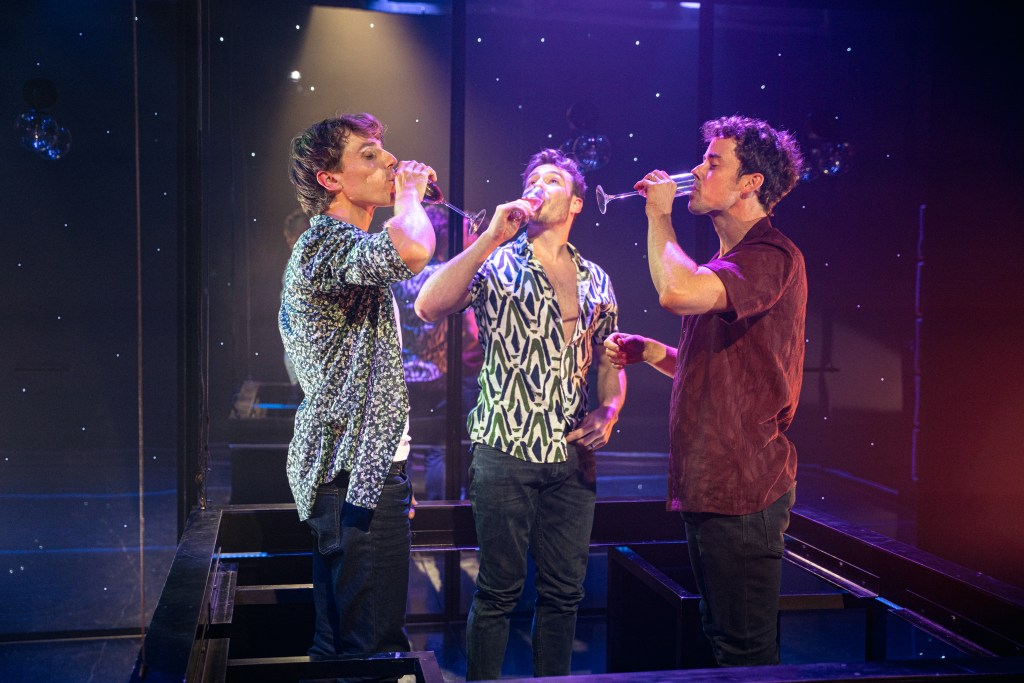
Alex and Josh are in an open marriage, and are both enjoying their new third, Darius. They regularly sleep with multiple men, including their friends, stating it adds a fun extra dimension to their relationships. They are also planning on having a baby through surrogacy, joking that “our DNA is so fuckin’ fabulous it needs to be passed on.”
The polyamorous trio are playful and flirty. There is no animosity. Josh and Alex acknowledge that relationships take work, with Alex recognising Josh needs more attention than he is able (or willing) to give. He’s grateful for Darius, at least at first. But “the heart wants what the heart wants” and Afterglow explores the relationships, desire and love.
Despite the story being about love, there’s a superficially and selfishness in the characters that prevents it from being heartfelt. The love triangle storyline is predictable, and given the entanglements, the relationship is unlikely to settle into a happy family dynamic, especially with a baby on the way.
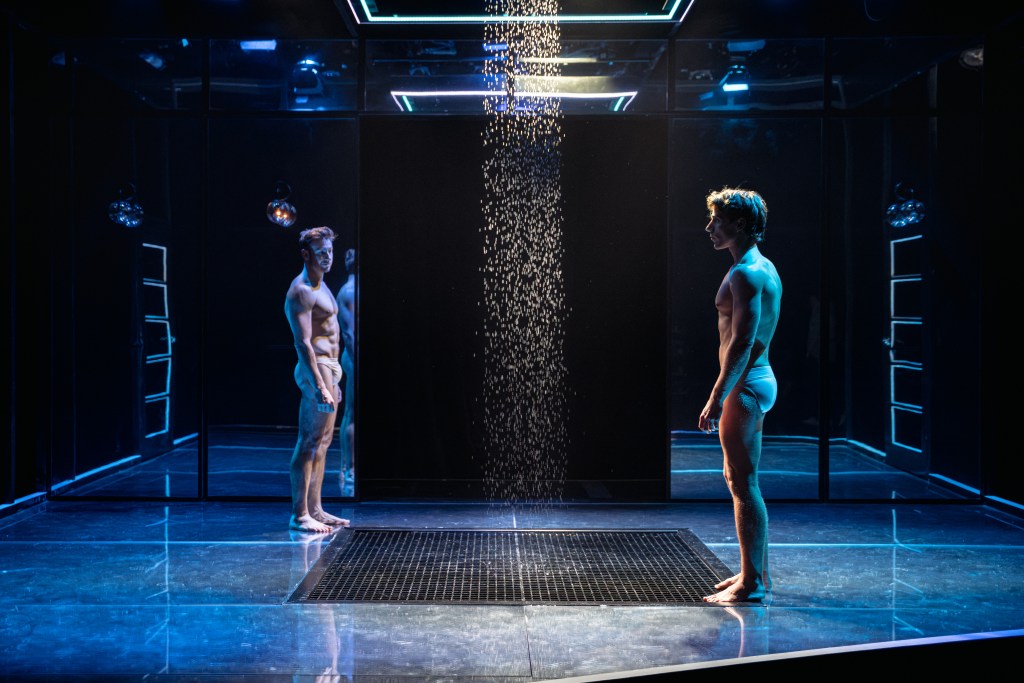
What elevates Afterglow is the staging and background creative. Gelman choreographs dance into the moments of intimacy between Darius and Josh. They mirror one another, the music a slow electro beat in tune to their movements. Then, just as their passion reaches fever pitch, a shower of water cascades over them.
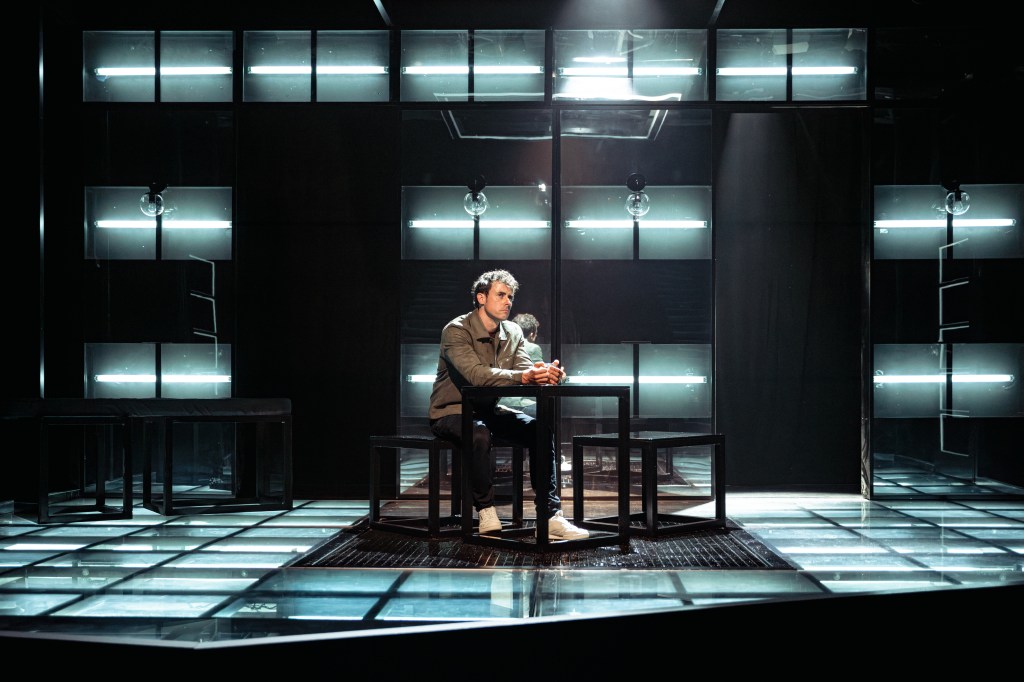
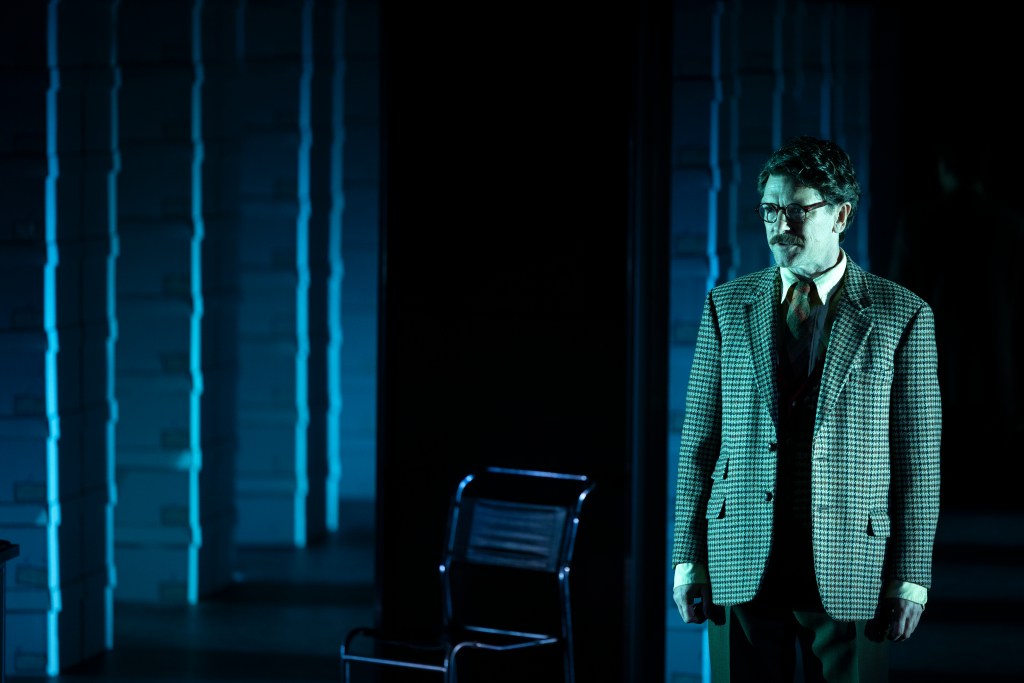
Ann Beyersdorfer’s all-black reflective staging accentuates Jamie Roderick’s lighting and ensures the men are constantly exposed. The neon lighting and in particular, the shadow work was a highlight of the show, beginning with the striking image of three silhouetted naked bodies writhing in ecstasy.
The play comes with a full-frontal nudity warning, and it is not merely a flash of body parts, the nudity is direct and constant. Unlike Naturism there’s a voyeuristic quality to the production, intensified as the men slip and slide beneath the water. For many audience members, this may well be part of the attraction.
Unlike Gravity which champions polyamory with heart, challenging ideas of sexuality, Afterglow is entertainment without depth. While Gelman suggests the work: “doesn’t provide any answers; instead it asks questions about both our individual and collective relationships to love, loyalty and trust.” there’s something missing or perhaps overexposed.
Undeniably provocative, Afterglow is bold and visually compelling, but never fully satisfies.
3 stars
Running for 90 minutes (no interval).
Presented by Midnight Theatricals Afterglow is playing at Eternity Theatre, Darlinghurst Sydney until 22 March 2026.
For tickets visit Afterglow


Leave a Reply