
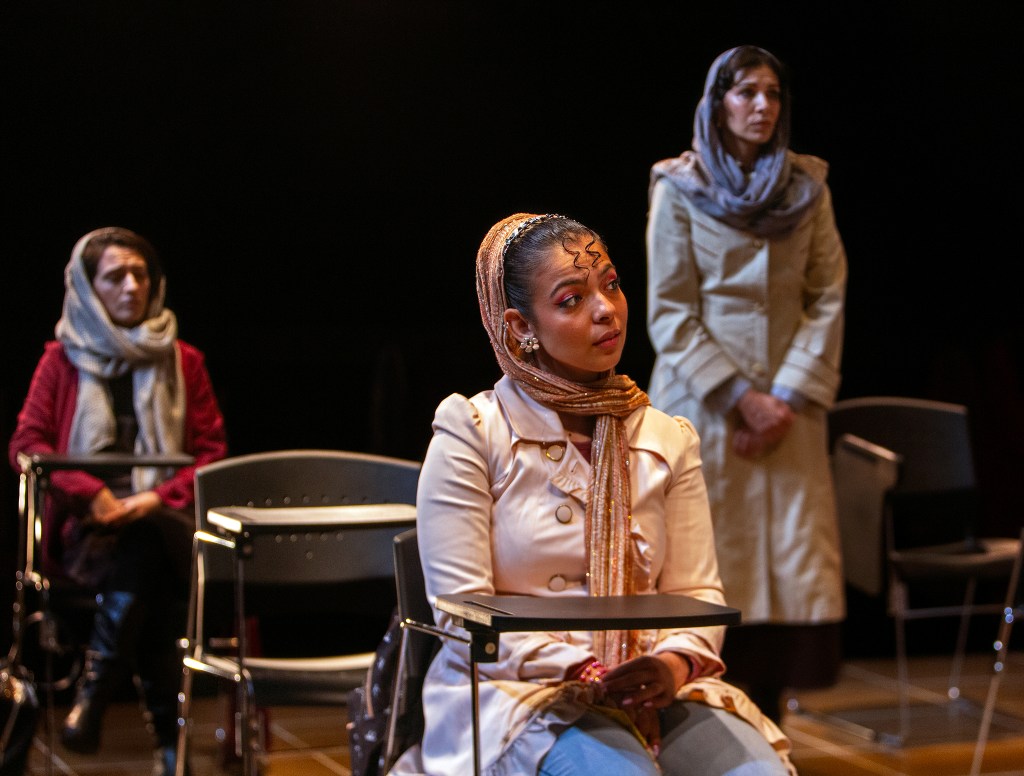
This isn’t just a show about people from a foreign country attempting to learn the English language. English by Sanaz Toossi, a Pulitzer Prize-winning work, explores the profound connection between language and identity.
At a time of political uncertainty and upheaval, English makes no political or religious statements. Instead, it resonates deeply with anyone who has experienced displacement or exile, or who has struggled to learn another language.
Set in Iran in 2008, the play follows four mature-aged students enrolled in a six-week English language class. Led by their teacher Marjan (Nicole Chamoun), the students – Elham (Setareh Naghoni), 18-year-old Goli (Minerva Khodabande), Roya (Neveen Hanna) and Omid (Pedram Biazar) – each bring their own motivations. These unfold gradually, from the pursuit of a green card to the desire to communicate with a grandchild.
Why do we speak English? To bring the outside in. To speak our souls. To converse – to speak and to listen. Marjan reminds her students, employing playful teaching methods – passing a ball with words, encouraging show and tell – but within the classroom, the emotional cost of learning a language is laid bare.
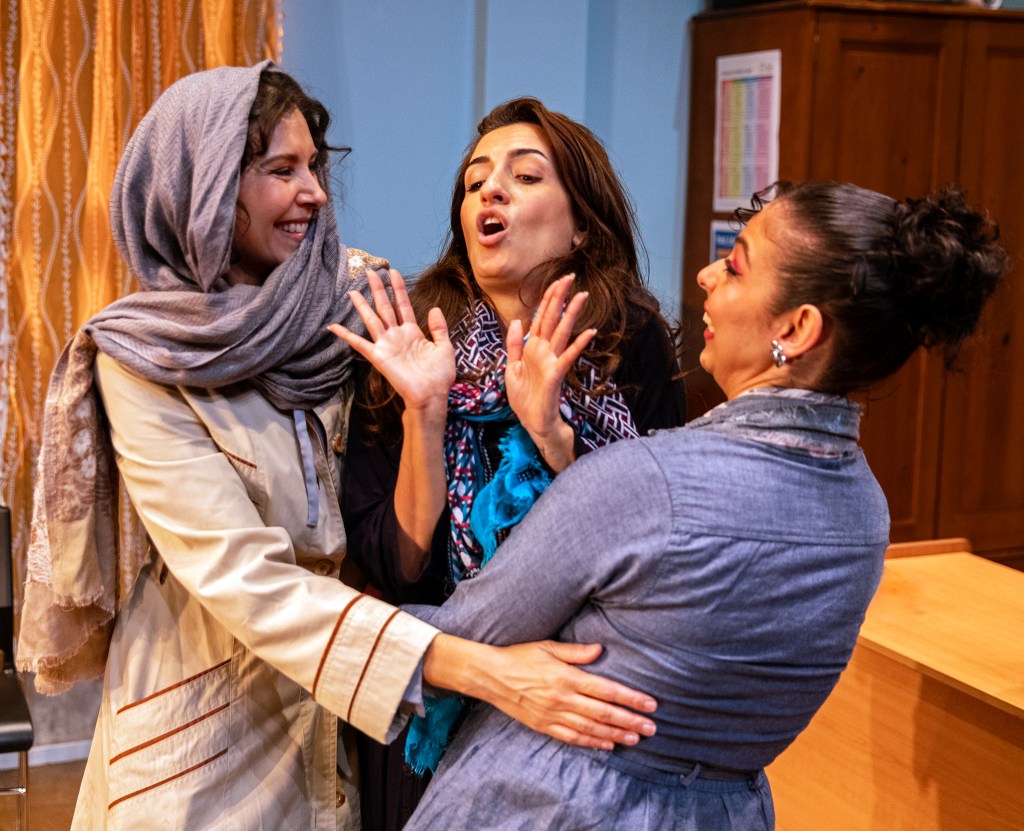
Roya’s “show and tell” is particularly devastating, as it captures one of the play’s central tensions with heartbreaking poignancy and asks, are we different people when we speak in our native tongue versus another language? Whilst English is a show many can relate to, what’s highlighted is the difference for Iranians, who are also trying to change their accents and even their names. The efforts they feel are necessary to fit in with another society and be accepted. It’s a pointed reminder of the imbalance in cultural expectation. “Don’t you think people can do us the courtesy of learning our names?”
Directed by Craig Baldwin (Eureka Day), the play balances its serious questions with moments of humour but the laughter doesn’t come from mocking broken English, but from cultural perspectives like Goli’s use of Ricky Martin songs as reading exercises.
English is an emotive play, performed with heart by all of the cast. Working with dialect coach Linda Nicholls-Gidley, they skilfully navigate speaking in two versions of English. When ‘learning’ their delivery is broken, slow and uncertain, as opposed to their native Farsi, with flowing words, spoken rapidly.
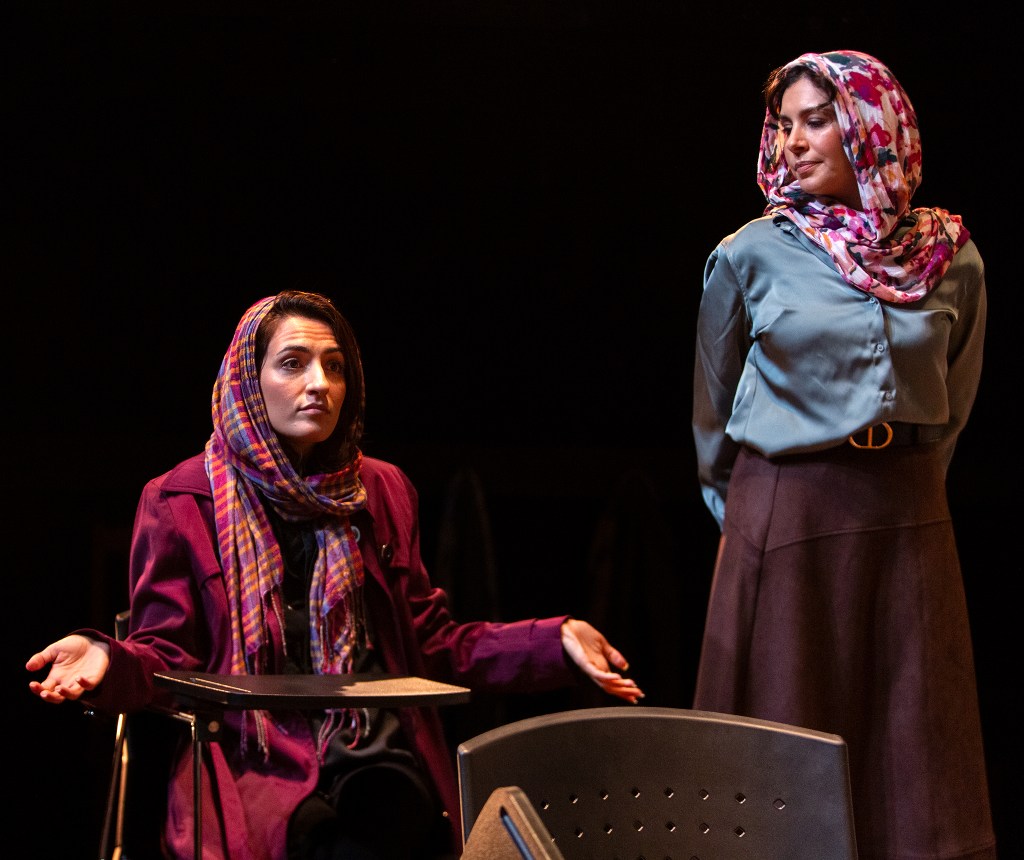
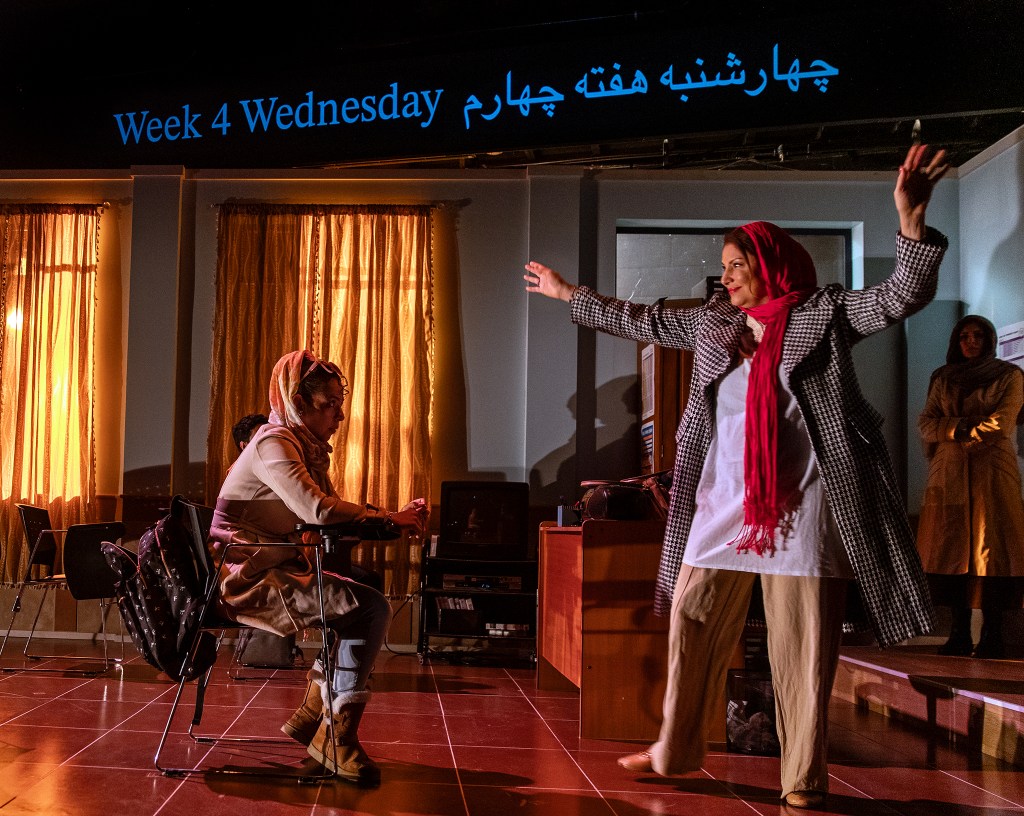
Guided by cultural consultant Madjid Alaei, Rita Naidu’s costume design reflects authenticity, with the women wearing headscarves. Soham Apte’s set evokes a familiar classroom with tiled floors, a television on a trolley – unremarkable, yet globally recognisable.
The desire to connect, belong and be understood is human. It’s what we all feel and want from each other. It’s how we can function and be together more easily and joyfully. English asks us to be more considerate of our foreign friends; understand the frustration they must feel in not being able to communicate – not just language but identity. In a post-show Q&A, Naghoni shared a striking example of a highly literate man, full of opinions and insight, diminished to a faction of himself due to the limitations of language.
In the final moments, the English spoken throughout the production switches to Farsi. It’s only for a couple of minutes. No subtitles, no explanations. I wanted to know what was being said. I listened to the tone for clues, watched their body language, sought out common words. I couldn’t understand it. Those few minutes were frustrating. And that was precisely the point, English invites empathy.
5 stars
Seymour Centre and Outhouse Theatre Co present the Sydney premiere of English. Playing at Seymour Centre, Sydney until 2 May 2026.
Run Time: 90 minutes (no interval)
For tickets visit Seymour Centre

 BACCHUS AT THE THEATRE
Leave a comment