
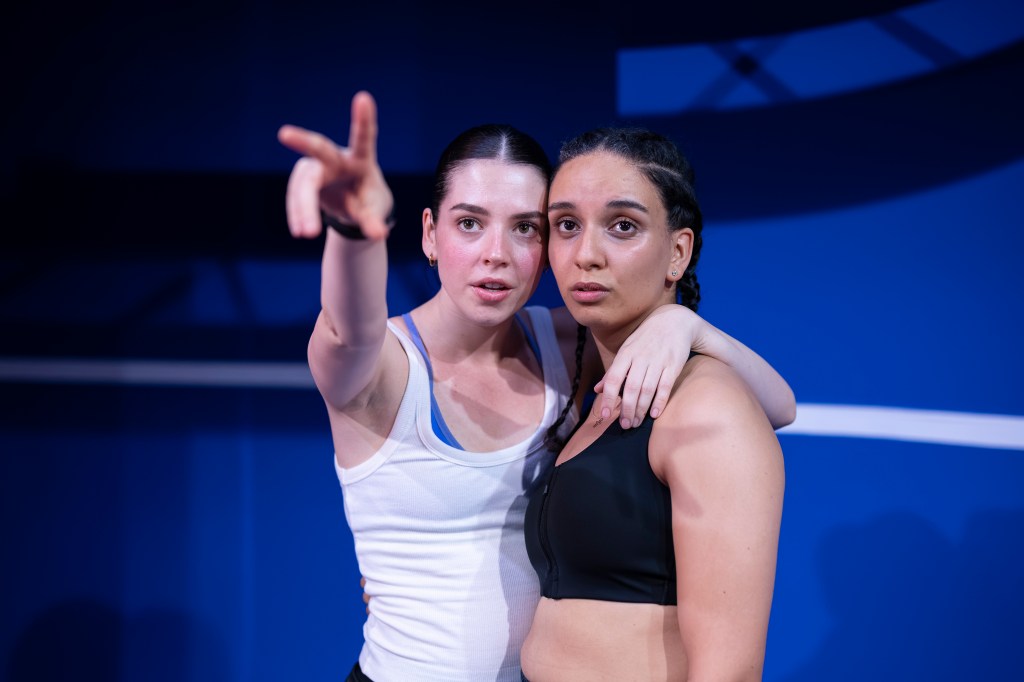
British playwright Ella Road’s Fair Play explores the intense world of elite female runners. A competitive runner herself before turning her attention to theatre, the play takes the friendship between two teenage girls and examines competition and fairness, while also humanising the broader issues around racism and the rules that govern society.
The story focuses on two young female middle-distance runners Elodie Westhoff (Sophie) and Rachel Crossan (Ann). When Sophie first encounters Ann, she’s snobbish in tone, stretching out the pronunciation of her name in a way that edges towards superiority. Yet over time, and as Ann’s racing speed increases, their friendship develops into warmth and playfulness. The girls’ conversations expand from pre-event rituals of snacks and playlists to sex and relationships, and their backgrounds become less important as they work towards their champion dreams. For both of them, everything in life is measured by training or race days. “All I want to do is run,” says Sophie.
When asked why she wanted to direct Fair Play, Emma Whitehead explains: “What grabbed me immediately was the intimacy of it. It’s just two young women and a track, but inside that space, the author opens up huge questions about identity, fairness and power. I was struck by how the play captures that moment in adolescence where friendship and competition become entangled – where the person you love most can also become the person standing in your way. It felt emotionally raw and politically urgent at the same time.”
Fair Play is an honest look at the intersection between friendship and competition. While the competitive spirit is ever-present behind it is affection. We also see the pressure of their professional ambitions placing strain on their friendship, with Road spotlighting those moments when you’re happy for your friend but also quietly jealous.
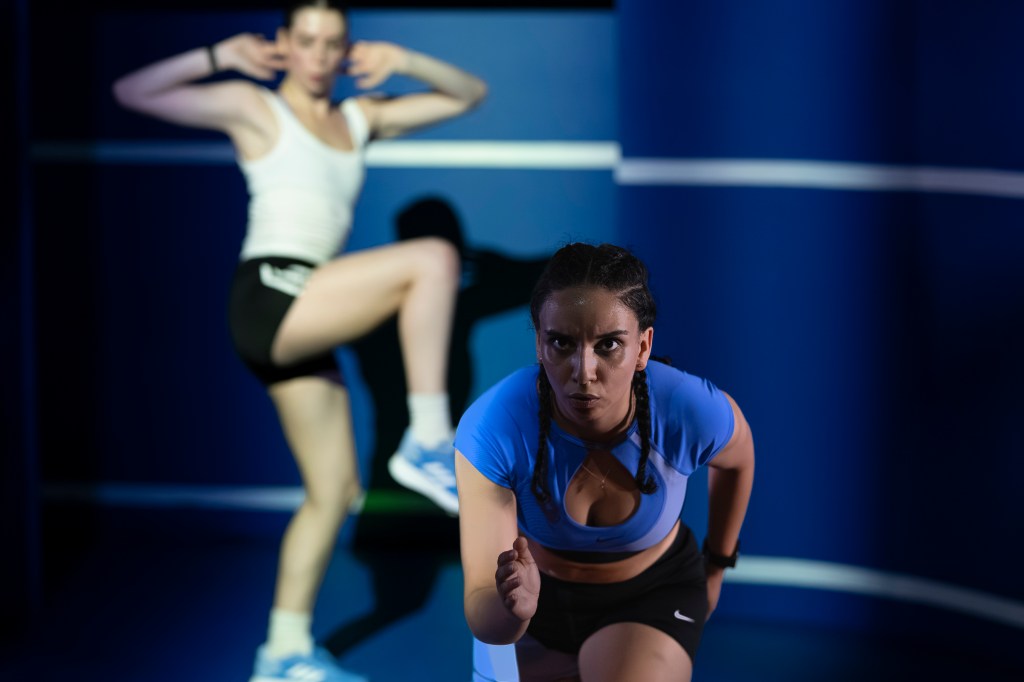
Whitehead shares: “We talked a lot about how competition can exist inside love. Ann and Sophie genuinely care for each other – they’ve trained together, grown up together, pushed each other to be better. But elite sport creates a system where your closest ally is also your rival. The cast spent a lot of time exploring how that tension lives in the body – the pride, the jealousy, the loyalty, the fear of losing someone even as you try to beat them.”
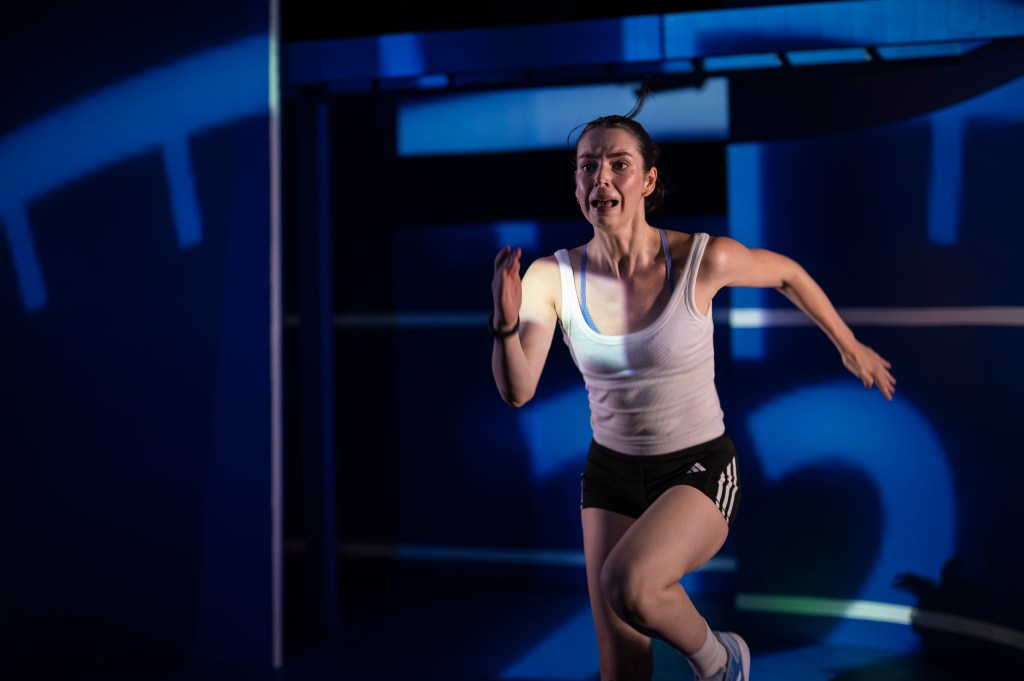
Performed with strong English accents, Crossan and Westhoff fully inhabit their characters with visible emotional tension. As the girls become more successful in their athletic careers, the pressure they place on themselves increases. Crossan’s facial expressions shift between bitterness and anger, alongside her bellowing outrage. Westhoff screws up her face, her angst and vulnerability on full display. Her character is the more avoidant of the two, so when she does reveal her honest feelings, desperate to “clear the air”, it feels achingly real and raw.
Whitehead reflects: “I hope audiences recognise something of their own relationships in Ann and Sophie: the love, the rivalry, the ways ambition can both strengthen and strain a bond. It asks us to consider what we’re willing to sacrifice for success, and what we might lose along the way.”
Fair Play however, isn’t just a story about friendship. It also draws on real-world debates around gender bias and eligibility in a way that’s both entertaining and harrowing.
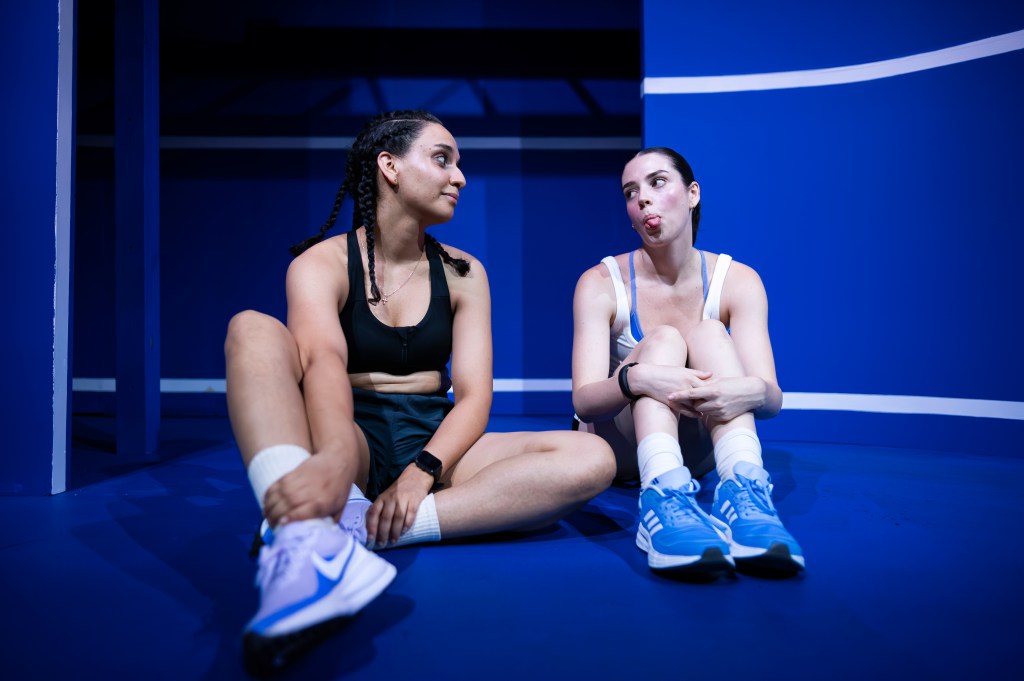
Whitehead shares, “One of the things the play interrogates is the idea that fairness is simple. In elite sport they talk about a ‘level playing field’, but the reality is much more complicated. Bodies are different, rules are made by institutions, and those rules often reveal deeper biases about gender, race and who gets to belong. In this production, fairness becomes something slippery – something everyone claims, but no one can fully define.”
Fair Play is fast-paced and energetic. The drama never stops; the script moves along quickly and the characters are constantly active, with Sophie and Ann stretching and flexing their muscles, reinforcing their drive and determination. Choreography by Cassidy McDermott Smith is demanding, but the girls show admirable strength and fitness through their routines, their sweat and exertion very real.
Road brings humanity to complex issues, and Whitehead notes: “We’re in the middle of global conversations about who gets to compete, what defines a body, and who makes those decisions. The play doesn’t try to solve those debates, but it puts human faces and relationships at the centre of them. It reminds us that behind every headline about policy or eligibility are real people navigating impossible situations.”
Every second counts when these girls’ race. Osibi Akerejola and Mitch Brownuse sound to guide the scenes, with a ticking stopwatch at the start indicating a quick scene change. We hear the roar and cheer of a crowd, a strong fast heartbeat and other recognisable sounds that would give too much away in this review but propel the narrative forward. Keeping the focus on the runners’ world, Kate Beere’s has created a curved set design that evokes a running track, perfectly showcasing Aron Murry’s projected countdown timer.
Whitehead reflects: “I hope audiences leave talking about the complexity of fairness not just in sport, but in society. The play asks us to sit with discomfort rather than rushing to simple answers. Ideally people will find themselves questioning assumptions and listening more closely to perspectives that might be different from their own.”
Fair Play is compelling, confronting, and the play leaves audiences grappling with the very idea of fairness.
4 stars
Run Time: 90 minutes
Presented by Lost Thought Fair Play is playing at the Old Fitz Theatre in Woolloomooloo Sydney until 21 March 2026.
For tickets visit Old Fitz Theatre


Leave a Reply