
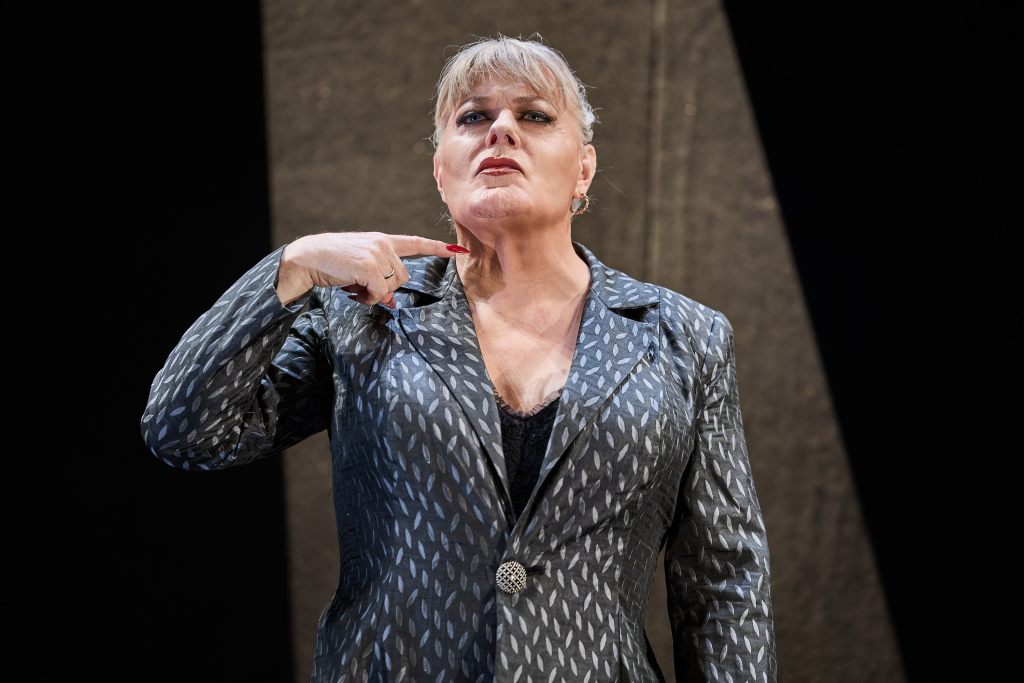
Izzard: The Tragedy of Hamlet is a multi-layered experience between Eddie Izzard and the audience.
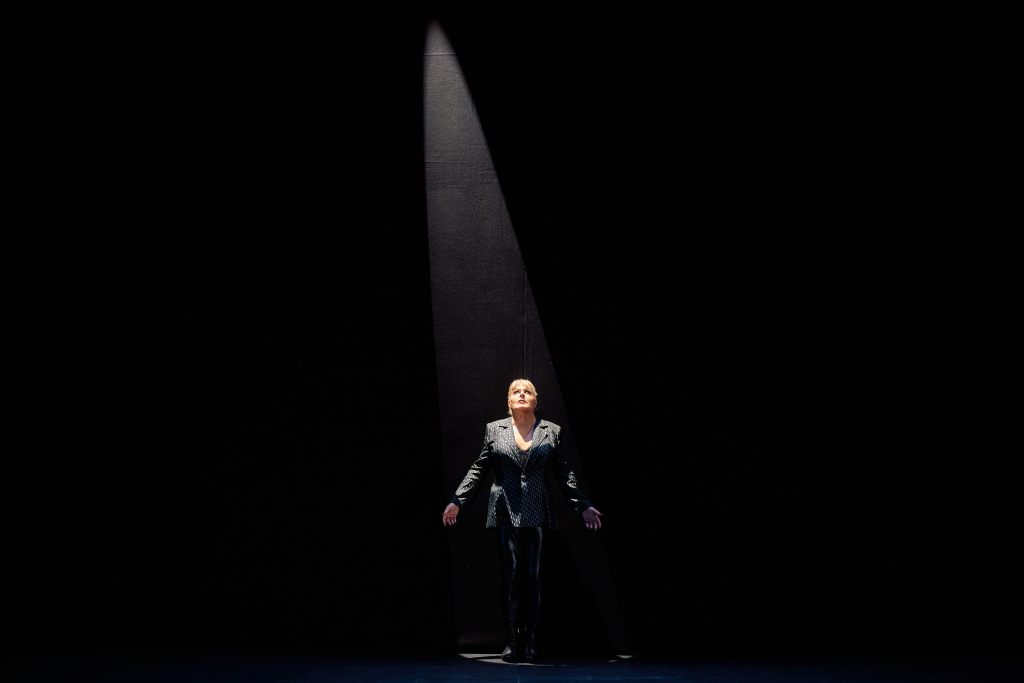
Upon entering the Playhouse, it’s clear this is not your traditional Shakespearean production. A single spotlight illuminates the empty stage where Izzard brings her acclaimed one-person adaptation of Hamlet to the Sydney Opera House.
This literary classic of epic proportions explores the human condition under the most extreme of circumstances when a young Prince of Denmark struggles with grief and madness after his father is murdered.
Widely regarded as Shakespeare’s masterpiece, the production would challenge the most talented of companies. Therefore, the idea of taking on Hamlet’s 23 characters solo, aptly, borders on madness.
However, for Izzard, “the play’s the thing” and the aforementioned challenge, accepted. Directed by Selina Cadell and skillfully adapted by Mark Izzard, the two-and-a-half-hour play follows worldwide acclaim and sold-out seasons in the US and UK.
Breaking the fourth wall: An essential pillar
Before embarking on the tragedy, Izzard addresses the audience as a Chorus (Shakespearean narrator) straight out of The Globe. In this fashion, Izzard provides a modern and informal introductory speech, prefacing the play’s central plot: a family and country tearing itself apart, while mirroring the turmoil of our current global reality.
While Hamlet does not have an official Chorus, various characters take on the role to engage the audience and provide narration offstage. This breaking of the fourth wall is a critical tool used throughout the performance to capture and sustain the audience’s engagement, particularly with a piece of work of such magnitude and intensity.
Act One: A masterclass in nuance and restraint
With the stage devoid of props, sets, colour and music, the opening scene begins with Izzard’s shallow breathing, immediately creating an atmosphere of unease.
Seconds feel like an eternity until Izzard speaks the first lines of the petrified Danish soldiers who believe they are being haunted by the late King’s ghost.
The lone beam of light offers the only source of special effects, providing the illusion of multiple players as it shines down on Izzard, enhancing her movements and adding visual complexity to the stage.
Each new character serves as an education into the subtle art of a one-person show, with nuances employed to distinguish between personas. In addition to physical attributes such as gait, posture and even hand puppets, the thickness and sophistication of the British accent help to denote rank and royalty, while tone and intensity convey temperament.
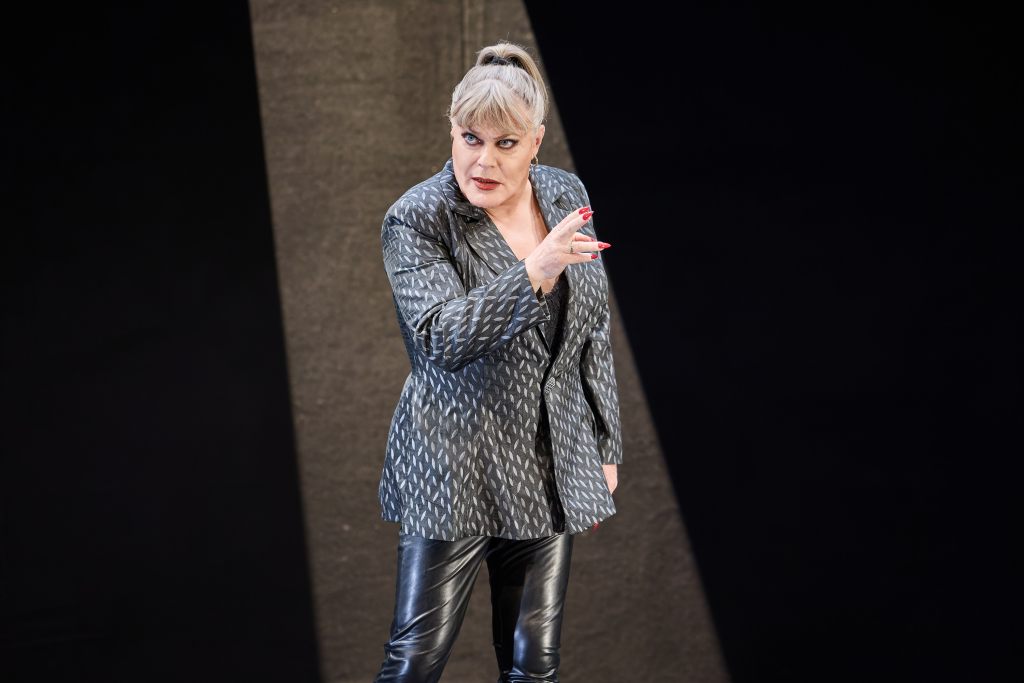
Even Izzard’s costume is complementary to the fast-paced switches in and out of various characters, carrying both masculine and feminine qualities. Her leather pants and boots contrast her peplum blazer, blunt fringe and slick high ponytail.
With the stage stripped bare, Izzard takes command of it, pacing intently, skirting the wings, only to return as a new character in a way that prepares the audience for the next scene.
Izzard’s performance is restrained. She masterfully glides through 15,000 words of text, cleverly abridged by Mark Izzard without removing a single subplot. The delivery steers clear of the melodramatic, which can often be tempting when undertaking Shakespearean works, not least Hamlet.
Act Two: Finding light in the darkness
Comic relief is the only respite to be found in this tragedy. In fact, the intensity of the psychological turmoil and dark themes leave you desperate for a reprieve, however brief.
The hand puppets representing Rosencrantz and Guildenstern are as childlike as their childhood origins with Hamlet. Talk of “nunneries”, “country matters” and Lady Fortune, while true to Shakespeare’s use of double entendres and Elizabethan slang, still rouse audiences 400 years later. And the famous graveyard scene with the witty repartee provides an interlude of sorts before the final tragedy unfolds.
A method to the madness
While the idea of a one-person performance of Hamlet might seem unfathomable, it is perhaps the ultimate challenge when it comes to Shakespeare; disrupting preconceived notions of what a traditional stage production of The Bard’s works entail. As Polonius notes while observing the protagonist’s erratic behaviour, “though this be madness, yet there is method in’t”.
The minimalist staging enhances Izzard’s adaptation, paying homage to an era when production value focused on the actor’s delivery of the text, movement, and the audience’s imagination, rather than the physical.
With no architectural sets or props to provide a sense of place, nor colourful costumes or props to provide symbolism, Izzard has no room for error. However, her performance is proof of an intimacy with the work and a depth of range beyond her legendary stand-up comedy status.
In stripping Hamlet back, Izzard reconnects the audience with the weight of the prose, proving that Shakespeare’s legacy is in the theatrical experience. The interrogation of the human condition is as emotional as it is reflective in this mad, mad world. The question is what you choose to be…or rather, not to be.
4 stars
Izzard: The Tragedy of Hamlet is playing at the Playhouse, Sydney Opera House in Sydney until 21 June 2026.
Run Time: 140 minutes (including a 20 minute interval)
For tickets visit Sydney Opera House




Leave a Reply