
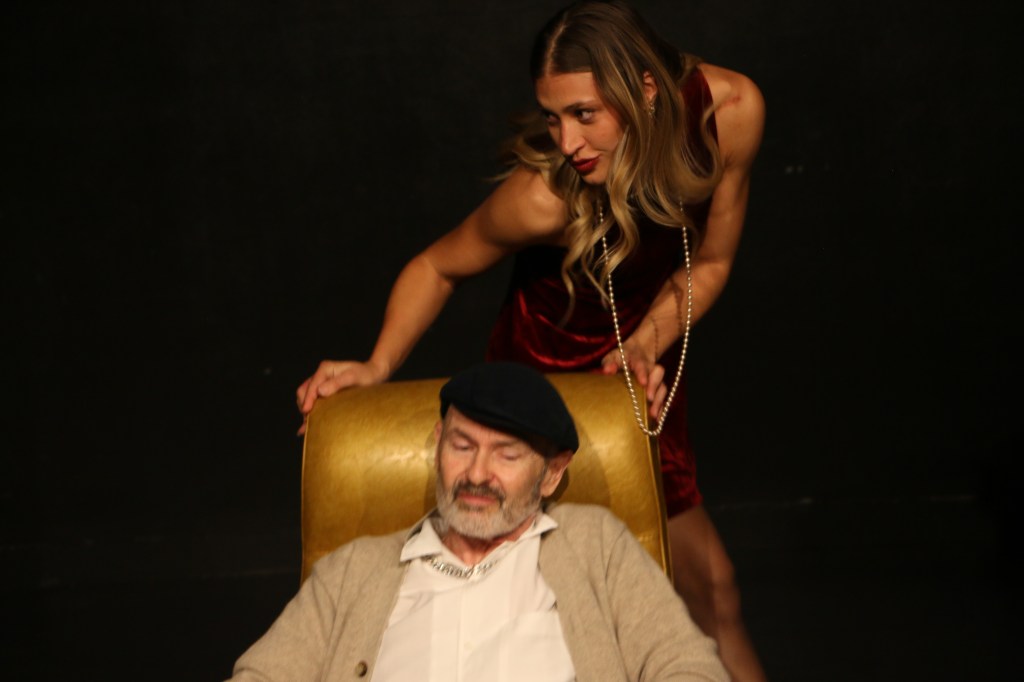
Independent theatre company Kult Klassic aims to move and confront audiences, something they have certainly achieved with their debut work Harold Pinter’s The Homecoming.
Those interested in psychology will revel in this play. From the script to the movement direction, Pinter’s work twists and turns – just remember, this is absurdist theatre, so don’t expect a straightforward narrative.
Co-directed by Lola Carlton and Bora Celebi, the controversial play has been accused of controlling a women’s identity. However, Carlton explains: “Our version of The Homecoming relishes in the idea of dangerous womanhood and the undeniable uselessness of the “power” patriarchy holds – because a system of power that can be undone through a singular act of kindness, or seduction, or interest, is not a truly powerful system.”
Pinter’s play is more than 60 years old, yet its emotional grip remains potent. After six years in America, Teddy (Tate Wilkinson Alexander) returns to his childhood home in working-class England, bringing his wife, Ruth (Danette Potgieter) with him. There is no welcome – the household, occupied by his father Max (Neil O’Donnell), Uncle Sam (Linton Atlas) and two brothers (Joey – Harrison Down, Lenny – Alejandro Sarmiento Castro), is just as volatile as he left it.
With sharp dialogue, the men dominate the conversation, sharing stories about their lives with a sense of wonder and ego, only to be cut off mid-sentence by the other. This is especially evident with Max and Sam. Astutely written by Pinter, their attitudes mirror people with little empathy, talking extensively about themselves while failing to truly communicate. The characters rarely say what they mean, yet the menace is unmistakable. As Carlton adds, “For this play, the characters are obviously aggressive and violent, so we could trust the words much more to do the talking for us without having to over intellectualise it.”
The British playwright is famous for weaponising silence and ambiguity and this production leans into that tension, with Ruth finding control through subtle manipulation. Carlton notes that the key is understanding the motivation behind the pauses: “ It’s the emotional response that drives the silence, not counting seconds. A big thing we focused on is motivating the next moment – how long could this person remain uncomfortable before they have to say something.”
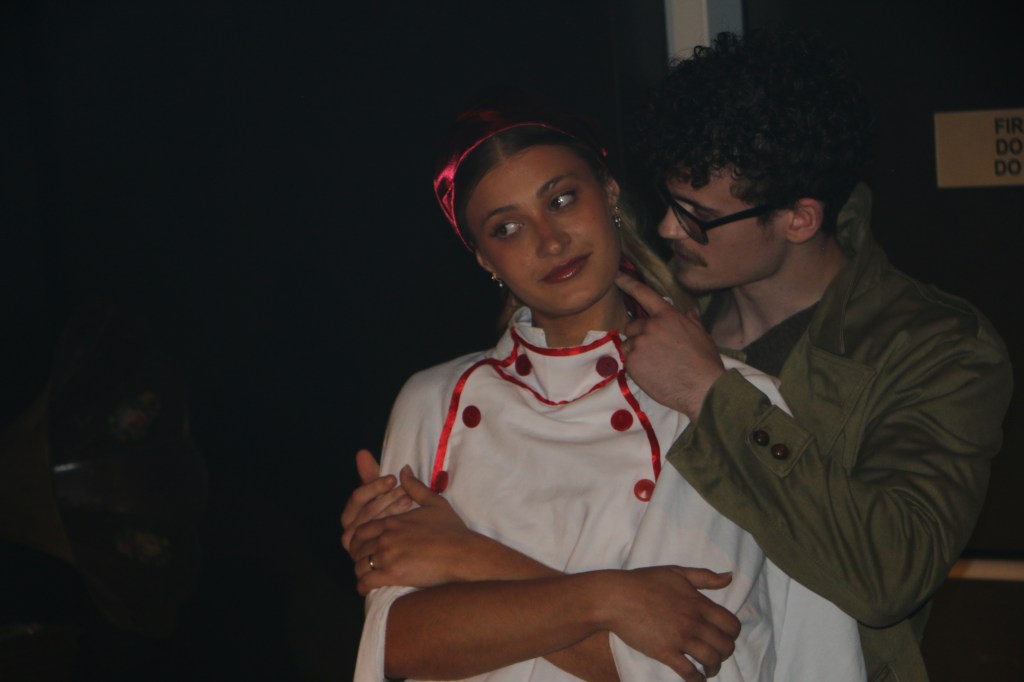
Pinter subverts audience expectations with Ruth. He sets the audience up to fear for her safety among these abusive, menacing men who leer at her; however, she is far less docile than they assume. Potgieter plays her as a calculated vixen, quietly commanding the room. Ruth sits as far from Lenny as she can, yet when he forces himself into her space, she doesn’t flinch. With subtle movements and a single glance, Ruth shifts the power dynamic. Under Carlton and Celebi’s direction, the characters’ intensity is heightened. It isn’t just Pinter’s words that make the audience squirm.
If this play is about control, it’s Ruth who rules. Celebi notes: “Pinter had incredibly progressive views – he was ahead of his time. Especially about women, to the point you can use his plays to argue a feminist perspective. However, he argues those points through a male perspective and through the critique of that male perspective. He doesn’t pretend to know what it’s like to be a woman – nor does he fall into the trap of writing pretentious empty female power monologues that try desperately to grasp at the female experience without actually understanding it, because he doesn’t know what that is. Instead, he completely dismantles the men in his plays.”
O’Donnell plays Max as warm and charming one moment, brutal with his walking stick the next. The Homecoming highlights how behaviour is inherited, with the violence and dysfunction of the older generation mirrored by the younger men. Castro makes the audience’s skin crawl as the sleazy Lenny. Down’s Joey unsettles – sweet-natured on the surface, until his actions prove otherwise. Only Uncle Sam and Teddy seem to carry any moral weight.
Abigail Holt costumes Ruth so she is simultaneously a model of decorum and a seductress. When she first enters in a high-necked white coat, black stockings and white heels, there is no hint of the red velvet mini dress that later rides provocatively, revealing black lace hold-ups against bare flesh. With a sly smile, she prowls; the prey becomes the hunter as she stalks and toys with the men.
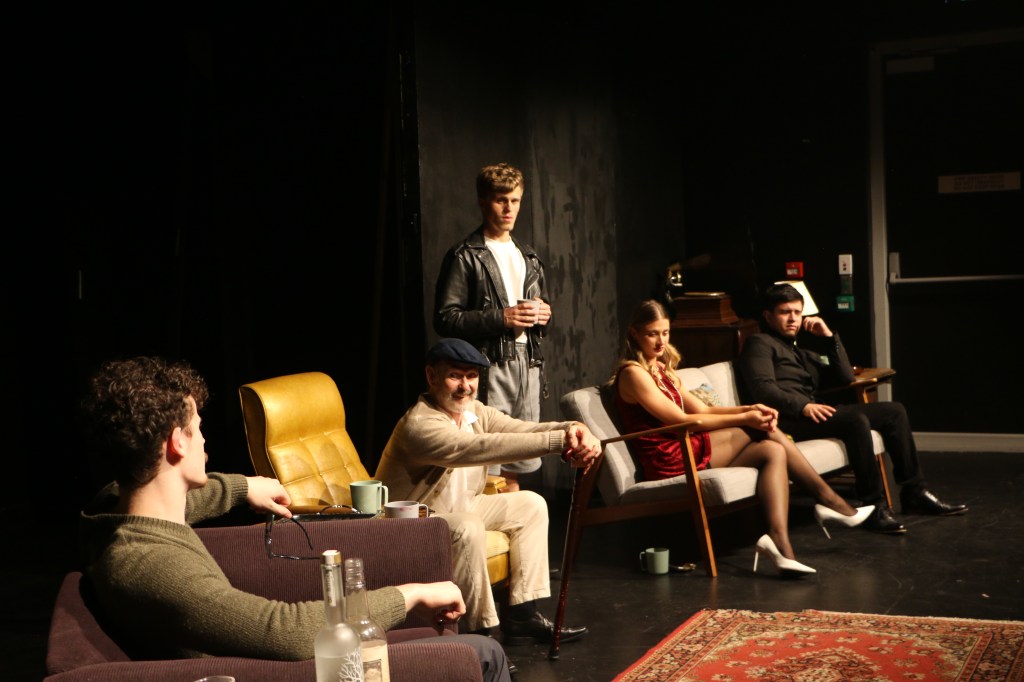
Oriana Chan’s sound enhances the intensity, creating a dark hum whenever Ruth speaks, while Tash McBride dims the lighting around her. The seedy atmosphere is further reinforced through Bronte Taylor’s set design, with worn couches, a drinks trolley and a centrally positioned vintage armchair from which Max rules.
Celebi finishes: “Pinter’s ability to capture and expose human dynamics all while making audiences laugh, wonder, cringe and enter a state of shock is unmatched.”
Kult Klassic’s debut is a brilliant, confronting introduction: a production that lingers, raises questions and darkly entertains.
4 stars
Presented by Kult Klassic The Homecoming is playing at Studio One, University of New South Wales in Kensington, Sydney until 16 May 2026.
For tickets visit Humantix




Leave a comment