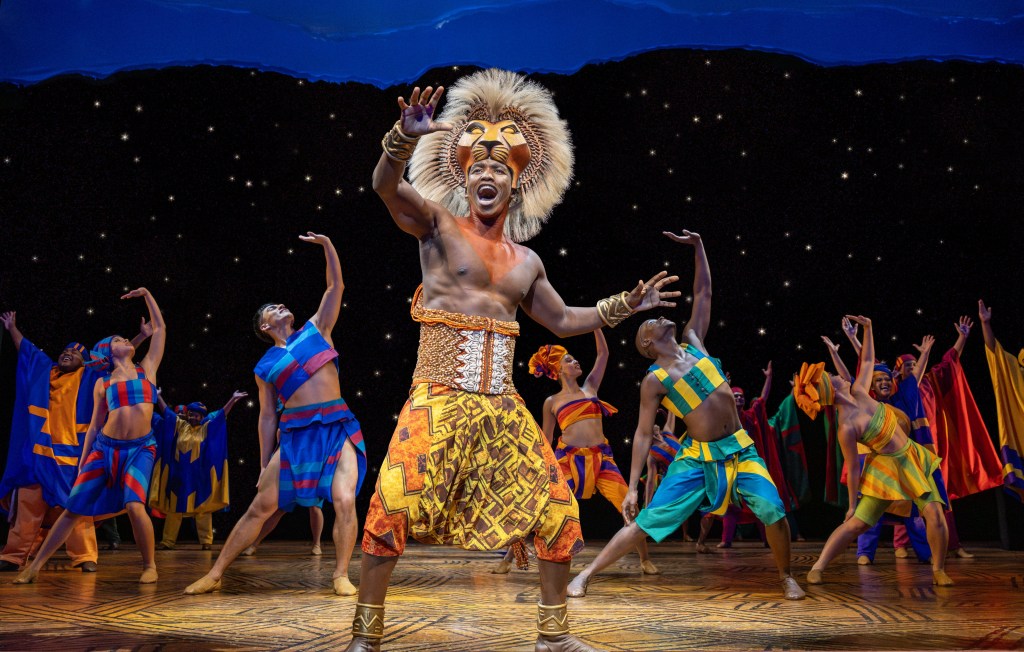
The Lion King is an immersive theatrical experience like no other.
The beloved coming-of-age story from Disney’s Renaissance era follows young lion cub, Simba (Aarya Surangi and Aphiwe Nyezi), from childhood through to adulthood. As prince and future king of the African Pride Lands, the production explores his trials, tribulations and brutal life lessons he encounters along the way.
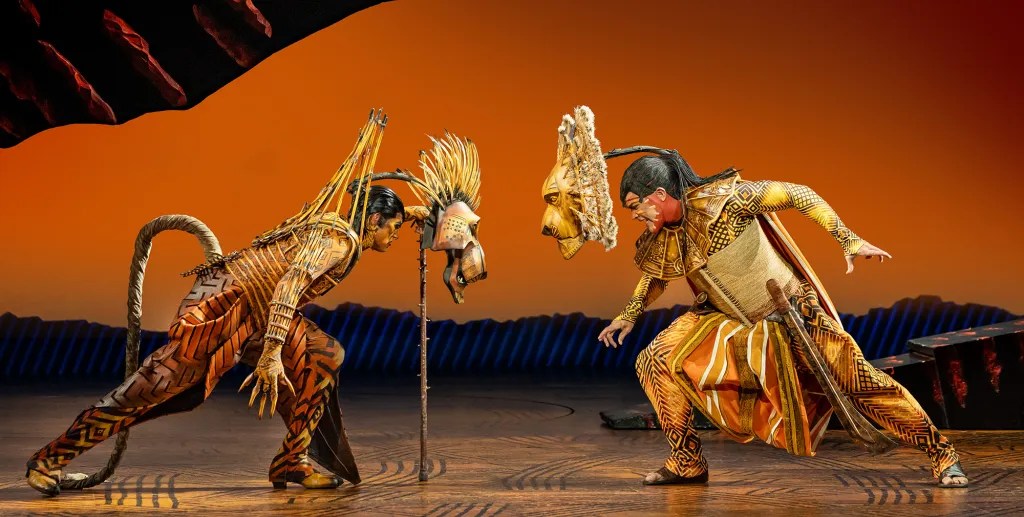
Experiencing the loss of his father, the much-loved King Mufasa (Nick Afoa), the emotional trauma he suffers at the hands (or claws) of his jealous uncle Scar (Daniel Fredricksen), and the existential crisis that ensues, are all hallmarks of Shakespeare’s Hamlet — an intentional move by the studio.
Despite the pressure of recreating one of Disney’s highest-grossing films for the stage, original director Julie Taymor’s multidisciplinary background in puppetry, carving, design, and global folklore proved tailormade for this multi-award winning Broadway hit.
Among the accolades is Taymor’s 1998 Tony Award for Best Direction of a Musical, which made her the first woman to win in this category. The impact of the production has also been recognised locally, winning four Helpmann Awards in 2004 following its first Australian tour.
Reaching six continents over almost 30 years, it remains one of the longest-running productions on Broadway and the West End, showing no signs of stopping.
From 2D to 3D: Anatomy of a Theatrical Spectacular
The wow factor of the show is evident from the first moment. As the famous Zulu chant from the opening line of the “Circle of Life” echoes throughout the Capitol Theatre, a lone antelope appears among the audience in the box seats under a spotlight.
Large carved spiralled horns protrude from an elegant, traditional wooden mask attached to a black-and-beige woven conical hat, which the performer swiftly moves in search of the call.
On stage, a beautiful peach-coloured morning sun rises from the ground. A cluster of graceful gazelles bound across the floor as flocks of birds soar above a performer’s shoulders.
As the music crescendos into the chorus, live drummers perched in the boxes either side of stage appear into full view. A massive, synchronised percussive crash reverberates across the auditorium as giraffes, zebras, cheetahs and, yes, even a life-sized elephant pace down the aisles in procession and onto the stage in a larger-than-life spectacle.
What’s unique about The Lion King is that all of the Tony Award-winning costumes and puppets have been designed in such a way to allow both art and artist to shine — a technique Taymor dubs “the double event”.
The cast do not simply sing and act; they also masterfully pull the strings. Rather than vanishing behind stage blacks, they wear tailored costumes that honour them as performers, creating a mesmerising visual harmony where puppet and performer move as one.
The scenic design is equally impressive, thanks to Richard Hudson’s ability to maximise the auditorium as a three-dimensional space. Rather than merely creating landscapes and backdrops, he constructs a complete environment.
The wildebeest stampede scene, for example, uses every inch of the stage, layering multiple dynamic set pieces ranging in height and width to create the depth of the gorge and the absolute terrifying chaos of a swarming herd. This is complemented by varying sizes of wildebeest costumes, puppets and projections.
Celebrating the African Culture
Every aspect of the production highlights African culture as its central motif, starting with six indigenous African languages that are sung and spoken throughout, including Swahili, Zulu, Xhosa, Sotho, Tswana, and Congolese.
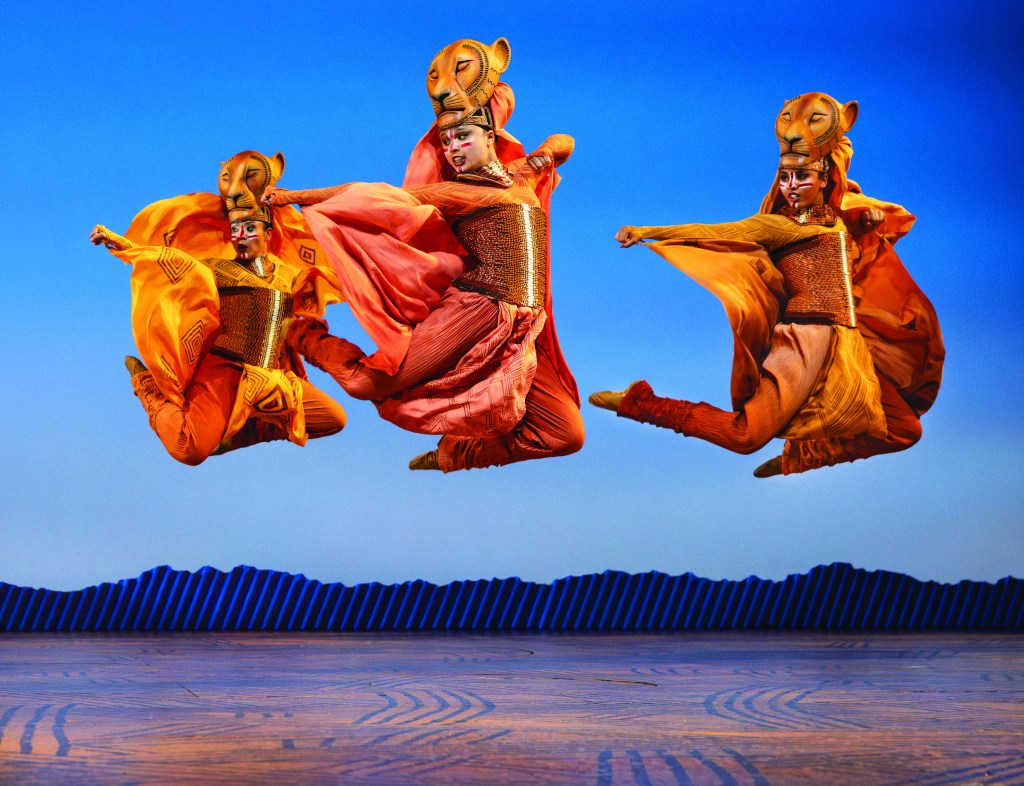
When it comes to the costuming, hair and make up, traditional dress and tribal patterns thoughtfully befit each character. Mufasa and Simba’s costumes, as the royal family and protectors of the Pride Lands, take inspiration from Maasai warriors.
Zazu (Benn Welford) the hornbill takes to the stage in an elegant navy-blue tailored suit, complete with bowler hat, detailed with geometric patterns inspired by the Kuba people.
Rafiki’s (Buyi Zama) character is modelled on the sangoma, traditional spiritual healers and shamans of southern Africa. Her costume is colourful and elaborate, featuring authentic beading and the distinct trinkets of a sangoma.
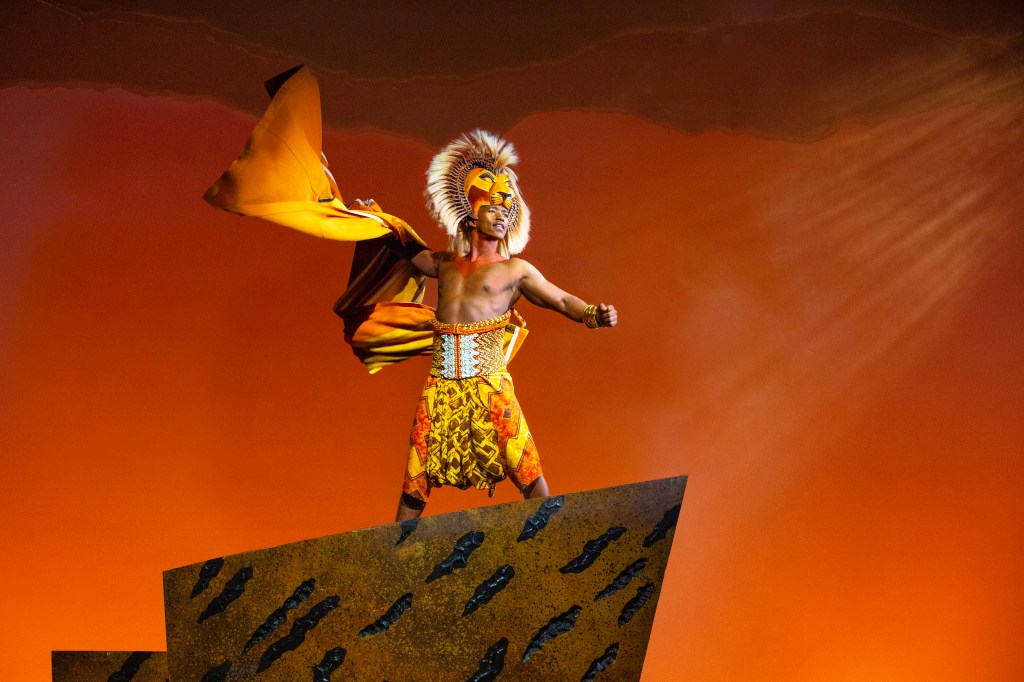
The Sound of the Savannah
The spirit of The Lion King is undoubtedly its music. Without the talents of lyricists and composers Sir Elton John, Sir Tim Rice, Hans Zimmer and South African composer Lebo M, the show’s iconic sound and hit songs would not exist.
However, what is perhaps less widely known is that the Hans Zimmer and Lebo M partnership did not just produce the memorable and emotionally-charged film score, but also a companion album.
‘Rhythm of the Pride Lands’ expands on the African percussive and choral influences of the original score, featuring tracks that didn’t make the final film. For Taymor, this became the heart and soul of the musical, providing audiences with enhanced character development expressed through song and dance.
From Mufasa’s touching father-son moment in “They Live In You” to Nala’s (Emily Nkomo) soul-penetrating ballad “Shadowlands” and the heartbreaking grief in “Rafiki Mourns”, the new musical numbers delve deeper into what is ultimately a universal story about the human condition.
Breathtaking, profound and emotionally-charged, they leave one wondering why they were cut from the film in the first place.
The Lion King is a larger-than-life musical not to be missed, evoking nostalgia for older generations while creating joyous, precious memories for the next. It’s a masterclass in theatrical innovation, demonstrating how to enrich the spectator experience. Now on its third Australian tour, its vibrant costumes, show-stopping numbers, mastery of puppetry, and immersive artistry will continue to captivate audiences for years to come.
5 stars
Presented by Disney Theatrical Group Disney’s The Lion King is playing at the Capitol Theatre in Sydney until 1 November 2026.
The production continues to Brisbane (Lyric Theatre, QPAC) from 15 November 2026 to 7 March 2027, then Melbourne (Regent Theatre) from 25 March 2027 (closing date not yet announced).
Run Time: 2 hours 30 minutes (including interval)
For tickets visit The Lion King
Looking for a pre-show bite? Deux Frères is located close by. For more suggestions, check out Bites & Sips.


Leave a Reply